

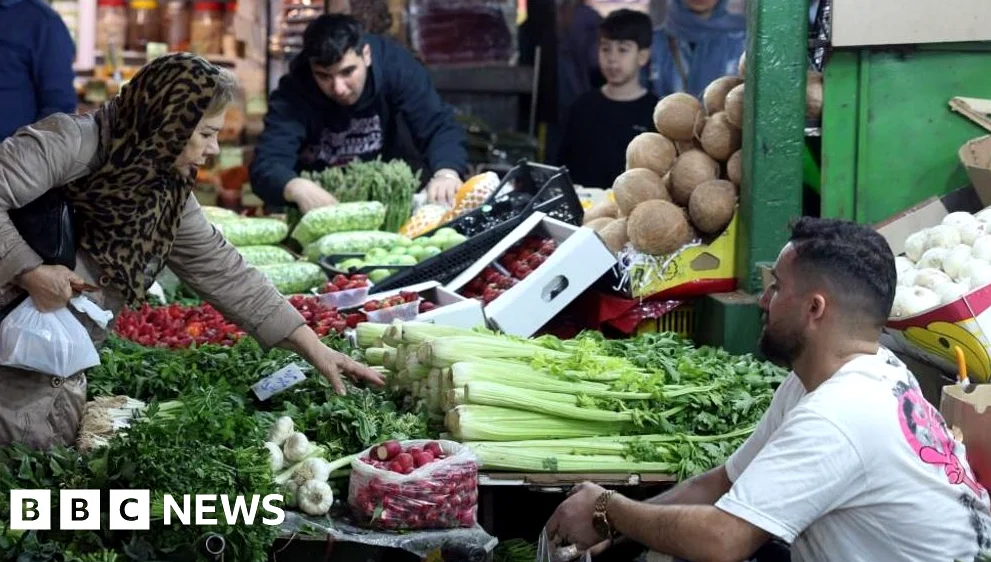
Iran is witnessing mass redundancies as a result of its ongoing conflict with the US and Israel, with the economic toll becoming increasingly evident across multiple sectors. According to the BBC. Widespread layoffs are one of the biggest topics of conversation among ordinary Iranians on social media; Employers and government officials refer to the phenomenon as ‘balancing the workforce,’ though the implications are far-reaching.
Impact on Employment and Daily Life
The impact of the war extends beyond factories hit by air strikes, affecting manufacturers, retailers, import and export businesses, and even the digital sector, and Social media users have shared observations that reflect the economic slowdown. One user on X noted. ‘You can see it from the emptiness of the metro,’ while another remarked on the abundance of parking spaces near offices — Another described the emptiness of the Hemmat highway, noting that a journey that usually took one-and-a-half hours took only half an hour.
Economic Consequences and Internet Blackout
The war has also had a negative impact on consumer spending, with many people cutting back to essentials, reducing demand in sectors such as tourism, restaurants, and non-grocery retailers. According to the BBC, the Iranian authorities’ decision to impose an internet blackout since the war began has hit the country’s relatively thriving tech and digital sectors. Officials cite security reasons, suggesting the move is aimed at preventing surveillance, espionage, and cyber-attacks, though the same step was taken during the clampdown on protests earlier this year, primarily to restrict protesters’ ability to organize and access information.
Economic Costs and Market Outlook
According to the BBC, Iran’s Information and Communication Technology Minister, Sattar Hashemi, stated that every day of internet blackout cost the economy at least 50 trillion rials ($35m; £28m; €32m). By that count, the 52 days of internet shutdown since the start of the war have cost the Iranian economy more than $1.8bn. The blackout has particularly affected female earners.
According to Crypto Briefing, traders are treating the economic damage as a signal of prolonged conflict. The odds of a permanent peace deal by April 30 are at a low point, with the Israel x Iran permanent peace deal by April 30, 2026 showing a minor uptick in odds, but the market remains skeptical. The US-Iran ceasefire by April 30 sits at a similarly low level.
The term structure shows traders expect any resolution to come later rather than sooner. The biggest jump is between April 30 and June 30 for the permanent peace deal, where odds rise to 19% YES. This spread suggests traders see any diplomatic breakthrough happening in the medium term, as current news points to economic pressure rather than diplomatic progress.
The largest single move in the last 24 hours was a 3-point drop in the April 30 peace deal market, driven by news of escalating economic distress. USDC volume sits at $2,604 across the peace deal markets, with just $422 needed to move odds five points, meaning larger trades can shift prices quickly.
However, without concrete diplomatic moves or softening rhetoric, odds reflect a market unconvinced by near-term resolution. The mass redundancies show the economic toll of the conflict, and economic capitalize on could factor into future negotiations. For traders considering a contrarian play, buying YES in the peace deal market at certain levels could be an option.
Watch for statements from Trump or Abbas Araghchi, which could move markets if they signal a shift toward negotiations or further escalation. The situation remains fluid, with the economic and geopolitical stakes continuing to rise.





Comments
No comments yet
Be the first to share your thoughts