

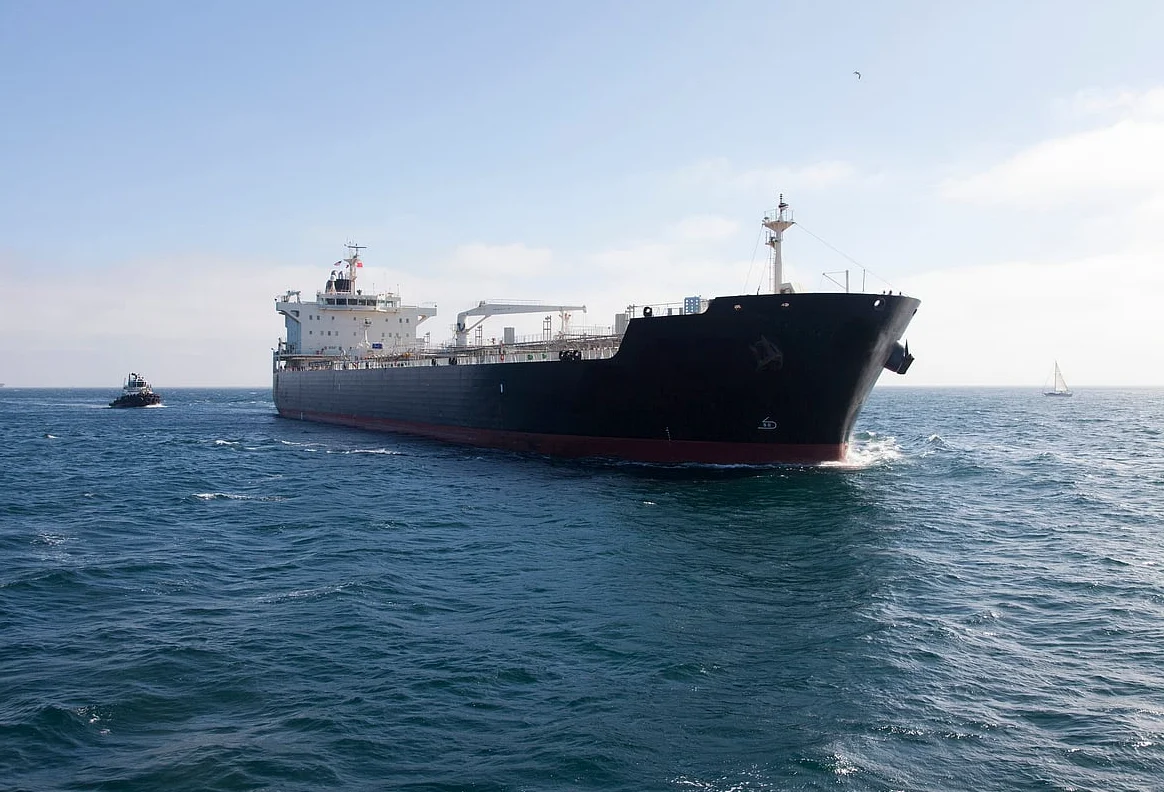
Iran has signaled a potential easing of restrictions for Indian-flagged vessels in the Strait of Hormuz, a critical passage for global oil trade, even as U.S. President Donald Trump warned of further action if Iran or any other entity interferes with the free and safe movement of ships through the waterway. The indication came from Iran’s Ambassador to India, Mohammad Fathali, who emphasized that India’s diplomatic and strategic ties with Iran could help protect Indian shipping interests amid heightened tensions in the region.
India’s Role in Regional Diplomacy
Fathali made the remarks during a press briefing in New Delhi, highlighting the growing cooperation between Iran and India. ‘Yes, because India is our friend. You will see it within two or three hours,’ he said, suggesting that Iran may soon grant safe passage to Indian vessels through the Strait of Hormuz. ‘We believe that Iran and India share common interests in the region. Yes… We believe that Iran and India are friends. We have common interests and a common faith,’ Fathali added.
The ambassador also underlined India’s support for Iran in the aftermath of the recent conflict with the United States and its allies. ‘As the Ambassador of Iran to India, I say that the Government of India, in this situation after the war, has helped us in different fields,’ Fathali said. His comments came as Indian Prime Minister Narendra Modi met with Iranian President Ebrahim Raisi, where both leaders reiterated their commitment to ensuring the unhindered movement of energy resources and the safety of their citizens in the region.
Strategic Significance of the Strait of Hormuz
The Strait of Hormuz, a narrow waterway connecting the Persian Gulf to the Gulf of Oman, is a vital artery for global oil trade, with approximately 20% of the world’s seaborne oil passing through it daily. The region has been a flashpoint for geopolitical tensions for years, particularly since the 2019 attacks on oil tankers and the subsequent escalation of hostilities between the U.S. and Iran.
Following the recent conflict, several Western and Israeli-linked vessels have been subject to restrictions or surveillance by Iranian forces. However, Indian-flagged tankers, such as the Pushpak and Parimal, have been allowed to pass through the strait unimpeded, according to recent reports. This move by Iran may be a strategic gesture to strengthen ties with India, a key regional power that has maintained a balanced approach in its foreign policy, avoiding direct confrontation with either side in the ongoing conflict.
India’s energy imports from Iran have declined in recent years due to sanctions and shifting trade dynamics, but the two countries have continued to maintain economic and strategic cooperation. India has also been vocal about the need for de-escalation in the region and has called for a peaceful resolution to the ongoing tensions.
Regional Implications and Future Outlook
Analysts suggest that Iran’s decision to allow safe passage for Indian vessels may be a calculated move to build goodwill with New Delhi, which has been a consistent advocate for peaceful dialogue in the region. ‘This is a clear signal from Iran that it is trying to balance its relationships with various global powers,’ said a senior defense analyst based in New Delhi. ‘By granting safe passage to Indian ships, Iran is not only showing goodwill but also reinforcing its strategic partnership with India.’
The situation remains fluid, with U.S. President Trump having warned that the United States will take further action if the free movement of ships is disrupted. However, as of now, no such action has been taken against Iran, and the focus remains on de-escalation and ensuring the safe passage of commercial vessels through the strait.
India’s Prime Minister Narendra Modi has previously emphasized the importance of regional stability and the safe transit of energy resources. ‘Unhindered energy transit, safety of citizens are our top priorities,’ Modi said during his meeting with Raisi. The two leaders also discussed ways to enhance bilateral cooperation in areas such as trade, energy, and infrastructure.
With the ongoing tensions in the region, the role of India as a mediator and a key player in ensuring the free movement of shipping through the Strait of Hormuz has become increasingly significant. The recent signals from Iran may indicate a shift in the dynamics of the region, with more emphasis on diplomacy and cooperation rather than confrontation.
As the situation continues to develop, both India and Iran are expected to play a crucial role in maintaining stability in the region. The next few weeks will be critical in determining whether the current diplomatic efforts will lead to a lasting resolution of the tensions in the Gulf.






Comments
No comments yet
Be the first to share your thoughts