

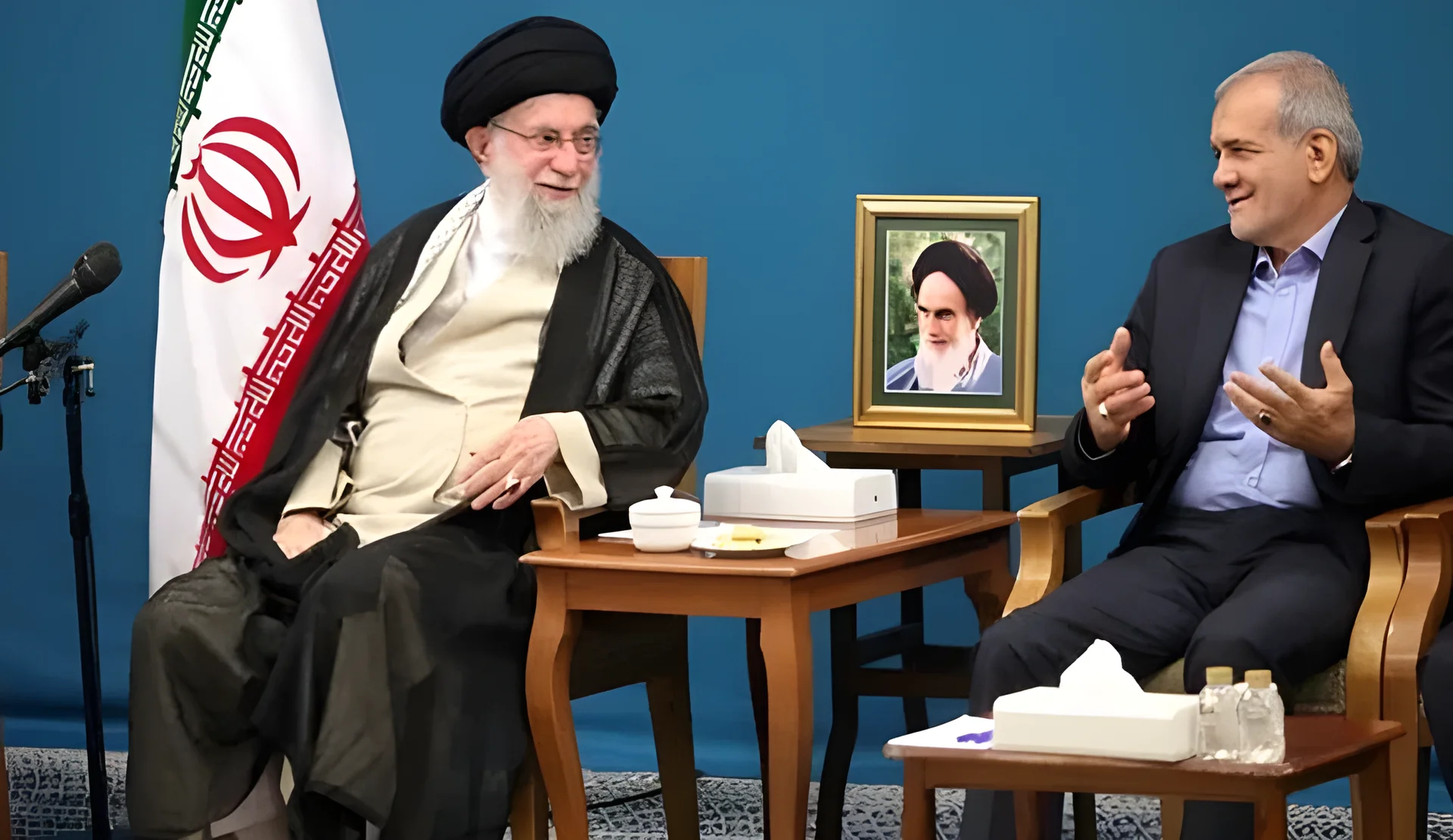
Iranian President Masoud Pezeshkian has condemned the assassination of Supreme Leader Ayatollah Ali Khamenei as a ‘great crime’ that will not go unanswered. In a nationally broadcast address, Pezeshkian described the killing as a ‘historic and painful moment for the nation,’ and vowed that Iran would respond with ‘full strength and determination.’
Unity and Resolve in the Wake of Tragedy
Pezeshkian emphasized the need for national unity in the face of the tragedy, stating that Iran would move forward ‘with the support of its people and allies across the Muslim world.’ He added that the blood of the leader would ‘strengthen resistance against oppression and injustice.’
The government has declared seven days of public holidays and a 40-day national mourning period. Official ceremonies, public gatherings, and moments of silence are expected to be held across the country. The mourning period will include religious rituals and state-sponsored events, reflecting the deep emotional and political impact of Khamenei’s death.
Khamenei, who had been Iran’s Supreme Leader since 1989, was a central figure in the country’s political and religious life. His death is expected to have far-reaching consequences for Iran’s domestic and foreign policies. Analysts note that Khamenei’s influence extended beyond Iran, shaping regional alliances and conflicts across the Middle East.
Regional Tensions and Potential Responses
Observers are closely watching how Iran will respond to the assassination. The strong language used by Pezeshkian suggests that Tehran may take firm diplomatic or strategic actions in the coming days. This comes amid heightened tensions in the region, particularly with the United States and Israel, who have been involved in escalating conflicts with Iran and its allies.
The situation has raised concerns among regional actors, including Gulf states and neighboring countries, about the potential for further instability. The assassination of such a high-profile figure could lead to shifts in Iran’s leadership and policy direction, with implications for nuclear negotiations, military alliances, and regional security.
According to a report from a regional think tank, the death of Khamenei could trigger a power vacuum, with potential rival factions vying for control. This could lead to internal power struggles within Iran’s leadership, further complicating the country’s geopolitical stance.
Iran’s Ministry of Foreign Affairs has not yet issued an official statement on the incident, but officials have urged calm and unity. Pezeshkian’s message reflects a balance between mourning and a clear warning that the incident will shape the country’s next moves, both domestically and internationally.
Forward-Looking Implications
Analysts predict that the next few weeks will be critical for Iran’s political and military leadership. A key deadline is the upcoming meeting of Iran’s Supreme National Security Council, which is expected to outline the country’s response to the assassination. The council will also determine whether to take any retaliatory measures or shift strategic priorities.
With Khamenei’s death, the leadership of Iran’s Islamic Major Guard Corps (IRGC) and other key institutions may face increased scrutiny. The IRGC has long been a powerful force within Iran, and its role in any potential response will be closely watched by both regional and global observers.
Meanwhile, the international community is calling for calm and restraint. The United Nations has expressed concern over the potential for further escalation and has urged all parties to avoid actions that could destabilize the region. Diplomatic channels are expected to remain open, though the outcome of these discussions remains uncertain.
As Iran enters a period of mourning, the focus will be on how the leadership handles the transition and manages the expectations of its people. Pezeshkian’s leadership will be tested in the coming days, as the nation grapples with the loss of one of its most influential figures.






Comments
No comments yet
Be the first to share your thoughts