

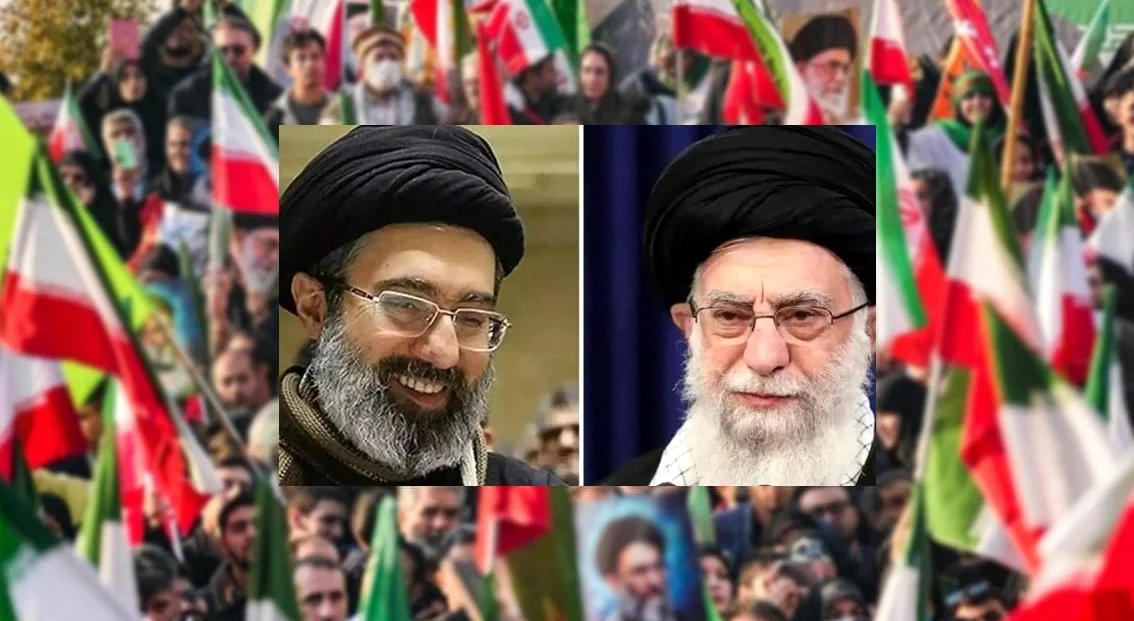
Tehran is in turmoil following the death of Ayatollah Ali Khamenei, the Supreme Leader of Iran, in an attack reportedly involving the United States and Israel. The incident has sparked a wave of retaliation from the Iranian regime, but the country now faces an unprecedented political crisis as it seeks to choose a new leader. With no obvious successor, the Assembly of Experts—a small but influential council of senior clerics—has been tasked with selecting the next Supreme Leader, a role that has only been filled once before, when Ayatollah Khamenei was elevated to power after the death of Ayatollah Ruhollah Khomeini decades ago.
Succession Process Under Scrutiny
The constitution mandates that the next Supreme Leader must be a male cleric with moral and political authority who pledges unwavering loyalty to the Islamic Republic’s ideological framework. This requirement may exclude reform-minded figures and could intensify internal political struggles. The process, which is expected to be swift, faces challenges due to ongoing security threats and external military pressure, making even the gathering of the council a potential risk.
Mojtaba Khamenei, the son of the late leader, is seen as a possible candidate. He is believed to hold behind-the-scenes power and maintain strong connections with the Islamic Major Guard Corps (IRGC) and its vast volunteer network, the Basij. However, hereditary succession remains controversial within the clerical establishment, and critics argue that Mojtaba lacks the high religious rank traditionally expected of a Supreme Leader.
Contenders and Their Positions
Alireza Arafi, a senior cleric and deputy head of the succession council, is viewed as administratively capable and well-connected within state institutions. He has served on the Guardian Council, which oversees elections and legislation. However, experts describe him as a bureaucratic figure rather than a political heavyweight, raising questions about his ability to command broad authority.
Conservative cleric Mehdi Mirbagheri represents the regime’s most uncompromising faction. He has justified extreme wartime casualties and confrontational positions toward the West—views that resonate with hardliners but could deepen divisions in a country already facing economic and social pressures.
Hassan Khomeini, the grandson of Ayatollah Ruhollah Khomeini, carries major symbolism but lacks political or security backing. He has previously been barred from participating in key institutions, highlighting the limits of his candidacy despite public recognition of his family legacy.
Another possibility is Hashem Hosseini Bushehri, a seasoned member of the succession body with institutional knowledge and ties to the leadership. He is considered a pragmatic choice by some analysts but lacks the high-profile security alliances that often determine political outcomes in the Islamic Republic.
Implications for Iran’s Future
The succession process now represents more than a clerical appointment—it is a test of regime stability at a moment of regional turmoil and domestic uncertainty. Experts warn that external pressures and internal ideological battles could slow decision-making or produce an unexpected compromise candidate.
The choice of the next Supreme Leader will have significant implications for Iran’s foreign policy, internal stability, and relations with the West. With tensions rising and the country facing economic and social challenges, the new leader will need to handle a complex political landscape while maintaining the regime’s grip on power.
Analysts suggest that the selection could take weeks or even months, depending on the level of consensus among the clerics. The outcome of this process will shape Iran’s trajectory in the coming years, influencing everything from nuclear negotiations to regional conflicts.
As the nation grapples with the loss of its most powerful figure, the path forward remains uncertain. The Assembly of Experts faces a daunting task, one that will test not only their political acumen but also their ability to ensure the stability of the Islamic Republic.


Comments
No comments yet
Be the first to share your thoughts