

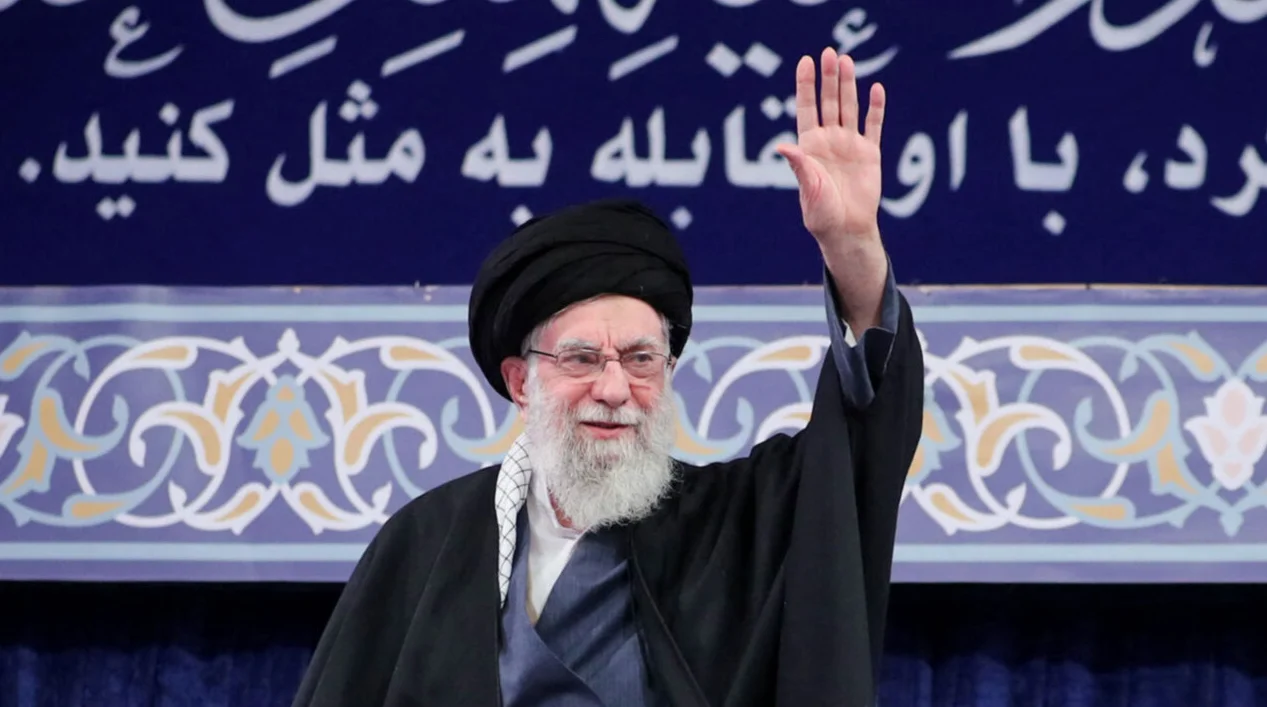
Iran’s state news agency IRNA reported that a three-member council consisting of the president, the judiciary chief, and a jurist from the Guardian Council will temporarily assume leadership duties. This move comes amid political uncertainty in the country, with no clear successor to the late Supreme Leader Ayatollah Ali Khamenei.
Structure of Iran’s Political System
Iran’s political system is known for its complex structure, with multiple decision-making bodies. The 88-member Assembly of Experts, whose candidates are vetted by the Guardian Council, is responsible for selecting the supreme leader. The Assembly of Experts also has the authority to establish a leadership council to run the state in place of a single leader.
The current leadership transition is unprecedented in Iran’s political history. The previous leader, Ayatollah Khamenei, died earlier this year, and his successor has yet to be officially named. This has created a power vacuum, prompting the need for an interim leadership structure.
The three-member council is expected to function as a temporary governing body until the Assembly of Experts can convene and select a new supreme leader. The council will include President Ebrahim Raisi, Chief Justice Mohammad Javad Larijani, and a representative from the Guardian Council, though the identity of the latter has not been disclosed.
Impact on Governance and Policy
The formation of the three-member council is a significant development in Iran’s political landscape. It marks the first time in recent history that such a council has been assembled to assume leadership duties. The council will be responsible for overseeing key governmental functions, including foreign policy, domestic affairs, and national security.
Analysts suggest that the council’s role will be to maintain stability during the transition period. However, the effectiveness of the council will depend on the cooperation between its members, who represent different factions within Iran’s political establishment.
According to IRNA, the council will have the authority to make decisions on major national issues, but it will not have the power to amend the constitution or remove the president from office. This limitation is designed to prevent any one member of the council from gaining too much influence.
President Raisi, who has been a key figure in Iran’s political landscape, is expected to play a central role in the council. His inclusion reflects the current administration’s efforts to maintain continuity in governance despite the leadership vacuum.
What Analysts Say
Political analysts have noted that the formation of the three-member council is a strategic move to prevent power struggles within Iran’s leadership. Dr. Mohammad Reza Nili, a political scientist at Tehran University, stated, ‘This is an attempt to ensure stability during a critical period. The council is designed to act as a unifying force rather than a source of division.’
However, some analysts warn that the success of the council will depend on the balance of power among its members. ‘If the judiciary chief and the Guardian Council representative do not align with the president, the council could become a battleground for competing factions,’ said Dr. Nili.
Iran’s political system has long been characterized by a balance of power between the executive, judiciary, and religious authorities. The current situation tests this balance as the country handles the leadership transition.
The Assembly of Experts is expected to meet in the coming weeks to finalize the selection of a new supreme leader. Until then, the three-member council will serve as the de facto governing body.
The implications of this development extend beyond Iran’s borders. The country’s foreign policy, particularly its relations with the United States and other Western nations, will be closely watched by the international community. Any changes in Iran’s leadership could have significant repercussions for regional stability and global diplomacy.
With the new leadership structure in place, the focus will shift to how effectively the three-member council can manage the country’s domestic and international challenges. The success or failure of this interim arrangement will likely shape Iran’s political trajectory for years to come.

Comments
No comments yet
Be the first to share your thoughts