

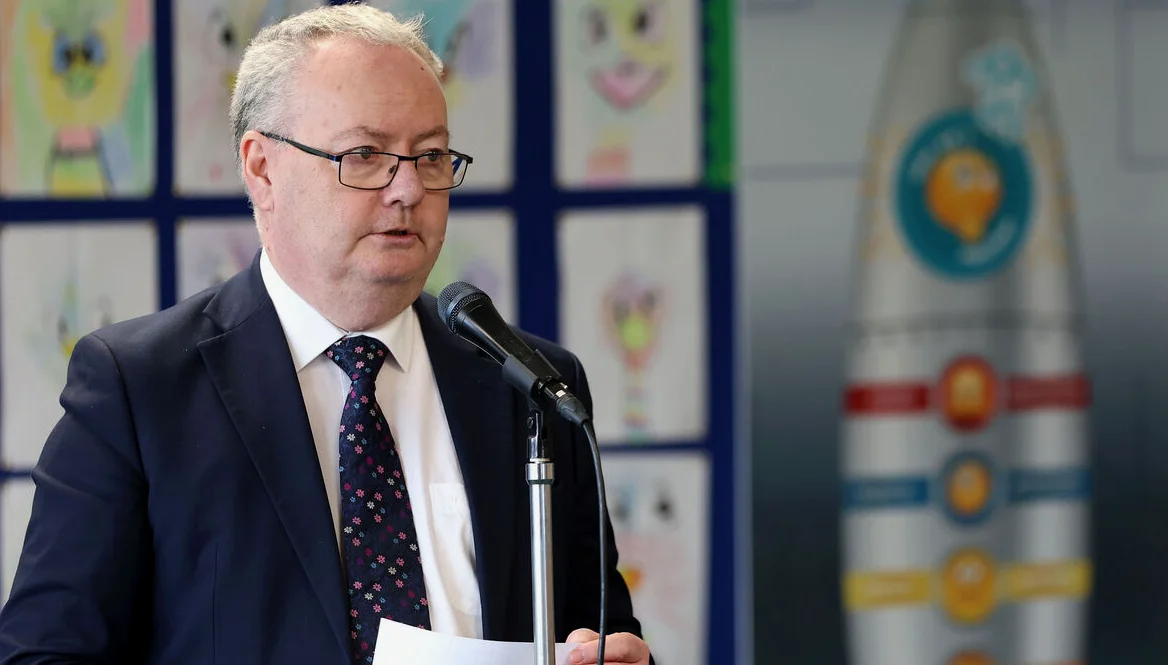
SCOIL EOIN, Ireland — Principal William Casey calls his students the school’s rhythm, energy, heart and soul. The primary school buzzes with color from student artwork lining its corridors. Laughter echoes from classrooms during a recent gathering.
Yet Scoil Eoin exemplifies the struggles many Irish schools face in supporting special needs students. It cannot open three autism classes approved nearly five years ago. The holdup: missing sign-off on building works. Parents’ associations funded a sensory space through fundraising to provide calm environments for autistic pupils. Many require more support than mainstream resources offer.
From September 2026, SNA numbers across Ireland will hit an all-time high of over 1,700 new posts, according to the Department of Education. Officials stress most will fill 4,000 additional special education places. That includes expanding special schools and opening 400 special classes, each staffed with two SNAs.
Mainstream schools, serving about 240,000 students with special needs — roughly 25% of all pupils — get SNAs as a general school resource. Deployment matches overall care needs, not individual assignments, the department states.
Still, the National Council for Special Education (NCSE) notified numerous schools of severe SNA cuts for 2026/27. Schools learned of the changes after accepting invitations to events well before the news broke.
Jesslyn Henry, an SNA with 15 years’ experience in Ballymun, Dublin, now a Social Democrats city councillor on career break, pins blame on shortages of special places. Special educational needs organisers (SENOs) and NCSE often urge parents to try mainstream, promising SNA support, she said. A spot in an autism class might open later if one arises in the school.
Autism classes cap at six students. They fill until pupils complete schooling. Rare cases see high-performing students shift to mainstream, freeing spots.
SNA duties vary by school. In Ballymun, Henry assisted wheelchair users with mobility, diabetics with insulin, epileptic students during seizures, and neurodivergent children with sensory breaks and task focus. SNAs simplify curricula, bridge teacher-student communication, ease anxiety, and handle challenging behaviors — tasks beyond official ‘primary care needs’ like toileting, feeding and medical aid.
“Regulation is huge for these children. Safety is paramount,” Henry said. “Cuts mean schools will struggle. It’s a crisis waiting to happen.”
A primary teacher, speaking anonymously, manages a class larger than average where over half the pupils have autism or ADHD. None qualify for SNA help; higher-needs students elsewhere in her school take priority. She relies on constant differentiation — varied teaching, levels and assessments. Lessons halt frequently for emotional regulation. “It’s frustrating not supporting everyone alone,” she said. Extra eyes from an SNA could help monitor and refocus students.
School management tries, but constraints bind them, she added.
The cuts ignited political backlash. Taoiseach Micheál Martin told the Dáil this week a thorough SNA review had not occurred in years. The Department of Education countered that NCSE conducts annual reviews, completing 1,400 last school year versus about 1,000 so far this year. It declined to disclose posts lost in those 2024/25 reviews or schools gaining allocations for September.
Allocations shift due to enrollment changes, evolving care needs or primary-to-post-primary transitions, a department spokesperson said previously.
The Irish National Teachers Organisation faults delays in SNA redeployment. Surplus staff lingered in some schools; others missed full entitlements. “Failure to resolve structural issues before revised allocations has compounded confusion and undermined confidence,” the union stated.
Samantha O’Flanagan, an SNA at Stapolin Educate Together National School in Dublin, faces similar hurdles. The school aims to launch special classes for September amid local demand but lacks building capacity.
Parents report SENOs pushing mainstream placements due to special school shortages. Schools build inclusion on their own dime, yet systematic barriers persist.





Comments
No comments yet
Be the first to share your thoughts