

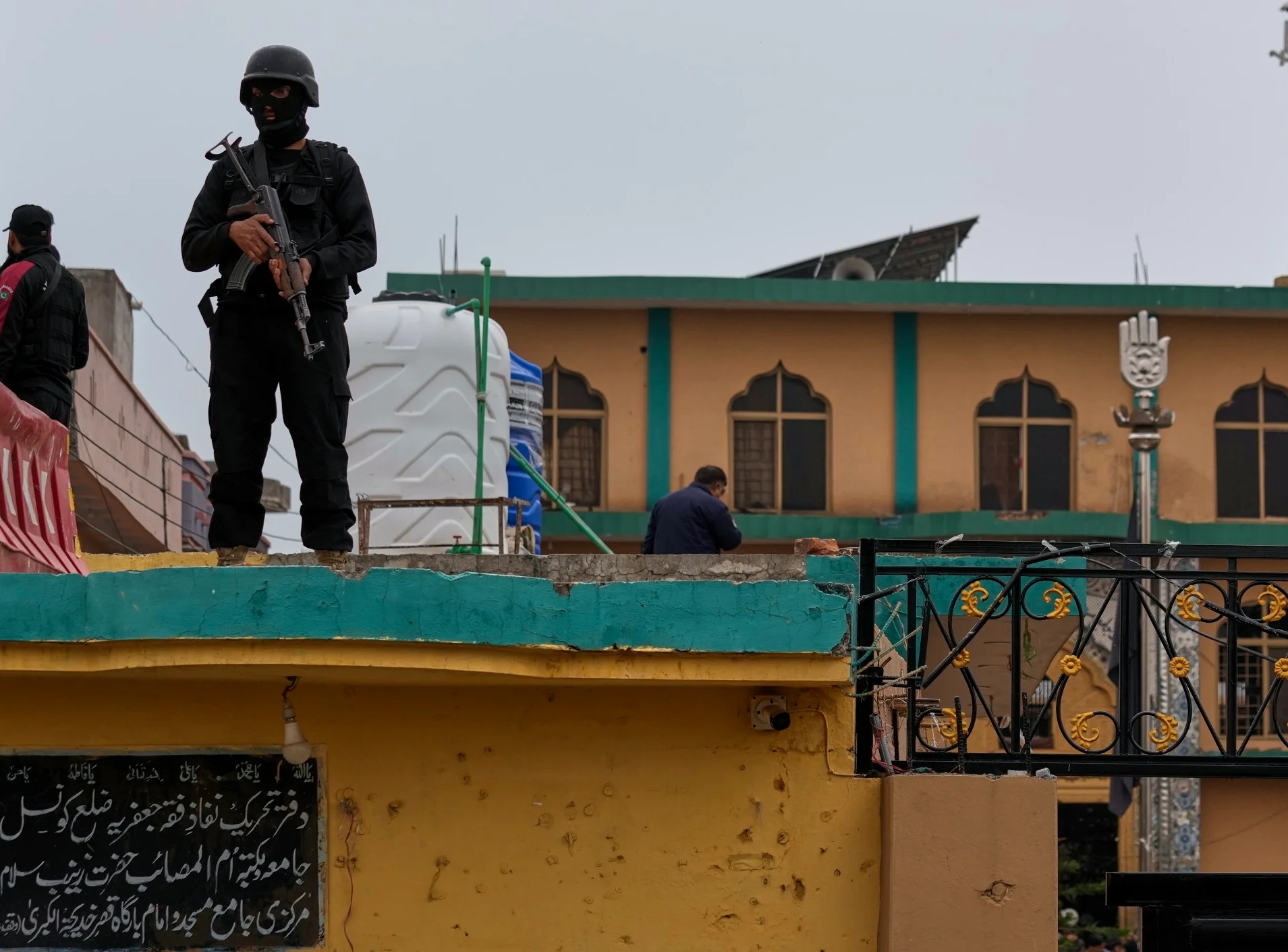
A suicide bombing at a Shia mosque in Islamabad on Friday killed 30 people and injured 169 others, marking a troubling escalation in sectarian violence in Pakistan. The attack took place during Friday prayers at the Khadija Tul Kubra Mosque in the Tarlai Kalan area of southeastern Islamabad, according to the Islamabad administration. The Islamic State (ISIS) group claimed responsibility for the attack via its Telegram channel, releasing an image purporting to show the attacker.
Security Response and Claims of Cross-Border Links
Pakistan’s Defence Minister Khawaja Asif stated that mosque security guards attempted to intercept the suspect, who then opened fire before detonating explosives. Asif alleged the attacker had travelled to and from Afghanistan. Security officials reported Saturday that several key arrests had been made, including family members of the suicide bomber in Peshawar and Karachi. The extent of their involvement in the plot remains unclear.
The attack marks a concerning shift in Islamabad’s security landscape, which had experienced a relative lull in violence in recent years. It was the second major attack in the federal capital since a suicide blast targeted a district court in November of last year.
Rising Trends in Violent Attacks
Data released by the Pak Institute of Peace Studies for 2025 recorded 699 attacks nationwide, a 34 percent increase compared to the previous year. Abdul Sayed, a Sweden-based analyst on conflict in Afghanistan and Pakistan, noted that the attack appears to be the deadliest operation carried out by the Islamic State Khorasan Province (ISPP) in Pakistan since its formation in May 2019. According to Sayed, ISPP has carried out approximately 100 attacks, with over two-thirds occurring in Balochistan, targeting Afghan Taliban members, police, and security forces.
Pakistan has seen a marked increase in violence over the past three years. The country has a history of sectarian violence, particularly in the Kurram district of Khyber Pakhtunkhwa province, which borders Afghanistan. Regional tensions are further exacerbating domestic anxieties, with armed groups in the region backed by Iran remaining alert amid “the simmering geopolitical tensions,” according to security analyst Manzar Zaidi.
Regional Tensions and Cross-Border Allegations
Islamabad has repeatedly accused the Afghan Taliban of providing safe haven to armed groups launching attacks inside Pakistan. The Afghan Taliban have consistently denied these allegations and condemned Friday’s mosque bombing. Tensions between Pakistan and Afghanistan escalated in October, resulting in the deadliest border clashes in years, which led to evacuations on both sides.
A United Nations report last year indicated that the Afghan Taliban provides support to the Pakistan Taliban, or TTP, which has claimed responsibility for numerous attacks across Pakistan. The report also highlighted connections between the Balochistan Liberation Army (BLA) and both the TTP and the Islamic State affiliate in Khorasan Province (ISKP).
Just days before the mosque bombing, the Pakistani military concluded a weeklong security operation in Balochistan province, claiming to have killed 216 fighters in targeted offensives. The operation followed attacks by the BLA aimed at destabilizing the region.
Fahad Nabeel, who heads the Islamabad-based consultancy Geopolitical Insights, anticipates Pakistan will maintain a firm stance towards Kabul, citing Afghanistan’s perceived failure to address anti-Pakistan militant groups. He expects officials to share preliminary investigation findings and potentially point to a link with Afghanistan.
“The upward trajectory of terrorist attacks witnessed last year is expected to continue this year. Serious efforts need to be made to identify networks of facilitators based in and around major urban centres, who are facilitating militant groups to carry out terrorist attacks,” Nabeel told Al Jazeera.
Zaidi cautioned against drawing direct parallels between the recent mosque bombing and the district court attack last year. “The last year’s attack was essentially a target on a state institution, whereas this one was plainly sectarian in nature, something that has certainly gone down in recent times, and that is why I will urge caution against a knee-jerk reaction to conflate the two incidents,” he said.
Shia Muslims comprise more than 20 percent of Pakistan’s population of approximately 250 million. Kurram district, with its roughly equal Sunni and Shia populations, has long been a flashpoint for sectarian clashes and experienced prolonged fighting last year. Zaidi noted that the instability in Kurram could easily escalate, emphasizing the need for Pakistan to closely monitor the situation.
Sayed added that an examination of Pakistani nationals who have joined ISIL and affiliated groups reveals that many originated from anti-Shia Sunni armed organizations. “The role of these sectarian elements is therefore an important factor in understanding such attacks. Such attacks appear significant in facilitating further recruitment of anti-Shia Sunni extremists within Pakistan, thereby contributing to IS efforts to strengthen its networks in the country,” he said.
Nabeel stated that a timely and thorough investigation could shape the government’s response and help prevent the attack from triggering wider sectarian unrest. “However, the possibility of low-intensity sectarian targeting in different parts of the country is likely,” he warned.






Comments
No comments yet
Be the first to share your thoughts