

 The Guardian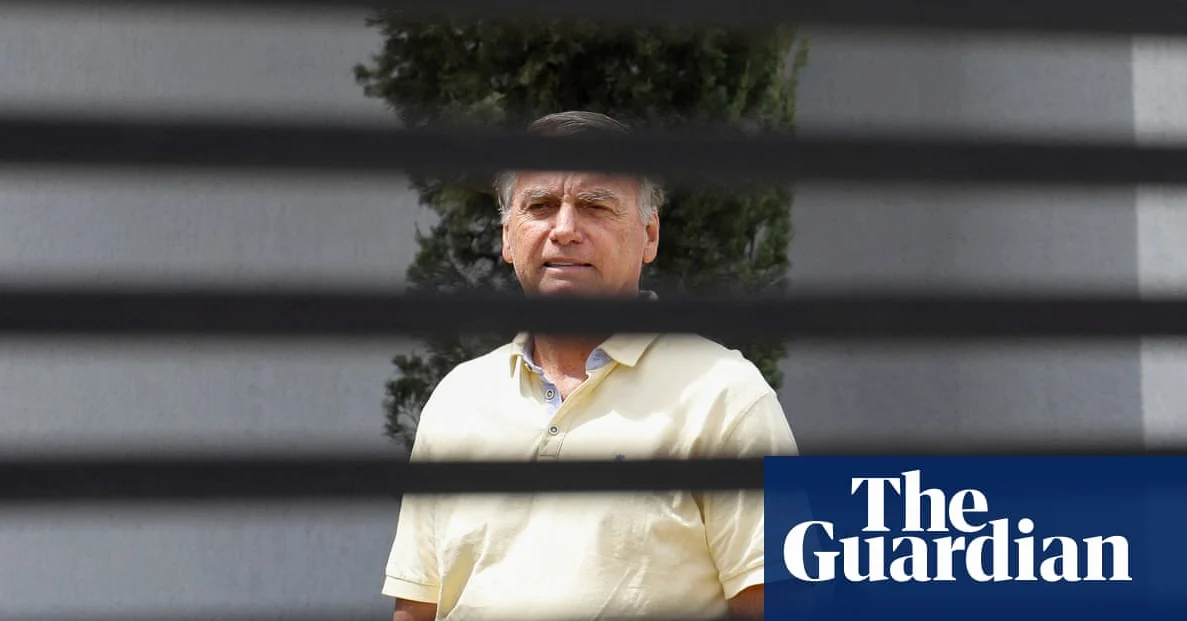
Brazil’s former president Jair Bolsonaro has been granted permission to serve his 27-year sentence for a coup attempt at home instead of in prison due to his failing health, according to The Guardian. The decision by Supreme Court Justice Alexandre de Moraes follows Bolsonaro’s hospitalization since 13 March for pneumonia, one of several health problems the former leader has faced since he was stabbed by a man in 2018 before he was elected president.
Health Concerns Prompt Legal Request
Bolsonaro recently was put in intensive care for a few days because of kidney problems and other issues, and his doctors did not say when he would leave the hospital in Brasília, but his overall condition has improved. In the decision. Moraes said the house arrest was going to last for an initial period of 90 days.
“After this period. The presence of the requirements necessary for maintaining humanitarian house arrest will be reassessed, including a medical examination if needed,” the justice wrote. Lawyers for the rightwing leader. Who governed from 2019 to 2022. Had long sought Moraes’s permission for him to serve his sentence under “humanitarian house arrest”, but the justice had previously denied all requests.
Bolsonaro’s legal team has been pushing for alternatives to incarceration for months, citing his deteriorating health and the potential risks of prison life; the move comes amid ongoing legal battles and political maneuvering, with his son, Senator Flávio Bolsonaro, preparing to run for the presidency in October. Polls show he is in a dead heat with incumbent, Luiz Inácio Lula da Silva.
Legal Precedent and Conditions
Historically, Brazil’s Supreme Court only reverses house arrest if a detainee’s health improves dramatically, or if there is a violation of the established rules, such as not making public statements, posting on social media, or giving interviews to the media. The current arrangement for Bolsonaro includes strict conditions that must be adhered to in order to maintain the humanitarian house arrest.
On Monday, Paulo Gonet, Brazil’s attorney general, paved the way for Bolsonaro to be put in house imprisonment instead of returning to prison. This decision marks a significant shift in the legal process surrounding the former president, who has been a polarizing figure in Brazilian politics for years.
The Supreme Court’s decision to allow Bolsonaro to serve his sentence at home has drawn both support and criticism from various political factions. Supporters argue that the move is humane and necessary given his health, while opponents claim it sets a dangerous precedent that could undermine the rule of law.
Bolsonaro’s case has become a focal point in Brazil’s ongoing legal and political discourse. His potential run for president in October has raised concerns about the stability of the country’s democracy, especially as he faces legal consequences for his role in the attempted coup against the government.
Future Implications and Legal Challenges
The 90-day period for Bolsonaro’s humanitarian house arrest is a temporary measure, and the Supreme Court will reassess the situation after that time. If his health continues to decline, the conditions for house arrest may be extended, but if there is any improvement, the court could reconsider his placement in prison.
Bolsonaro’s legal team is expected to monitor his health closely and ensure that all conditions are met to maintain the house arrest. The attorney general, Paulo Gonet, has stated that the legal process will continue to be followed meticulously to ensure compliance with all court orders.
Meanwhile, Bolsonaro’s son, Flávio, is preparing for the upcoming presidential election. His campaign has already begun, and he is positioning himself as a strong contender against Lula da Silva. The outcome of the election could have significant implications for Brazil’s political landscape and the future of its democracy.
The Supreme Court’s decision has also sparked discussions about the broader implications for Brazil’s legal system. Legal experts are watching closely to see how this case will be handled and whether it will influence future decisions regarding similar cases.
Bolsonaro’s health remains a critical factor in the ongoing legal proceedings. His doctors have not provided a definitive timeline for his hospital discharge, and his overall condition continues to be monitored closely. The situation is expected to evolve as the 90-day period approaches and the court prepares to reassess the conditions of his house arrest.
As the political and legal landscape in Brazil continues to shift, the case of Jair Bolsonaro serves as a complex example of how health, law, and politics intersect in the country. The Supreme Court’s decision to grant him humanitarian house arrest is a significant moment in Brazil’s ongoing legal and political history.






Comments
No comments yet
Be the first to share your thoughts