

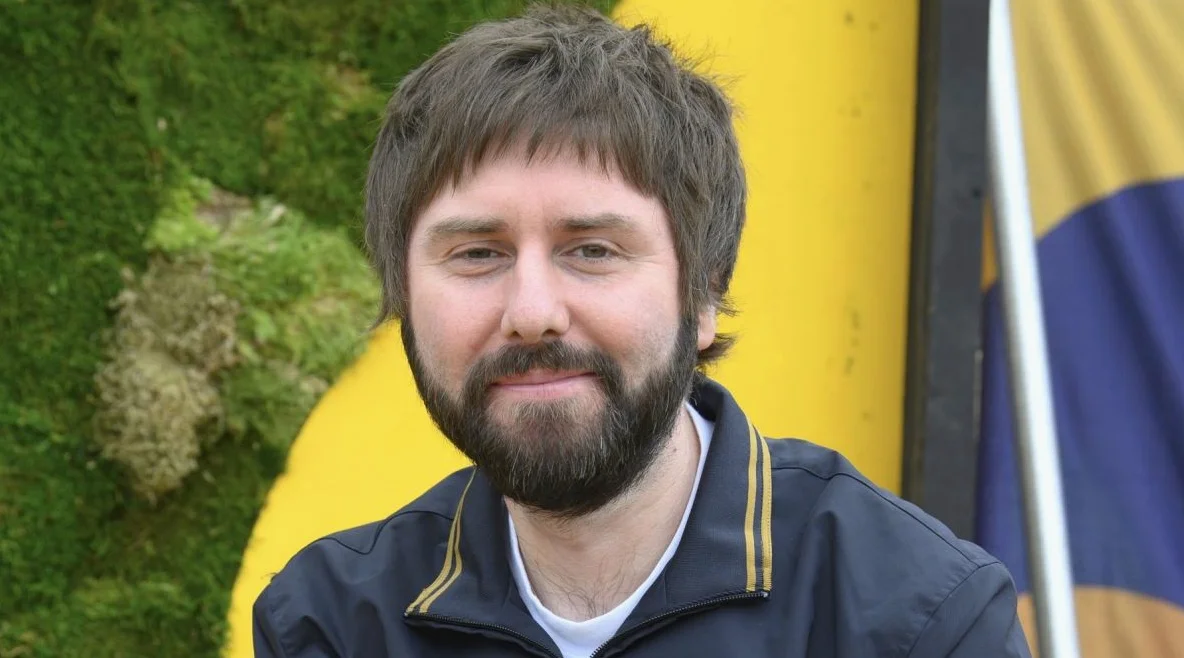
James Buckley, the actor best known for his role as Jay in the British sitcom The Inbetweeners, has revealed that he has struggled to find a new purpose in life since the show ended in 2014. At 38, Buckley has continued to act and engage with audiences through various platforms, but he admits he feels the absence of a clear direction that The Inbetweeners once provided.
Impact on Personal and Professional Life
Buckley’s portrayal of Jay Cartwright was more than just a character—it became a cultural phenomenon. The character’s crass humor, outrageous sexual delusions, and absurd scenarios left an indelible mark on British comedy. Buckley recalls that the show was not only a career highlight but also a defining moment in his life. ‘It was my first love, and I’ll never get that again,’ he said during a recent video call from his home in Essex.
However, with the success of The Inbetweeners came an unexpected challenge. Buckley says he has struggled to find a new goal. ‘I don’t really have a goal anymore, which I generally think is quite a dangerous thing,’ he admits. ‘I do think you need something in your life to work towards. And I’m struggling, personally, to find out what that is.’
Life After The Inbetweeners
Since the show’s end, Buckley has continued to act, notably in the BBC sitcom White Gold, but he says he no longer feels the same drive he once had. ‘I just sort of keep myself busy,’ he says. ‘I potter about, really.’
That understatement doesn’t quite capture the full extent of Buckley’s recent endeavors. During the pandemic, Buckley and his wife, Clair, started a YouTube channel titled At Home with the Buckleys, chronicling their domestic life with humor and relatable anecdotes. The channel has since evolved into a podcast with 281,000 subscribers and an upcoming live tour. Buckley also co-hosts a second podcast, Joe and James Fact Up, with his The Inbetweeners co-star Joe Thomas.
Buckley has also made a name for himself on the video platform Cameo, where he became the first celebrity to earn $1 million. He often records personalized messages as Jay, usually filled with his signature brand of humor. ‘I give people what they want,’ he says, sheepishly. ‘I make sure all the biggest hits are in there.’
Trying to Reconnect with Acting
Recently, Buckley has made a conscious effort to return to acting, trying to suppress the voice in his head that tells him he won’t be taken seriously. He recently starred in the Channel 4 film Finding Father Christmas alongside Lennie Rush and is set to release Mother’s Pride, a comedy about two grieving brothers who revive their family brewery, alongside Martin Clunes.
Despite his success, Buckley suffers from terminal imposter syndrome. ‘When I’m on a film set, I just walk around thinking, ‘I’m ruining this. I’ve wasted everyone’s time and money and this is going to be a failure because of me,’ he admits. ‘That became a bit of a problem for a little while.’
Buckley’s self-deprecating nature is evident in his humility. He often credits his success to others, saying, ‘I’m not educated. I don’t have any skills. I don’t have any trades. I feel like the only thing I can contribute to society is hopefully making them smile.’
Buckley grew up in Dagenham, where his father was a postman and his mother worked at the Home Office. He believes his working-class background has made him feel out of place in the entertainment industry. ‘I find it uncomfortable,’ he says. ‘That’s why I stopped going to award shows during The Inbetweeners.’
Buckley feels that the entertainment industry lacks representation of working-class actors. ‘There’s not a lot of really working-class actors,’ he says. ‘There’s lots of actors that haven’t necessarily come from a showbiz background, sure. Their parents aren’t actors or musicians or anything, but they still went to Oxford or Cambridge.’
Buckley’s pride, however, lies in his role as a father. ‘Genuinely, the one big success in my life is how great my kids are turning out,’ he says, his face beaming. His sons, Harrison, 14, and Jude, 11, are polite, caring, and ‘really nice boys.’
‘I tell them all the time: I don’t expect you to be the smartest in the class, and I don’t expect you to be the fastest. I expect you to work the hardest and to be the kindest. I’m trying to make sure those boys are better people than I was, and we spend loads of time together as a family. We really enjoy each other’s company.’






Comments
No comments yet
Be the first to share your thoughts