

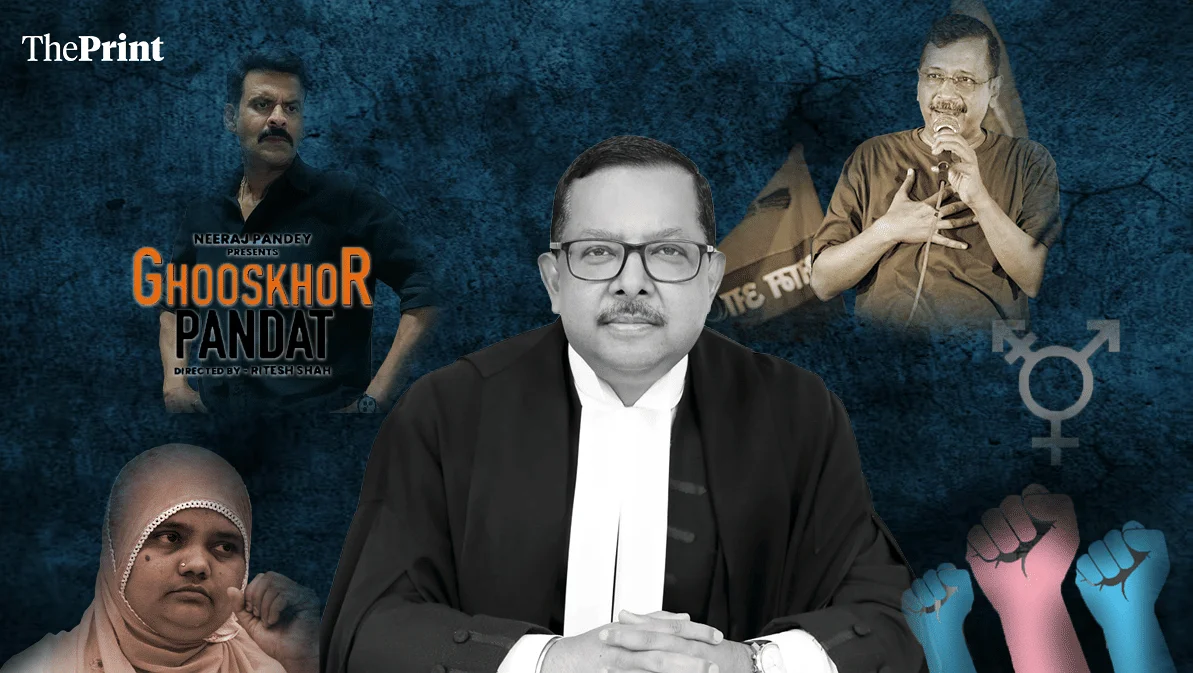
In a closely watched 2:1 ruling on 18 November 2025, the Supreme Court of India overturned its own earlier decision prohibiting post-facto environmental clearances (ECs), a move that has sparked fierce debate among environmentalists and legal experts. Justice Ujjal Bhuyan, who had been part of the original bench that issued the ban in May 2025, dissented again, calling the reversal a ‘curse’ for the environment and a ‘backtracking’ on sound environmental jurisprudence.
Environmental Concerns and Legal Precedent
The Supreme Court’s earlier ruling had been a significant victory for environmental advocates, as it prohibited the Union government from granting retrospective environmental clearances to projects that had already been constructed without prior approval. The November 2025 decision, however, allowed the Builders Association of India (BAI) to file a review petition, which the court accepted, effectively permitting the government to grant retrospective clearances in certain cases.
Justice Bhuyan, who had been part of the initial bench that issued the 2025 ruling, reiterated his dissent in the November decision. In his opinion, he stated that the move ‘cannot be seen backtracking on the sound environmental jurisprudence that has evolved in this country.’
He emphasized the importance of the Supreme Court’s role in safeguarding the environment, citing the ongoing issue of Delhi smog as a stark reminder of the dangers of unchecked environmental pollution. ‘Supreme Court as the highest constitutional court of the country has the duty and obligation under the Constitution of India and the laws framed thereunder to safeguard the environment,’ Justice Bhuyan wrote in his dissenting opinion.
Judicial Independence and Constitutional Morality
Beyond the environmental issue, Justice Bhuyan has consistently emphasized the need for constitutional morality and judicial independence in his career. In a public address on 21 February 2026, he spoke candidly about the discrimination faced by women and minorities in the district judiciary, highlighting the ethical responsibilities of judges at all levels.
He also criticized the new eligibility norms for women entering the judiciary, noting that the three-year experience requirement could disproportionately affect those from rural areas or those without established legal backgrounds. ‘It may also have implications for women judicial aspirants, especially those hailing from rural areas and small towns, who may face career interruptions due to societal constraints or family pressure for marriage,’ he said during a seminar organized by the Telangana Judges Association.
Justice Bhuyan also touched on the persistent issue of religious and caste discrimination. He cited an instance where a Muslim girl was denied housing by a landlady in Noida due to her religion, and another where a Dalit woman was preparing mid-day meals for students at a government school, leading to outrage from parents.
Commitment to Constitutional Principles
Justice Bhuyan has long been known for his commitment to constitutional principles, often returning to the text of the Constitution when faced with complex legal questions. His opinion in the Ghooskhor Pandat case, where the filmmakers had agreed to change the movie’s title, was a rare instance of him expressing his views in writing. In a 30-page opinion, he emphasized the importance of fraternity and Ambedkar’s vision of democracy, stating that ‘it is constitutionally impermissible for anybody, be it the state or non-state actors, through any medium, such as speeches, memes, cartoons, visual arts, etc., to vilify and denigrate any community.’
He also warned against the dangers of intolerance in a free society, stating that ‘if organised groups threatening such freedom are not restrained, there is a real danger that art and literature would become victims of intolerance.’
Justice Bhuyan has also been vocal about the need to address disparities in legal education, noting that the wide disparity in the quality of students and teaching in different law colleges could have a ‘telling impact on the district judiciary where the bulk of the litigation is fought.’
His career has seen him serve in various high courts, including the Gauhati High Court, the Bombay High Court, and the Telangana High Court, where he was appointed Chief Justice in 2022. He is set to retire in August 2029 without holding the position of Chief Justice of India.
The Supreme Court’s decision to allow post-facto environmental clearances is expected to have significant implications for the environment, public infrastructure, and the legal framework governing environmental protection in India. Environmentalists and legal experts are closely watching the situation, with many calling for a reevaluation of the court’s stance on this issue.





Comments
No comments yet
Be the first to share your thoughts