

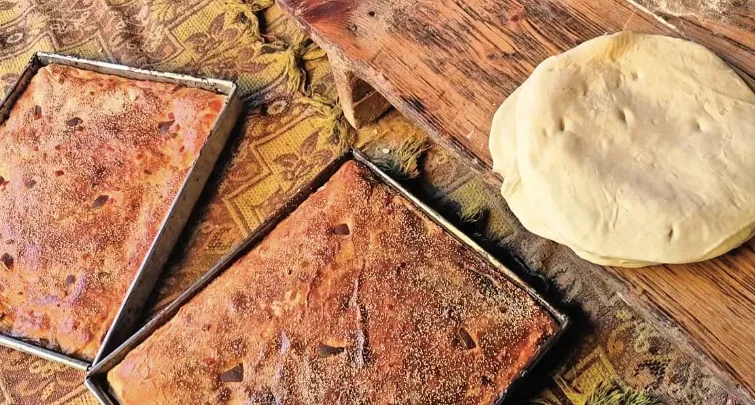
Pulwama, March 8 — The traditional Kashmiri bread ‘Routh’ has made a quiet but significant return to bakeries in south Kashmir’s Pulwama district, rekindling memories of a delicacy that had nearly disappeared from local shelves over the years. This Ramadhan, the bread’s revival has drawn attention from both younger and older residents eager to reconnect with their region’s culinary heritage.
Rediscovery of a Culinary Staple
Once a staple in bakeries across the Kashmir Valley, Routh had gradually fallen out of favor as changing food habits and the rise of other bakery items pushed the traditional bread into obscurity. However, Rayees Ahmad, a local baker in Pulwama, decided to reintroduce the bread this year, and the response has been positive.
“We reintroduced ‘Routh’ this Ramadhan and are receiving a very good response from customers,” Ahmad said. “Many people were surprised to see it again because it had disappeared from most bakeries for a long time.”
Routh is a large, square-shaped sweet bread traditionally made with flour, ghee, sugar, and dry fruits. It was once considered a special item, often associated with celebrations and religious gatherings. Elders in the area recall that Routh used to be widely consumed during weddings and festive occasions, with families serving it to guests as a traditional delicacy.
Religious and Cultural Significance
The bread also had a strong association with religious sites, where devotees would offer it at shrines as part of customary practices. Muhammad Sultan, an elderly resident of Pulwama, recalled its prevalence in the past.
“In earlier times, Routh was very common,” Sultan said. “People would buy it for weddings and also distribute it at shrines. It was considered a special bread.”
Despite its cultural significance, the bread had slowly faded from bakery shelves over the past two decades. Bakers say the preparation process is more time-consuming compared with other items, and declining demand had discouraged them from continuing its production.
“Making Routh requires more effort and ingredients, so many bakeries stopped baking it when customers began preferring other products,” Ahmad said.
Renewed Interest and Future Prospects
However, the renewed interest during Ramadhan has encouraged Ahmad to revive the traditional recipe. Customers visiting the bakery during the holy month have shown curiosity about the bread, while older residents have welcomed its return with nostalgia.
Some buyers said the reappearance of the bread reflects a growing interest in rediscovering traditional foods that once formed an important part of Kashmiri culture. If the response continues, Ahmad says he may keep producing the bread beyond Ramadhan, allowing a new generation to experience a taste that was once deeply rooted in Kashmir’s culinary traditions.
The revival of Routh is not just a culinary event but also a cultural one. It highlights the importance of preserving traditional foods in a rapidly changing society. For many, it is a reminder of a time when food was not just sustenance but a part of identity and community.
As the holy month continues, the story of Routh’s return serves as a testament to the power of tradition and the desire to reconnect with the past in a meaningful way.






Comments
No comments yet
Be the first to share your thoughts