

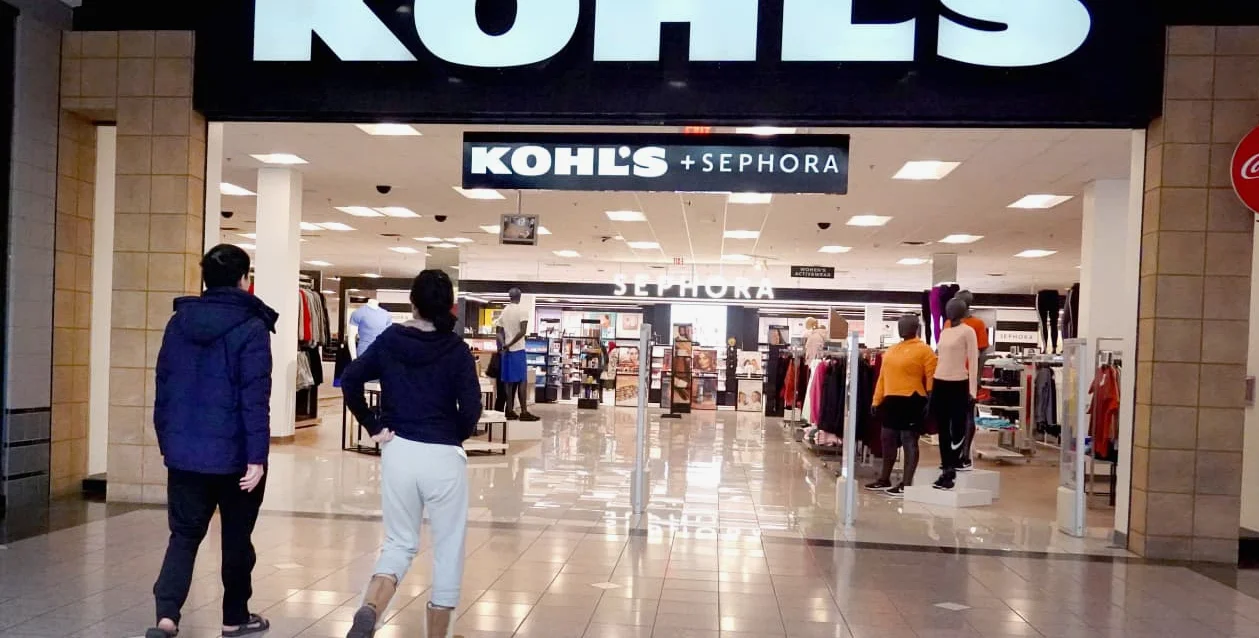
Kohl’s (K) shares dropped toward a seven-month low in early Tuesday trading, following the release of its latest quarterly results, which showed continued sales declines. The department-store chain, which has struggled for years with shifting consumer habits and competition from e-commerce giants, reported that its fourth-quarter net income more than doubled, but sales remained weak, signaling that the restructuring efforts initiated by its former CEO have not yet yielded the desired results.
Weak Sales Despite Improved Profitability
Despite a 23% increase in net income compared to the previous year, Kohl’s reported a 3.7% decline in sales for the fourth quarter, which ended in January. The results mark the 13th consecutive quarter of declining sales, a streak that has persisted despite significant restructuring efforts. The company’s current CEO, Michael Bender, who took over in April 2023, acknowledged in a statement that while ‘meaningful progress’ has been made, sales were ‘softer than projected.’
Kohl’s has been trying to stabilize its business since the departure of former CEO James A. Kennedy, who was ousted in September 2023 after less than four months in the role. Kennedy had implemented a series of cost-cutting measures and store closures, but those efforts did not appear to translate into improved sales performance.
Struggles to Adapt to Changing Retail Landscape
Kohl’s has long been a casualty of the retail transformation brought on by the rise of e-commerce and shifting consumer preferences. The company has been closing stores at an accelerating pace, with more than 100 locations shuttered since 2020. However, these closures have not been enough to reverse the downward trend in sales.
According to the company’s latest earnings report, total sales for the fourth quarter were $3.5 billion, down from $3.64 billion in the same period last year. The decline was attributed to both lower foot traffic and a shift in consumer spending toward online retailers such as Amazon and Walmart.
‘The retail landscape continues to evolve rapidly, and we are focused on adapting to these changes,’ Bender said in a statement. ‘While we are making progress, the pace of recovery is slower than we hoped.’
Analysts have been watching Kohl’s closely as it handles a challenging environment. According to a recent report from Bloomberg, the company’s stock has underperformed against its peers in the retail sector, with shares down nearly 20% year-to-date. The report also noted that Kohl’s is expected to continue closing underperforming stores and investing in digital capabilities to better compete with online retailers.
What’s Next for Kohl’s?
Looking ahead, Kohl’s faces a critical period as it works to implement new strategies aimed at reversing its sales decline. The company has announced plans to expand its omnichannel capabilities, including a push for more smooth online and in-store experiences. However, these initiatives will take time to show results.
In the coming months, Kohl’s will also be monitoring the impact of its recent store closures and the performance of its newly launched private-label brands. The company has also set a goal to reduce its operating costs by 10% by the end of 2025, a target that will require further restructuring and cost-cutting measures.
With the retail sector facing continued uncertainty, Kohl’s must find a way to stabilize its business and regain consumer confidence. If the company fails to turn around its sales performance, it could face further pressure from investors and potentially more store closures in the near future.
The latest earnings report has raised concerns among analysts and investors, many of whom are questioning whether Kohl’s can achieve a sustainable recovery. ‘The company has taken some important steps, but it’s clear that the road to recovery is still long,’ said one analyst from Morningstar, who noted that Kohl’s needs to see a stronger rebound in sales before it can be considered a turnaround success.






Comments
No comments yet
Be the first to share your thoughts