

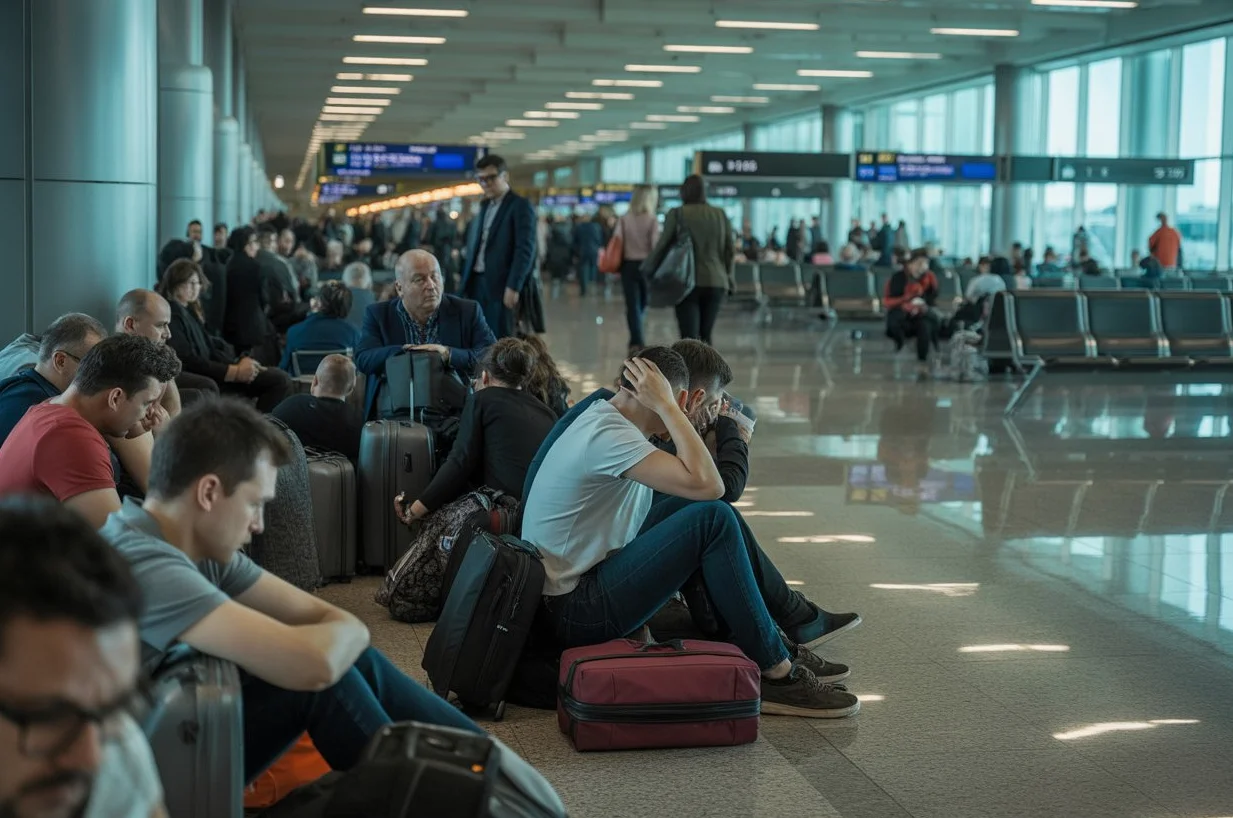
Over 28 flights were cancelled from Kuwait International Airport on Monday, stranding thousands of passengers and disrupting key regional and international routes. Airlines including Qatar Airways, Saudia, IndiGo, EgyptAir, and Royal Jordanian suspended scheduled departures from Kuwait City to destinations such as Doha, Riyadh, Jeddah, Cairo, Mumbai, Delhi, and Amman, according to airport officials.
Disruption to Major Transit Hubs
The cancellations affected routes connecting Kuwait to major regional transit hubs, including Doha, Riyadh, and Cairo, which serve as critical gateways for both domestic and international travel. Qatar Airways, which operates several flights between Kuwait and Doha, suspended services using widebody aircraft like the Boeing 777-300ER and Airbus A350-1000. These routes are among the busiest in the Gulf region, often used by business travelers and expatriates.
Saudia, the national carrier of Saudi Arabia, also suspended multiple flights from Kuwait to Riyadh and Jeddah, including SVA511 and SVA501, which were scheduled in the late afternoon and early evening. These cancellations have forced many passengers to seek alternative travel options or delay their journeys.
Impact on Indian Expatriates
IndiGo, India’s largest airline, suspended several flights connecting Kuwait to major Indian cities, including Mumbai, Delhi, Hyderabad, and Ahmedabad. Among the affected flights were IGO1236 to Mumbai and IGO1232 to Delhi, which are critical for the large Indian expatriate community in Kuwait. These cancellations have created significant inconvenience for workers and families relying on these routes for regular travel.
For example, IGO1238 to Kochi and IGO1234 to Hyderabad were scheduled during overnight hours, a time when airlines typically operate tightly coordinated connection banks. The sudden changes have left many stranded at the airport with limited options for rescheduling or alternative transportation.
Regional and Global Travel Disruptions
With Doha, Riyadh, and Cairo serving as major transit hubs, the cancellations have potential ripple effects on onward journeys to Europe, Asia, and Africa. Passengers attempting to connect through these cities may face delays or additional costs in rebooking flights with other carriers.
Qatar Airways’ suspension of flights to Doha has particular significance, as the city is a crucial node in the Gulf’s aviation network. The airline’s widebody aircraft, including the Boeing 777 and Airbus A350, are essential for long-haul connections to international destinations.
EgyptAir also cancelled several flights from Kuwait to Cairo, a key link between the Gulf and North Africa. These cancellations could affect both business and pilgrimage travel, particularly around major religious observances.
Royal Jordanian suspended two flights to Amman, including RJA641 and RJA643, using Airbus A320neo and Embraer E190-E2 aircraft. These routes are frequently used by travelers from the Gulf region seeking to visit Jordan for tourism or business.
Broader Implications for Air Travel
The situation highlights how flight cancellations at a single airport can create cascading effects across regional and international networks. Aviation analysts note that when multiple carriers adjust schedules simultaneously, it can lead to complex disruptions for passengers and logistical challenges for airlines.
According to airport officials, the cancellations were due to a combination of operational adjustments and unforeseen logistical challenges. However, no official statement has been released explaining the specific reasons behind the widespread disruptions.
Passengers affected by the cancellations have been advised to contact their airlines for rebooking options. Some are being offered refunds or alternative flights, though availability is limited due to the high demand on affected routes.
As the situation unfolds, travelers are encouraged to monitor their airline’s official channels for updates and consider alternative travel plans if possible. With the holiday season approaching, the disruptions could have long-term implications for regional air travel.






Comments
No comments yet
Be the first to share your thoughts