

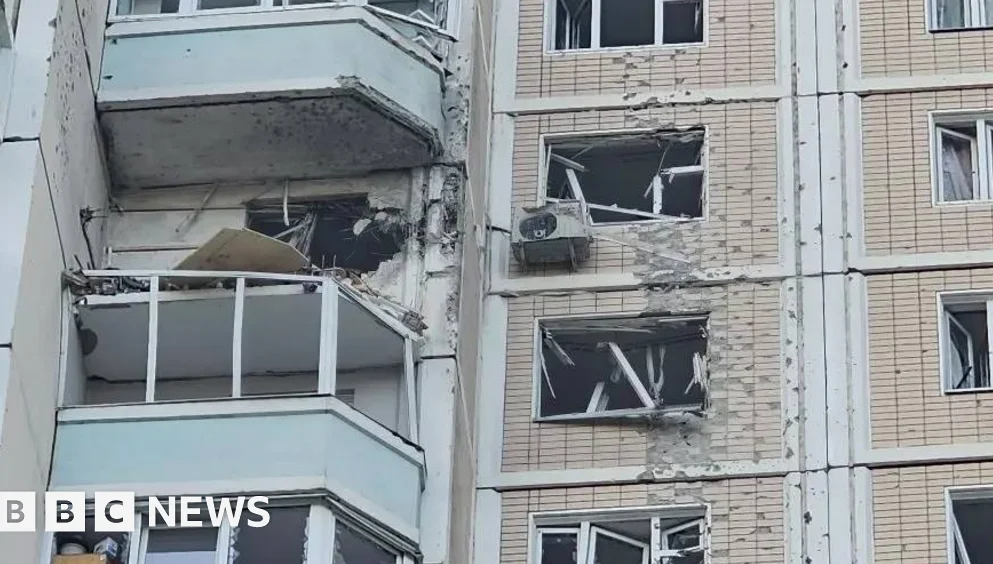
Russian Troop Commitment in Kursk
Russia has deployed up to 38. 000 troops to its counteroffensive in Ukraine’s Kursk region, according to a report in The Financial Times, citing a senior Ukrainian military intelligence official — some of these troops have been redeployed from southern Ukraine. Despite this. The same source noted that the operation is ‘still not large-scale,’ and Russia will need to bring in more combat-tested assault brigades to make significant gains.
Ukrainian President Volodymyr Zelensky has previously estimated that 100,000 Russian troops would be needed to fully repel the incursion, which began in August. Ukrainian forces initially seized around 460 square miles of territory in the Kursk region, but concerns are growing that the initiative may now be shifting in Russia’s favor.
One of the key concerns for Ukrainian commanders is that Russia has not yet diverted significant forces from eastern Ukraine, where Kyiv’s troops are still under pressure and losing ground. The area around Pokrovsk in the Donetsk region, a major railway hub, has seen an uptick in Russian attacks.
Ukrainian Preemptive Ceasefire Announcement
Amid the military developments. Ukrainian President Zelensky announced a preemptive ceasefire two days ahead of Russia’s planned truce for Victory Day. In a statement posted on X, Zelensky said, ‘There has been no request officially conveyed to Ukraine regarding the modalities of a cessation of hostilities (ceasefire) circulating via Russian social media,’ and added, ‘We believe that human life is far more precious than any ‘commemoration.’ He announced that a ceasefire would begin at midnight on May 5–6.
Ukraine’s Foreign Minister Andrii Sybiha echoed Zelensky’s stance, criticizing Russia for delaying peace talks. Sybiha said, ‘Peace cannot wait for parades and commemorations,’ and emphasized that if Moscow truly intends to end the fighting, it could take meaningful steps now.
Geopolitical Shifts in Latin America
Meanwhile, in a separate but related geopolitical development, Russian President Vladimir Putin faces a shifting field in Latin America. With Venezuela’s President Nicolás Maduro ousted and jailed in the U.S., Putin now has fewer allies in the Western Hemisphere. The Moscow Times reported that Maduro’s removal was part of a U.S. operation dubbed ‘Absolute Resolve,’ aimed at countering Russian and Chinese influence in the region.
Since 1999, Russia has sold more than $20 billion in weapons and military equipment to Venezuela. Moscow also maintained an undeclared spy network in the country and was invited to build or manage a naval base in the southern Caribbean. The removal of Maduro could signal a broader shift in Russian influence in the Americas, as Washington seeks to limit Moscow’s access to strategic partners.
U.S. President Donald Trump and his associates have described the operation as a necessary step to address issues of resource exploitation and drug trafficking. However, some analysts suggest the real motivation is to eliminate Russian influence in a region long considered part of the U.S. sphere of interest under the Monroe Doctrine.




Comments
No comments yet
Be the first to share your thoughts