

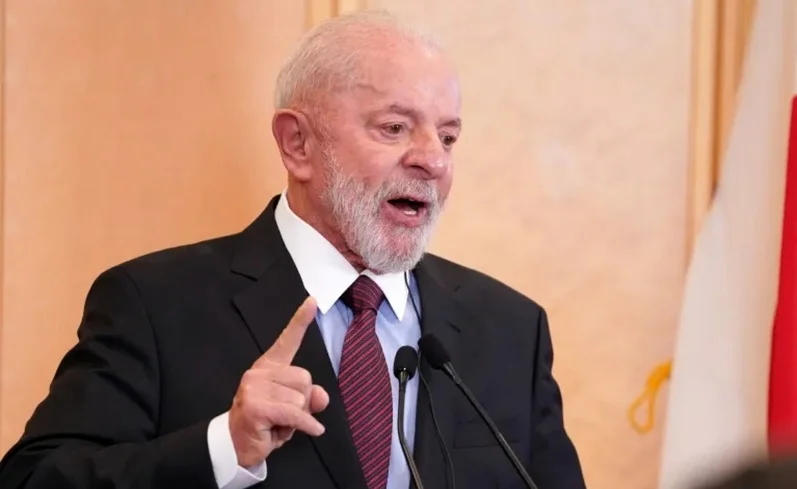
NEW DELHI — Brazilian President Luiz Inácio Lula da Silva pressed for immediate changes to the UN Security Council on Saturday. Speaking alongside Indian Prime Minister Narendra Modi, Lula argued the body must expand to include nations like Brazil and India.
Lula arrived in India on Wednesday for a five-day state visit. He and Modi covered trade, minerals, investments, defense, multilateralism and global governance. Their talks highlighted shared priorities between the two emerging powers.
“We reaffirm our commitment to reforming the United Nations, particularly the Security Council, so that it represents the interests of the Global South, of which Brazil and India are natural candidates,” Lula said at the press conference, according to statements from his office.
The Brazilian leader pointed to the G4 group—Brazil, India, Japan and Germany—which formed 20 years ago to push for Security Council expansion. All four nations seek permanent seats. Lula stressed their development levels match those of the current five permanent members: the United States, Russia, China, France and Britain.
“Expanding the membership of the Security Council, both permanent and non-permanent, including Brazil and India, is essential for the legitimacy and effectiveness of global governance,” he added.
Foreign ministers from the G4 nations met last on the sidelines of the Munich Security Conference. They renewed calls for reform and pledged mutual support for each other’s bids.
Brazil and India have long championed UN changes. Both view the Security Council’s structure—unchanged since 1945—as outdated. Permanent members hold veto power, often blocking action on global crises. Lula’s remarks echo years of frustration from the Global South over limited influence.
The visit builds on strong bilateral ties. Brazil and India boosted trade to $15 billion last year, officials said. Defense cooperation includes joint exercises and technology sharing. Lula’s trip also features business deals in renewable energy and agriculture.
Modi welcomed Lula’s UN stance. Indian officials described the talks as productive, with agreements on digital payments and space exploration. The leaders signed pacts worth $5 billion in investments, according to Brazil’s foreign ministry.
UN reform efforts face steep hurdles. Permanent members show little appetite for dilution of their privileges. Recent vetoes on Gaza and Ukraine resolutions have fueled demands for change. The G4 proposal calls for six new permanent seats and four additional non-permanent ones, with no veto for newcomers.
Lula wrapped up the press event by urging faster action. “The world has changed since 1945,” he said. “The UN must change too.” His words drew applause from Indian journalists present.
As Lula’s visit continues, eyes turn to a possible joint statement on UN reform. Brazil hosts the next G20 summit in 2024, where the issue could gain traction among developing nations.



Comments
No comments yet
Be the first to share your thoughts