

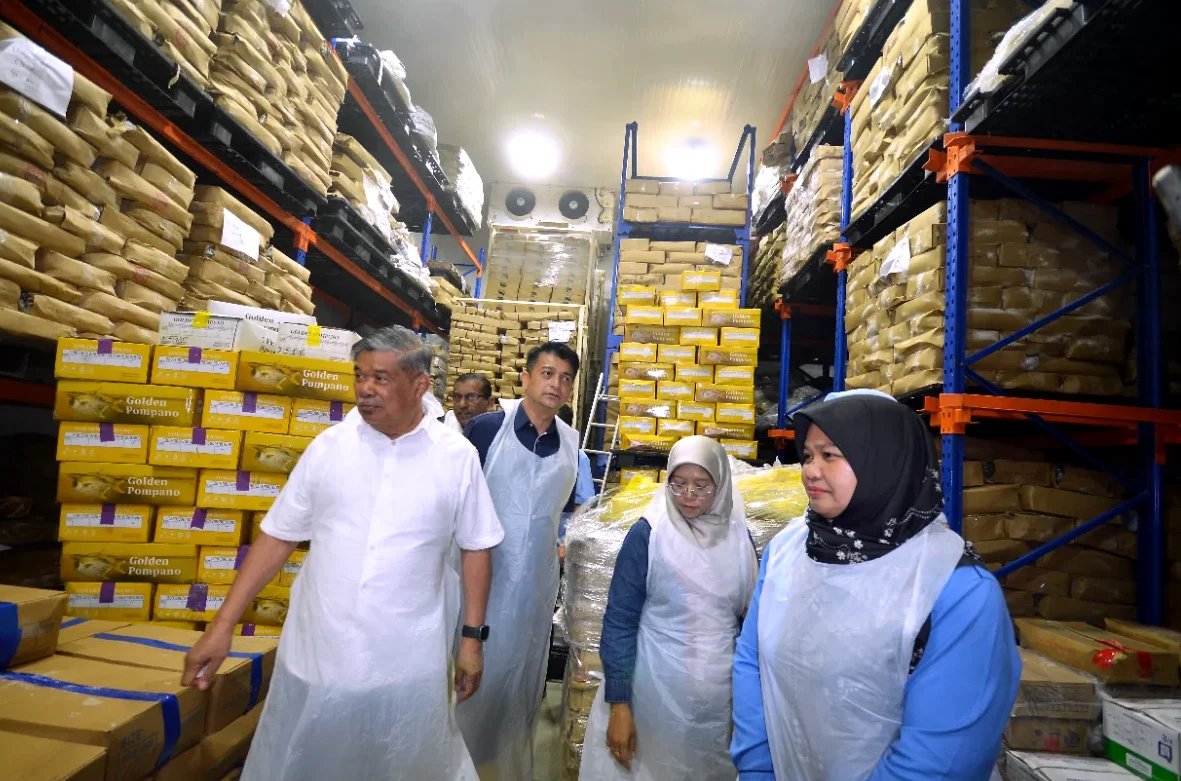
JERTIH — A new fisheries hub on Malaysia’s east coast has officially begun operations with the goal of stabilizing seafood prices and improving the livelihoods of local fishermen by shortening the supply chain. The Fish Collection, Processing, Storage and Distribution Hub (HPPPP), launched with a RM5.81 million investment, is designed to reduce dependence on middlemen and ensure more direct access to consumers.
Operational Since January, Focus on Surplus Management
Agriculture and Food Security Minister Datuk Seri Mohamad Sabu said the facility has been operational since January 2023. It includes a 300-metric-tonne cold room and blast freezer for large-scale storage and processing. The hub aims to provide systematic management of surplus catch, particularly during peak fishing seasons.
Mohamad described the HPPPP as a ‘shield’ for both fishermen and consumers, explaining that the system ensures excess seafood is preserved during periods of limited supply. This is especially crucial during the monsoon season, when the nation’s protein availability could otherwise be at risk.
Reducing Middlemen, Increasing Profit Margins
The minister emphasized that the goal is to allow fish to move directly from the processing complex to consumers. This approach is expected to reduce the influence of middlemen, who can suppress the prices paid to fishermen. ‘This hub will help ensure more stable fish prices and larger profit margins for fishermen,’ he said, adding that the initiative is part of the MADANI economy, which aims to deliver fairness to both producers and consumers.
In addition to the HPPPP, Mohamad also inaugurated a RM2.5 million ice plant for the Besut Area Fishermen’s Association (PNK). The new phase of the project increases daily ice production by 50 tonnes, bringing PNK Besut’s total daily capacity to 103 tonnes. This is crucial for maintaining the quality of the catch before nationwide distribution.
Tengku Harun Tengku Ismail, chairman of PNK Besut, noted that the hub should help address price drops during oversupply. He explained that fish volumes often surge after the monsoon season ends in March, forcing fishermen to sell at lower prices despite high retail costs. The HPPPP is expected to purchase excess catch, resolving the oversupply issue and stabilizing prices for both fishermen and consumers.
Tengku Harun said that approximately 1,000 fishermen under PNK Besut are actively fishing. The hub’s intervention is anticipated to ensure more stable income for them, especially during periods of high supply and low demand.
Broader Implications for the Fishing Industry
The new hub is part of a broader effort to modernize Malaysia’s fisheries sector and ensure sustainable practices. By reducing the role of intermediaries, the government hopes to increase transparency and efficiency in the supply chain. This could have a ripple effect on the broader seafood market, potentially leading to more competitive pricing and better access to fresh seafood for consumers across the country.
Experts say the success of the HPPPP will depend on how effectively it can manage surplus catch and coordinate with local fishermen. If the model proves successful, similar hubs could be established in other coastal regions to address regional supply and demand imbalances.
The hub is also expected to play a key role in maintaining food security, particularly in regions where seafood is a primary source of protein. With the population growing and demand for seafood increasing, the ability to manage supply fluctuations will be crucial in the coming years.
As the project moves forward, officials have set a target to evaluate its impact within the next year, with potential expansions or adjustments based on the results. The government has also pledged to continue investing in infrastructure and technology to support the long-term sustainability of the fishing industry.






Comments
No comments yet
Be the first to share your thoughts