

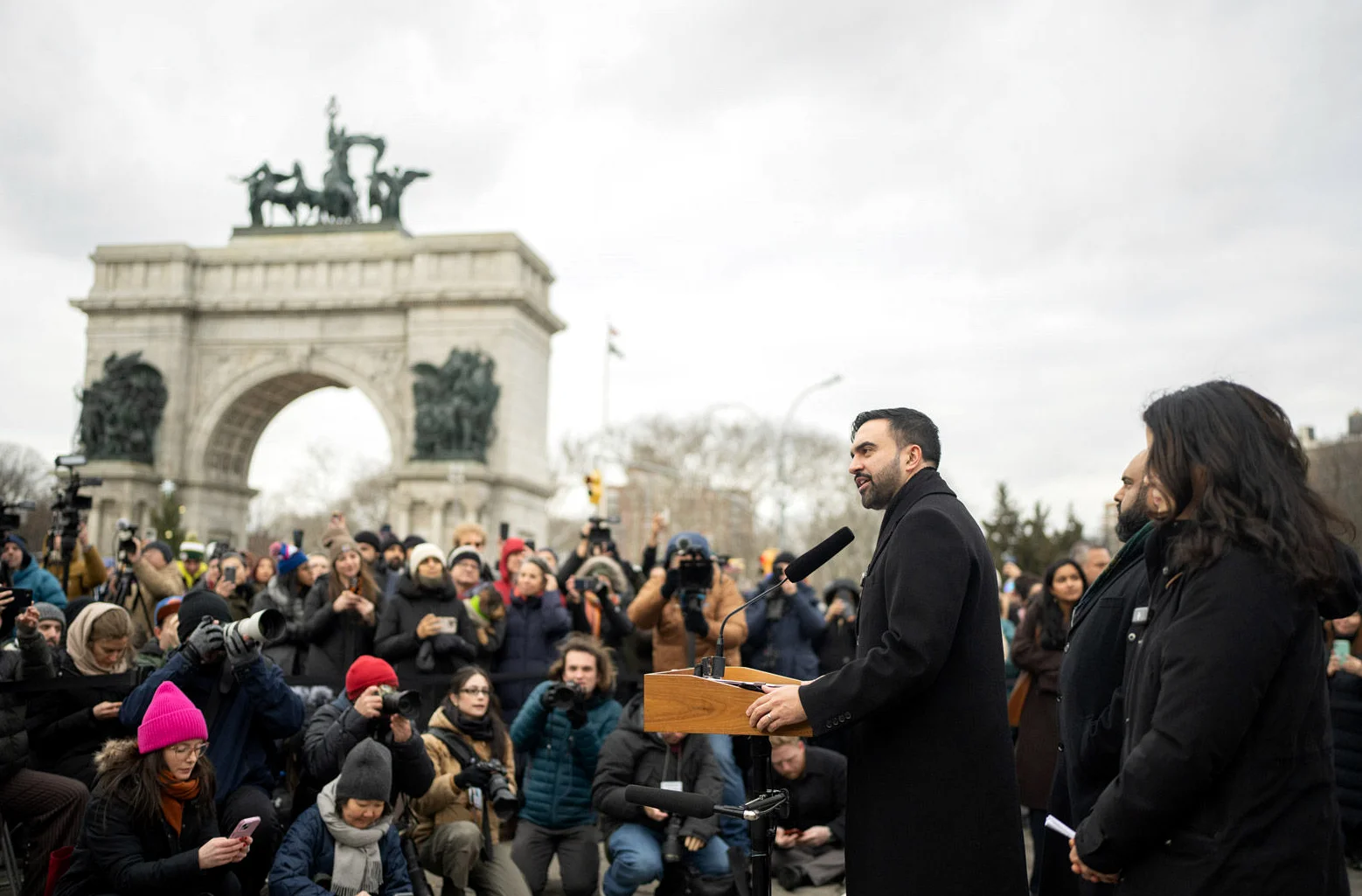
Mayor Zohran Kwame Mamdani released a detailed statement on Thursday addressing the One-House Budget Resolutions proposed by the New York State Assembly and Senate. The mayor acknowledged the legislature’s efforts to address the city’s fiscal challenges but emphasized the need for policies that do not disproportionately burden working-class New Yorkers.
Focus on Equity in Fiscal Policy
Mamdani stated that both the legislature and the city agree that the burden of closing the budget deficit should not fall on working-class residents. According to the mayor, the Assembly and Senate One-House Budgets have recognized the scale of the fiscal crisis facing New York City, and he expressed appreciation for the steps taken by legislative leaders.
“I’m grateful that the Assembly and Senate One-House Budgets recognize the scale of the fiscal crisis facing New York City,” Mamdani said in the statement. “I want to thank Speaker Heastie, Leader Stewart-Cousins and the Assembly and Senate Democratic conferences for having taken meaningful steps toward closing the deficit we inherited.”
The mayor highlighted efforts to ask more from the wealthiest New Yorkers and to create a fairer balance in the city’s fiscal relationship with the state. These measures, he said, are essential to addressing the city’s financial challenges without overburdening the middle and lower classes.
Transportation and Child Care Priorities
Mamdani also praised the extension of the fare-free bus pilot program in both One-House budget proposals. He noted that one in five New Yorkers struggle to afford public transportation, making it essential to build a transit system that is accessible to all.
“As one in five New Yorkers struggle to pay for public transportation, it is essential we take bold action and build a transit system all New Yorkers can afford,” the mayor stated. He emphasized the importance of this initiative in addressing the city’s affordability crisis.
Additionally, Mamdani thanked Governor Kathy Hochul and the State legislature for their support in advancing universal child care. He acknowledged the state’s role in this effort but noted that mayoral control has been critical to launching the 2-K program and addressing issues with the 3-K initiative.
“The State’s support has also been integral to advancing universal child care, and I deeply appreciate Governor Hochul and the State legislature’s partnership to that end,” Mamdani said. “However, we would not have been able to launch 2-K or begin to fix the issues plaguing 3-K without mayoral control.”
Mayoral Control and Future Collaboration
The mayor reiterated the importance of mayoral control in delivering the city’s affordability agenda. He expressed hope for continued collaboration with state leaders to secure the extension of this control, which he said is vital to addressing the city’s financial and social needs.
“Mayoral control is key to delivering our affordability agenda, and I look forward to continuing to work with leaders in Albany to secure its extension,” Mamdani said.
He also highlighted New York City’s role as the economic engine of the state, stating that restoring the city’s fiscal health is an investment in the state’s overall economic well-being. Mamdani expressed optimism about the relationship between the city and state leaders and pledged to continue reviewing their proposals.
“New York City is the economic engine of our state — restoring our city’s fiscal health is an investment in the state’s economic wellbeing,” the mayor said. “I am encouraged and heartened by the relationship that we have built with Governor Hochul and the State legislature, and I look forward to continuing to review their proposals and build upon the work we have done together throughout this budget process.”
Analysts have noted that the One-House Budget proposals represent a significant step in addressing the state’s fiscal challenges, though they are not without controversy. The proposals include measures to increase taxes on high-income earners and to expand access to public services, reflecting a broader push for economic equity.
According to recent data, New York City’s budget deficit is projected to reach $15 billion this year, with the state contributing a significant portion of the funding needed to close the gap. The mayor’s statement highlights the ongoing negotiations between the city and state over how best to distribute the financial burden.
As the budget process continues, both the mayor and state leaders face the challenge of balancing fiscal responsibility with the need to support the city’s most vulnerable residents. With upcoming negotiations and deadlines, the final shape of the budget could have far-reaching implications for public services, transportation, and economic development in the coming years.






Comments
No comments yet
Be the first to share your thoughts