

The Meghalaya government has postponed the Garo Hills Autonomous District Council (GHADC) elections after violent clashes in West Garo Hills left two people dead in police firing. Curfew has been imposed, and Army columns have been deployed to restore order.
Impact on Elections and Law and Order
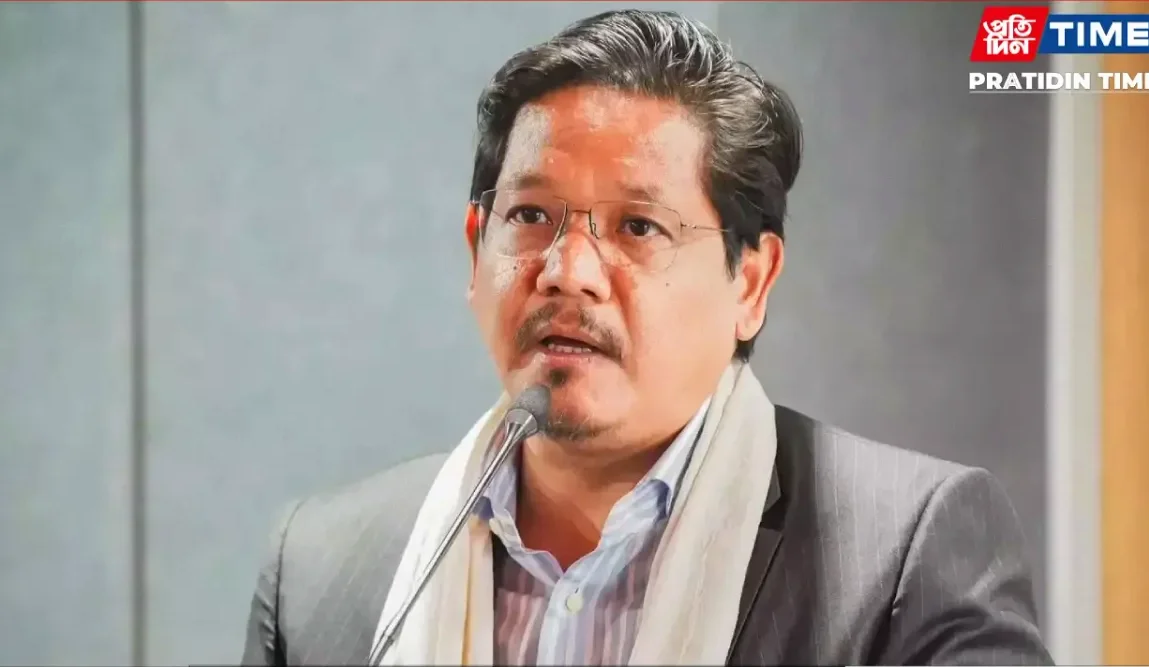
The decision to postpone the GHADC elections comes in the wake of escalating tensions over the participation of non-tribal candidates in the polls. Chief Minister Conrad Sangma made a public appeal on Wednesday, urging residents of Meghalaya, especially in the Garo Hills region, to maintain peace as the situation remains volatile.
Violence erupted during the nomination process for the GHADC elections, with tribal and non-tribal groups clashing over the issue of representation. The clashes reached a peak on Tuesday, when police opened fire in Chibinang, resulting in the death of two youths. The incident intensified unrest across the district and forced authorities to take immediate action.
In a social media post, Sangma stated that the government has decided to cancel or postpone the GHADC elections due to the prevailing law and order concerns. He emphasized the need for calm and urged citizens to support efforts to restore normalcy in the region.
“At this critical juncture, I appeal to all our citizens of Meghalaya, especially Garo Hills, to maintain peace and law and order. Based on the prevailing situation, the Government has decided to cancel / postpone the elections to the GHADC,” Sangma said.
Security Measures and Army Deployment
Authorities have taken significant steps to stabilize the situation in West Garo Hills. Five Army columns have been deployed across the region, with three stationed in Tura, the divisional headquarters, and two in Chibinang, where the police firing occurred.
Security forces, including the Rapid Action Force (RAF) and additional state police units, have been placed at vulnerable locations to prevent further escalation. The deployment of military personnel highlights the gravity of the situation and the government’s commitment to ensuring public safety.
Officials confirmed that the curfew has been imposed in several areas, and movement restrictions are in place to prevent further unrest. The situation remains tense, with no immediate signs of de-escalation.
Political and Social Context
The violence in West Garo Hills is not an isolated incident. Tensions over the inclusion of non-tribal candidates in the GHADC elections have been brewing for some time. The Garo Hills, a region with a distinct tribal identity, has historically resisted non-tribal participation in local governance.
Similar incidents of unrest have occurred in the past, particularly during the 2013 GHADC elections, when clashes between tribal and non-tribal groups led to widespread protests and a temporary suspension of polling. This history adds to the current concerns over the legitimacy and peaceful conduct of the elections.
Analysts suggest that the core of the conflict lies in the fear of cultural erosion and loss of autonomy among the Garo community. The participation of non-tribal candidates in the elections is viewed by some as a threat to traditional governance structures and local customs.
“The issue is deeply rooted in the historical and political dynamics of the region. The Garo Hills have long been a stronghold of tribal identity, and any perceived encroachment on that identity is met with resistance,” said Dr. Anil Das, a political scientist from North Eastern Hill University.
What’s Next for the Region
The government has announced plans to convene a meeting with political parties and stakeholders to address the underlying issues surrounding the GHADC elections. The aim is to reach a consensus-based solution that ensures the elections are conducted in a peaceful and inclusive manner.
Sangma has indicated that the government is committed to finding a resolution that respects the rights and concerns of all communities in the region. However, the timeline for rescheduling the elections remains unclear, with no official date set for the next round of voting.
Meanwhile, the focus remains on restoring peace and stability in West Garo Hills. The deployment of Army and police forces continues, with authorities working closely with local leaders to de-escalate tensions and prevent further violence.
The situation has significant implications for the region’s political landscape and the broader discourse on tribal autonomy in India. The outcome of the government’s efforts will be closely watched by both local and national observers.
As the situation unfolds, the people of Meghalaya remain on edge, hoping for a swift resolution that will allow the elections to proceed without further disruption. The events in West Garo Hills serve as a stark reminder of the delicate balance between tradition, representation, and governance in the region.






Comments
No comments yet
Be the first to share your thoughts