

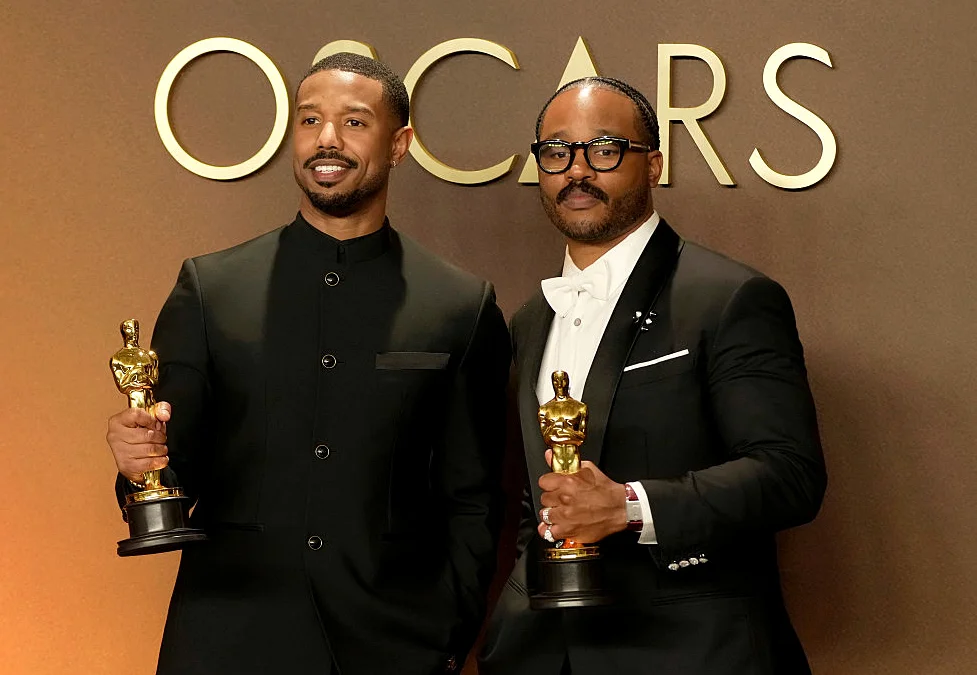
Michael B. Jordan’s historic Oscar win for Best Actor, along with the Academy’s controversial choices, sparked intense conversation during a post-Oscars edition of The Black Watch, a popular editorial series hosted by BOSSIP and Cassius. The panel, featuring BOSSIP’s Managing Editor Dani Canada and other entertainment industry professionals, dissected the 98th Academy Awards, highlighting both the triumphs and the glaring omissions in the ceremony.
Michael B. Jordan’s Triumph and Legacy
One of the most celebrated moments of the evening was Michael B. Jordan’s Oscar win, which marked a significant milestone for Black actors in Hollywood. Jordan, who portrayed twin brothers in the film Sinners, delivered a heartfelt acceptance speech that paid homage to legendary Black actors such as Denzel Washington and Jamie Foxx. According to Dani Canada, the speech reflected Jordan’s humility and reverence for those who paved the way for him in the industry.
“I love the reverence that Michael B. Jordan gave to the people who won in that category before him,” Canada said. “He was just paying homage to the people who paved the way. It really speaks to his humility.”
Jake Edwards, a member of the panel, emphasized the unique challenges Jordan faced in his role, noting that he had to “literally work twice as hard to get just as far as the rest of the people on that stage.” His performance, which required him to embody two distinct characters, was a testament to his dedication and range as an actor.
Ryan Coogler’s Oscar Win and Delroy Lindo’s Snub
Ryan Coogler, the director of Sinners, won the Oscar for Best Screenplay, a moment that the panel praised for its authenticity and gratitude. His acceptance speech, which included a heartfelt thank you to his wife, Zinzi, and showcased his unmistakable Oakland accent, was a standout moment of the night. “He thanked his wife and said every day with her is better than the last. I was like, ‘Oh my God. Black love, romance. I love it all,'” said Canada.
However, the panel was less enthusiastic about the Academy’s decision to award the Best Supporting Actor Oscar to Sean Penn over Delroy Lindo. Lindo’s performance in The Last Day was widely praised by critics and fans, but he was left without a statue. Alvin Blanco, a panel member, called the decision “heinous,” stating that “nowhere in this world is that feasible.” Tanya Hoffler-Moore, another panelist, admitted that she was “done with the show after Delroy didn’t win.”
The disappointment over Lindo’s snub was echoed by others in the entertainment industry, with many questioning the Academy’s criteria for awarding such roles. The panel also criticized the Best Picture win for One Battle After Another, which Jake Edwards described as a troubling pattern in Hollywood, suggesting that the film’s win may have reinforced the idea that only certain Black stories are recognized.
Other Disappointments and Show-Stopping Moments
Another notable snub came from Ruth E. Carter, the legendary costume designer for Sinners, who became the most-nominated Black woman in Oscar history but ultimately lost to Kate Hawley for Frankenstein. Dani Canada, who is personally connected to Carter, called the decision a personal disappointment, saying, “My biggest snub of the night, and I’m biased because she’s my Hampton sister and my sorority sister, was Ruth E. Carter. I just knew she had it in the bag.”
Despite the disappointments, the evening had its share of memorable moments. Misty Copeland, the first Black principal dancer in the American Ballet Theatre, made a stunning appearance during the performance of Sinners, drawing praise from the panel. Shamika Sanders, a panel member, described the moment as “incredible” and a “reminder about the great arts and the disciplines that were snubbed recently.”
The ceremony also featured lighter moments, including the reunion of the Bridesmaids cast and Sterling K. Brown’s Casablanca-themed performance. However, these moments were often overshadowed by the broader conversations about representation and recognition in Hollywood.
Tanya Hoffler-Moore expressed frustration that in 2026, she could only name a handful of Black actors who had won Oscars before her. “I shouldn’t be able in 2026 to name five Black actors who won before me, and that’s it,” she said. “We’ve been killing it in the area of cinema for so long. And it just goes to show you that even in 2026, in today’s America, it’s still not enough.”
The panel emphasized the need for greater representation and recognition in the film industry. “We need more of our creatives winning so it doesn’t have to be a topic of conversation every year,” said Hoffler-Moore. The discussion underscored the ongoing challenges faced by Black artists in Hollywood, despite their significant contributions to the industry.
The Black Watch episode provided a platform for these conversations, highlighting the importance of addressing these issues in the broader context of the film industry. As the Academy Awards continue to shape the narrative of cinema, the panel’s insights offer a critical perspective on the state of representation and recognition in Hollywood.






Comments
No comments yet
Be the first to share your thoughts