

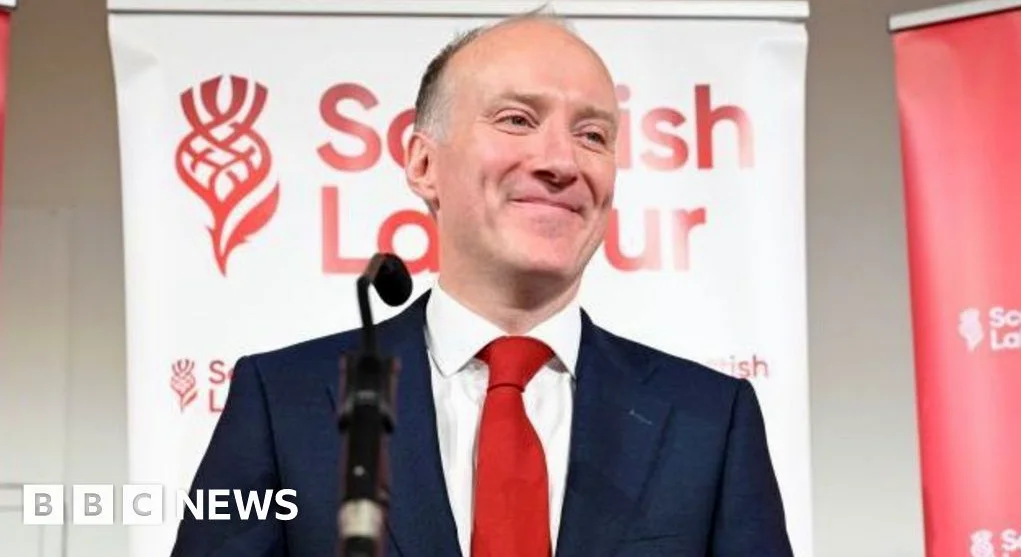
Michael Marra has been elected as the new leader of the Scottish Labour Party, taking over from Anas Sarwar, who left Holyrood to join Andy Burnham’s government in the UK. In his acceptance speech, Marra emphasized the need to reconnect with Scottish voters and outlined a vision rooted in social justice and public service reform — he also acknowledged the challenges ahead, noting that Labour must clearly define its values to compete with the SNP and Reform UK.
A New Leader for a Fractured Party
Marra’s election comes after a historically poor performance for Labour in the 2026 Scottish Parliament election, the party secured just 17 seats, making it the joint second-largest party at Holyrood alongside Reform UK. This marked a significant decline from previous elections and highlighted the party’s struggle to connect with voters. Marra’s predecessor, Anas Sarwar, had set his sights on becoming First Minister but fell short, a result that he attributed to a lack of voter confidence in Labour’s ability to offer a clear alternative to the SNP.
Marra, who has served in the Scottish Parliament since 2021, has a background in education and finance policy; he previously worked for Dundee University and was elected to the Scottish Parliament to represent the North East region. His sister, Jenny Marra, was also an MSP for the same area before stepping down in 2026. Marra has described his leadership as an opportunity to rebuild the party from the ground up, focusing on community engagement and policy-driven change rather than political attacks.
Key Policy Priorities and Challenges
In outlining his vision, Marra has expressed support for energy projects like the Rosebank oilfield and Jackdaw gasfield, arguing they provide cleaner energy sources than imports while also supporting jobs in Scotland. This stance contrasts with the SNP’s stronger focus on green energy initiatives, including a recent budget announcement that will expand benefits for large families and increase investment in renewable energy. The Scottish government has committed 4.9 billion pounds to tackle the climate crisis, including tripling investment in offshore wind energy and improving energy efficiency.
Marra’s leadership will be tested by the need to balance these competing priorities. While he has positioned himself as a pragmatic leader open to both traditional and green energy projects, he must also address the growing demand for social welfare reforms. The Scottish government’s decision to eliminate the two-child benefit cap, which affects 15,000 children in Scotland, will cost between 110 and 150 million pounds, though Marra will need to work with Holyrood to mitigate the financial impact of such policies while maintaining Labour’s appeal to working-class voters.
Electoral Realities and Future Prospects
Marra faces a difficult political field. The 2026 Holyrood election saw the SNP retain power with 64 seats, leaving Labour with 17 seats and trailing far behind, Reform UK, which won the same number of seats, has become a more prominent political force in Scotland. Marra’s leadership campaign received 6,751 votes from Scottish Labour members, with 4,266 votes supporting him and 2,485 for his main rival, Joe Fagan; this margin reflects the party’s internal divisions and the urgency for a clear, unified message.
Marra has also faced criticism for his stance on Scottish independence; During the leadership campaign, both he and Fagan struggled to outline a clear position on a potential second independence referendum. This lack of clarity has left Labour vulnerable to criticism from both the SNP and Reform UK, Marra’s ability to articulate a coherent vision for Scotland’s future—whether within the UK or with greater autonomy,will be a key factor in his success.
With the support of Andy Burnham’s Labour government in Westminster, Marra aims to rebuild the party’s credibility in Scotland — However, the path ahead is uncertain, and the challenges facing the new leader are significant. As one pollster noted, Marra will need to address deep-seated voter disillusionment, re-engage with trade unions, and provide a clear alternative to the SNP’s dominance in Holyrood.






Comments
No comments yet
Be the first to share your thoughts