

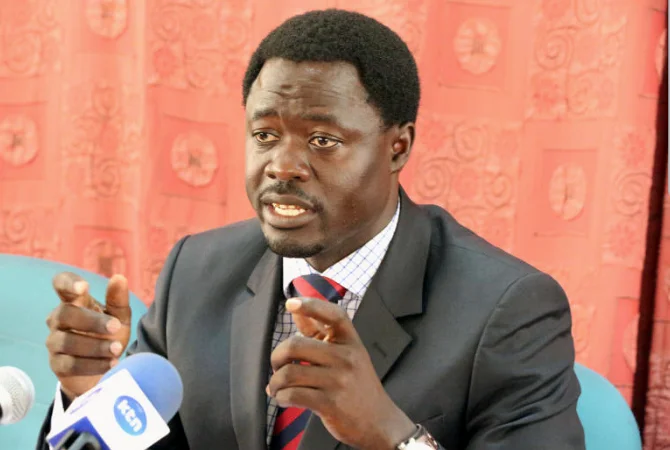
Homa Bay Town MP Peter Kaluma has called for the Orange Democratic Movement (ODM) to secure more than half of the Cabinet positions if it enters into a political agreement with the United Democratic Alliance (UDA) ahead of the 2027 General Election. Kaluma, a prominent ODM legislator, made the remarks during an interview with NTV, emphasizing that the party should be allocated a larger share of government positions based on its national support base and political strength.
Demographics and Cabinet Representation
Kaluma argued that ODM, which has historically been one of Kenya’s leading political parties, should be allocated more than 15 Cabinet slots in any power-sharing arrangement with UDA. He said that if the allocation is based on the current demographics, ODM would be justified in demanding a larger share of government positions.
Kenya’s Constitution allows for a maximum of 22 Cabinet Secretaries. Under Kaluma’s proposal, ODM would hold more than half of these positions, with UDA and its coalition partners under the Kenya Kwanza Alliance sharing the remaining slots. This would effectively mean that ODM would dominate the Cabinet in any formal coalition government.
“If we were to go with the current demographics, we should actually have more than 15 Cabinet slots,” Kaluma said. “I would be very happy with 50 positions.”
Kaluma emphasized that ODM would not oppose a negotiated arrangement, provided that it reflects the country’s true political and demographic realities. He said the party is ready to engage in coalition talks, but only if the distribution of power aligns with the actual political landscape.
Pre-Election Negotiations and Political Realities
The anticipated negotiations between ODM and UDA come as Kenya’s political landscape begins to take shape ahead of the 2027 General Election. Political analysts have noted that the current climate is marked by shifting alliances and emerging political interests, with several parties vying for influence in the next electoral cycle.
According to Kaluma, the talks are expected to explore possible areas of cooperation, coalition arrangements, and strategies that could redefine alliances in the coming political cycle. He said the discussions would likely include determining a joint presidential candidate, a key factor in any coalition agreement.
“When parties are negotiating a pre-election deal, each outfit first nominates their own presidential candidates,” Kaluma explained. “Then you go for negotiations and settle on the candidate for the coalition.”
He added that ODM would still follow its internal constitutional procedures in presenting a presidential candidate before engaging in coalition negotiations. Kaluma emphasized that the party has a candidate who would represent ODM in the initial stages of coalition discussions.
“Dr Oburu Oginga, our party leader, is our presidential candidate as we speak,” Kaluma said. However, he noted that the process of negotiations could eventually lead to a compromise candidate agreed upon by coalition partners.
“So when you go to negotiation and agree on a candidate, even if he is not from ODM, then he becomes our presidential candidate,” Kaluma added. This highlights the flexibility ODM is willing to show in its negotiations, provided that the final arrangement is in line with the party’s strategic interests.
Implications for Kenya’s Political Future
The anticipated negotiations between ODM and UDA come at a time when political leaders are repositioning themselves amid shifting alliances and emerging political interests. The talks are expected to have significant implications for Kenya’s political future, particularly in terms of power distribution and governance in the next electoral cycle.
Political analysts have suggested that the current climate is reminiscent of previous pre-election negotiations, such as those that took place ahead of the 2013 and 2017 General Elections. These negotiations often involved complex power-sharing arrangements and were critical in determining the eventual composition of the government.
Experts believe that the outcome of the current talks could redefine the political landscape in Kenya, potentially leading to a more stable and inclusive government if the negotiations are handled transparently and in the national interest.
According to Kaluma, the negotiations are still in their early stages, and the exact terms of any agreement have yet to be finalized. However, he has made it clear that ODM is prepared to engage in talks that reflect the country’s true political and demographic realities.
The coming months are expected to be crucial for Kenya’s political landscape, with the 2027 General Election approaching. The success of the negotiations between ODM and UDA will be a key factor in determining the shape of the next government and the direction of the country’s policies in the years to come.






Comments
No comments yet
Be the first to share your thoughts