

 BBC
BBC 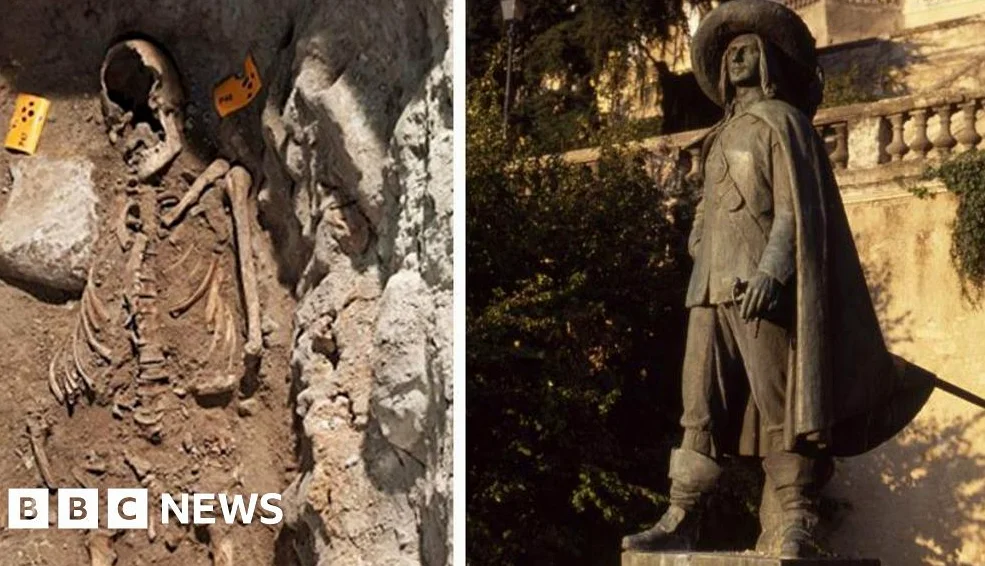
More than 350 years after the death of d’Artagnan, a skeleton has been found under the floor of St Peter and Paul Church in Maastricht. Jos Valke. A deacon at the church. Is 99% certain the remains belong to Charles de Batz de Castelmore, a close aide to Louis XIV who was known as Count d’Artagnan — the discovery comes after centuries of speculation about where the famous musketeer was buried.
Historical Context and the Discovery
D’Artagnan was killed during the Siege of Maastricht in 1673, an event that marked a significant moment in European military history — his story later became immortalized in the adventure novels of Alexandre Dumas, where he is depicted as a loyal friend of the Three Musketeers. Despite the popularity of the fictionalized version of his life, little was known about the actual burial location of the real d’Artagnan.
The remains were discovered under the church floor when a few tiles had been broken; Deacon Valke, who has long believed that d’Artagnan was buried beneath the church, decided to investigate further. An archaeologist was called in. And the skeleton was found beneath where the altar table had once stood 200 years ago.
Valke described the moment of discovery as a quiet one, saying, ‘We became quite silent when we found the first bone.’ He pointed to several pieces of evidence that suggest the skeleton is indeed that of d’Artagnan. These include a bullet that may have caused his death, a coin from 1660, and the location of the burial on sacred ground.
The Scientific Verification Process
Despite the strong evidence, the archaeologist involved in the excavation, Wim Dijkman, remains cautious. He said. ‘I’m a scientist. But my expectations are high.’ Dijkman has spent 28 years researching d’Artagnan’s possible burial site and sees this discovery as the highlight of his career.
A sample from the remains has been sent to Germany for DNA analysis, while some of the bones have been taken to Deventer to determine the skeleton’s age, origin, and gender. This scientific verification is central in confirming the identity of the remains, as Dijkman prefers to wait for conclusive results before making any final claims.
D’Artagnan was believed to have been killed in the throat by a musket ball during the siege. The French army decided to bury him locally because it was mid-summer, and their camp was set up near the church in the Wolder area, now in the south-west corner of Maastricht.
Significance of the Discovery
The discovery of what may be d’Artagnan’s remains is significant not only for historians and archaeologists but also for the general public. It provides a tangible connection to one of the most famous figures of European history, whose life has been immortalized in literature and popular culture.
For the people of Maastricht, the discovery adds to the city’s rich historical legacy. The church, now a focal point of the community, may soon become a place of pilgrimage for those interested in the life and death of the legendary musketeer.
Experts say that the discovery could also lead to a renewed interest in the history of the 17th century and the Siege of Maastricht. The event, which took place in 1673, was a turning point in the region’s military and political history.
The remains, if confirmed, would be the first physical evidence of d’Artagnan’s burial site. This could lead to further archaeological investigations in the area and provide new insights into the lives of people during the 17th century.
The discovery also highlights the importance of preserving historical sites and the role of local communities in uncovering the past. Deacon Valke’s long-standing belief in the church’s connection to d’Artagnan shows how personal dedication can lead to significant historical findings.
As the DNA analysis continues, the world waits to see if the remains will be confirmed as those of d’Artagnan. This could mark a new chapter in the study of European history and the legacy of one of its most iconic figures.






Comments
No comments yet
Be the first to share your thoughts