

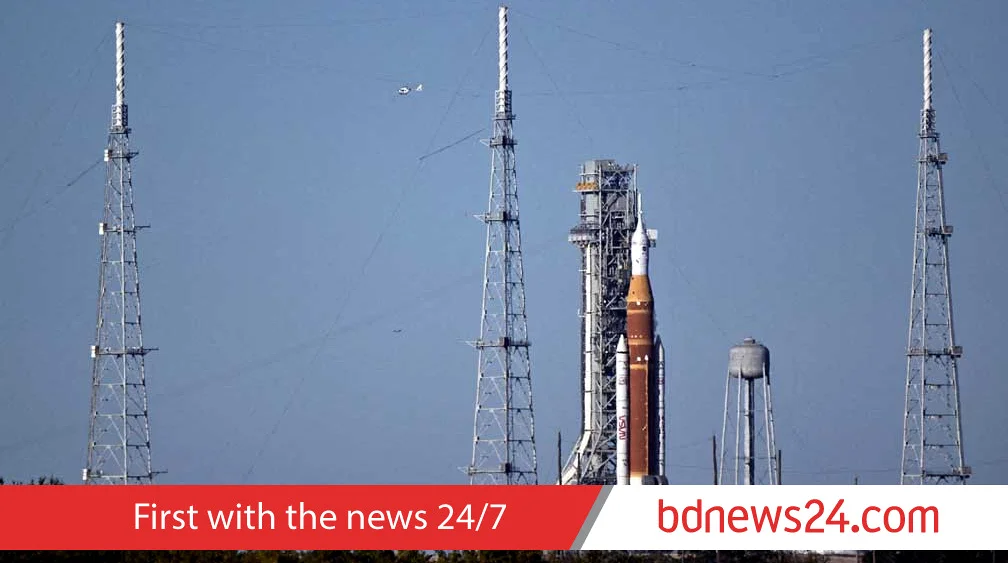
CAPE CANAVERAL, Fla. — NASA detected an interrupted flow of helium in the Space Launch System rocket’s interim cryogenic propulsion stage overnight, prompting plans to return the fully stacked Artemis II vehicle to the agency’s Vehicle Assembly Building at Kennedy Space Center.
The space agency confirmed the issue Saturday. Helium flow is essential to pressurize the rocket’s propulsion systems for launch. Technicians spotted the problem during final preparations for the crewed lunar flyby mission.
“This will almost assuredly impact the March launch window,” NASA stated in an update. The rollback process involves moving the 322-foot rocket from Launch Pad 39B back roughly four miles to the assembly facility for inspection and repairs.
Friday’s announcement came just days after NASA set a March 6 target date for liftoff. That schedule aimed to send four astronauts — Reid Wiseman, Victor Glover, Christina Koch and Jeremy Hansen — on a 10-day trip around the moon and back. Wiseman commands the mission, with Glover as pilot, Koch and Hansen serving as mission specialists.
The crew represents a milestone. Wiseman, Glover and Koch are NASA astronauts; Hansen is from the Canadian Space Agency. Artemis II marks the first crewed Orion flight and the farthest humans will travel from Earth since Apollo 17 in 1972. No Apollo astronauts orbited the moon; this mission will loop behind it, testing systems for future landings.
Engineers first stacked the core stage, solid rocket boosters and upper stage in November. The Orion capsule joined the stack last month. The helium anomaly surfaced during checks of the interim cryogenic propulsion stage, which uses liquid hydrogen and oxygen.
NASA officials did not specify a cause or timeline for fixes. Rollbacks are rare but not unprecedented. The agency performed a similar maneuver with the Artemis I rocket in 2022 to replace a faulty seal on a solid rocket booster.
Artemis II serves as a critical test before Artemis III. That follow-on mission eyes a crewed landing near the moon’s south pole in 2028, with SpaceX’s Starship as the lunar lander. Delays to Artemis II could ripple through the program, already pushed back from an initial 2025 target for the landing flight.
The astronauts completed final suit-ups and briefings earlier this week. Training wrapped up in Houston, with the crew arriving at Kennedy Space Center on Feb. 26. They had rehearsed emergency scenarios at the pad as recently as Thursday.
Kennedy Space Center teams now assess rollback logistics. The process requires crawler-transporter vehicles that move at under 1 mph. Weather in central Florida remains clear, but high winds or lightning could complicate the operation.
NASA emphasized safety remains paramount. “We are taking deliberate steps to ensure the vehicle is ready,” the agency said. Artemis II revives U.S. deep-space human exploration after more than five decades, building toward a sustained lunar presence and Mars ambitions.
Officials will provide updates as diagnostics progress. The March window closes soon; the next opportunity likely falls in April or later, depending on repair complexity.






Comments
No comments yet
Be the first to share your thoughts