

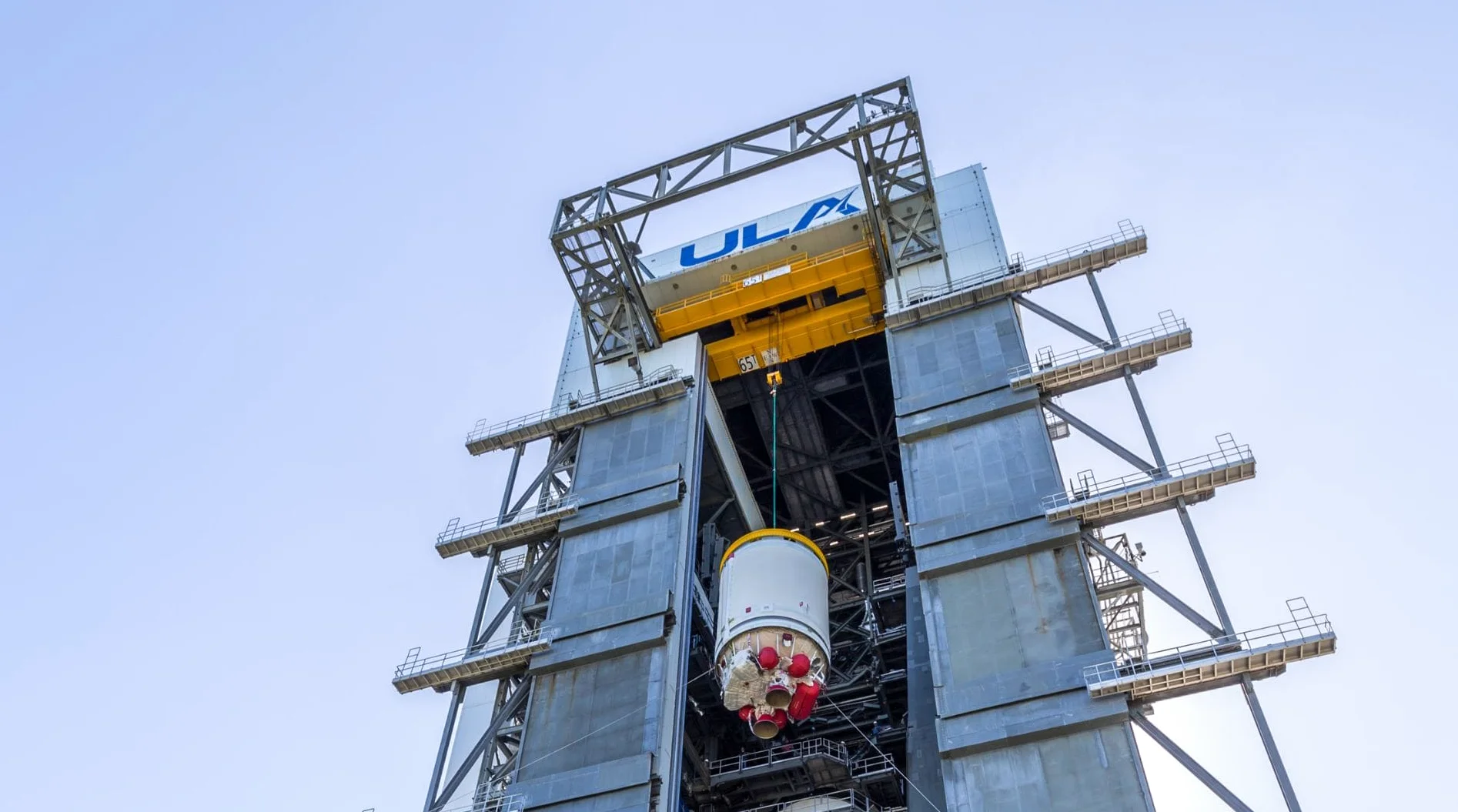
NASA has made a strategic shift in its Artemis lunar exploration program, selecting ULA’s Centaur V upper stage for the Space Launch System (SLS) rockets, abandoning a delayed and over-budget custom design in favor of a proven commercial solution. The decision, outlined in a procurement notice, marks a significant pivot in the agency’s approach to lunar missions.
Shifting Goals and Timelines
The Artemis program, aimed at returning humans to the Moon, has undergone a major revision. Originally targeting a crewed landing with Artemis III in 2028, NASA now plans to conduct the first crewed landing with Artemis IV, with Artemis V and VI also scheduled for the same year. This adjustment reflects a broader strategy to maintain a sustained human presence on the lunar surface.
NASA Associate Administrator Amit Kshatriya emphasized the need for consistency in the mission architecture. ‘We want to fly the landing missions in as close to the same Earth ascent configuration as possible – this means using an upper stage and pad systems in as close to the ‘Block 1′ configuration as possible,’ Kshatriya said. This approach aims to reduce complexity and increase mission reliability.
Abandoning the Exploration Upper Stage
The decision to adopt the Centaur V upper stage comes after the cancellation of the Exploration Upper Stage (EUS), a custom-built upper stage originally developed by Boeing for the Block 1B configuration of the SLS rocket. The EUS, intended to be powered by four RL10 engines and larger fuel tanks, was designed to significantly expand the SLS’s payload capacity.
However, the EUS faced severe delays and cost overruns. According to internal reports, the project has seen little progress toward flight-ready hardware, with estimated costs far exceeding initial projections. NASA officials cited these challenges as the primary reason for abandoning the EUS in favor of a more reliable and cost-effective solution.
Instead of waiting for the EUS to reach flight readiness, NASA has opted for the Centaur V, which is already in use on ULA’s Vulcan Centaur rocket. This upper stage is powered by a single RL10 engine and has demonstrated reliability in previous launches. The Centaur V is a cryogenic stage, capable of delivering heavier payloads to higher orbits than the Interim Cryogenic Propulsion Stage (ICPS), which was used in earlier Artemis missions.
Strategic Implications and Forward Momentum
The shift to the Centaur V upper stage represents a pragmatic move by NASA to accelerate the Artemis program. By using existing commercial hardware, the agency can reduce development risks and costs, allowing for more frequent launches. This decision aligns with NASA’s broader strategy to rely more heavily on commercial partners like ULA and SpaceX for critical components of its lunar exploration efforts.
According to NASA’s procurement notice, the contract with ULA is a sole-source agreement, meaning no competitive bidding was required. This approach highlights the agency’s confidence in the Centaur V’s capabilities and its proven track record in spaceflight.
Industry analysts suggest that this move could also influence the development of future heavy-lift rockets. The Centaur V’s performance, while not as powerful as the EUS, is sufficient to support the Artemis IV and beyond missions, particularly as NASA aims to establish a sustained human presence on the Moon. The decision to use the Centaur V is expected to be finalized by the end of 2025, with the first launches of the modified SLS configuration slated for 2027.
The adoption of the Centaur V upper stage marks a clear departure from the earlier plan to develop a custom upper stage. It reflects NASA’s growing emphasis on collaboration with industry partners and the use of off-the-shelf technology to achieve mission objectives more efficiently. As the Artemis program moves forward, this decision is likely to shape the trajectory of lunar exploration for years to come.






Comments
No comments yet
Be the first to share your thoughts