

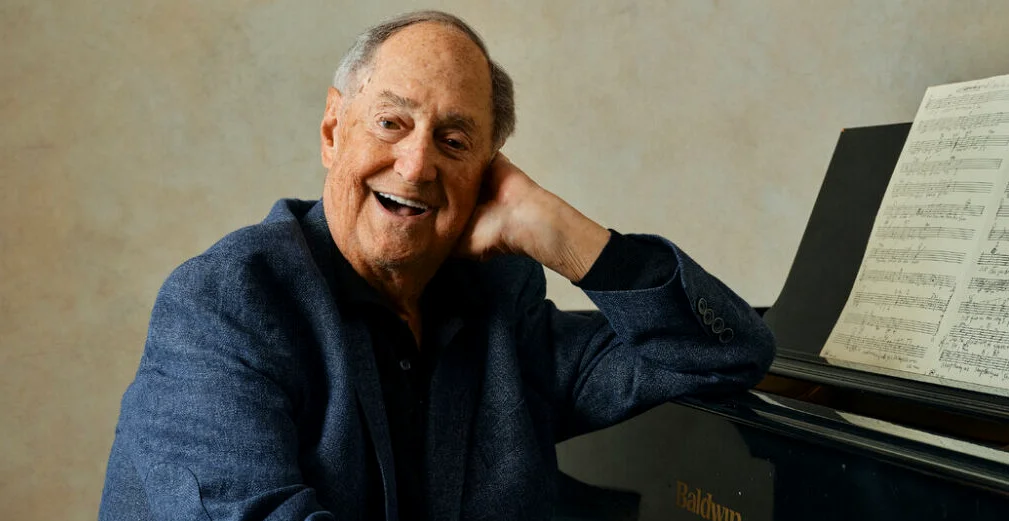
Neil Sedaka, the legendary singer-songwriter who captivated audiences with his teen-pop anthems and orchestrated a remarkable comeback in the 1970s, has died at the age of 86. His death marks the end of an era for fans of American pop music, whose careers and personal lives were shaped by his songs.
A Voice Between Eras
Sedaka defined a micro-era in American pop music, the brief period between the explosion of rock ‘n’ roll and the onset of the British Invasion. He was a teenager when he first recorded his hits, and he remained a relevant artist well into the 2010s, when he found audiences eager to hear once again the songs of adolescent love and middle-aged melancholy.
Working with his songwriting partner Howard Greenfield, Sedaka wrote and recorded teenage dreams, eschewing big backbeat for showbiz pizazz. They penned hits for Connie Francis, including “Stupid Cupid” and “Where the Boys Are,” and later wrote a clutch of bright, irrepressible songs for Sedaka as a singer: “Oh! Carol,” “Calendar Girl,” “Happy Birthday, Sweet Sixteen” and “Breaking Up Is Hard to Do.” The last of these, in particular, kept him at the top of the charts during the early days of the 1960s.
A Dramatic Comeback
After 10 long years in the wilderness, Sedaka resurfaced in England, where he collaborated with a group of professional pop merchants who would soon become known as 10cc. With these studio musicians, Sedaka recorded the original version of “Love Will Keep Us Together,” a song Captain & Tennille took to No. 1 in 1975, the same year his silky “Laughter in the Rain” did the same. It was one of the first dramatic comebacks in pop/rock history, one in which a seeming relic of an earlier era used his canny craftsmanship not only to return to the top of the charts, but to carve out an enduring third act as a performer.
“The comeback cemented his reputation as a pop songwriter and performer, allowing him to keep performing well into the 2010s,” said a music historian specializing in 20th-century pop culture.
The Essential Songbook
Sedaka’s essential songbook includes 14 tracks that defined his career. Among them is “The Diary,” written from the perspective of a lovesick teenager wondering if his crush writes his name in the pages of her journal. The music is suitably overwrought, pairing a swaying rhythm with a keening melody that sounds particularly pining when delivered in Sedaka’s adenoidal voice.
“Oh! Carol” is another standout, an exuberant declaration of love that feels as if the romance is a two-way street. Sedaka’s performance is so eager that it suggests the affection is mutual, even if it wasn’t.
“Stairway to Heaven” offers a busy orchestral arrangement filled with clever details like booming timpani acting as a bridge from chorus to verse. Sedaka is again pledging his love, this time to a girl he believes is as perfect as a heavenly angel. There’s not a hint of self-doubt here, no trace of adolescent angst: It’s the candied rush of a teenage crush.
“You Mean Everything to Me” is an unusually moody ballad from Sedaka, treating his overheated testament of devotion as a matter of grave importance. It’s a marked shift in tone from his earliest hits, and as the rhythm crawls along, he’s cradled by reverb and buoyed by strings.
“Calender Girl” sees Sedaka singing to a pinup, ticking off how his object of affection changes with the seasons. His good cheer, as evident in the bright beat as it is in the sunny melody, keeps the single’s spirits high, diluting any suggestion that he’s leering at a picture on the wall.
“Happy Birthday Sweet Sixteen” is an artifact of an era when much of pop music was directly targeted at teenagers. But heard through contemporary ears, the song may make a listener cringe: Sedaka tells the birthday girl, “Tonight’s the night I’ve waited for, because you’re not a baby anymore.”
His first single to top the Billboard charts, “Breaking Up Is Hard to Do” is also the definitive Sedaka song, the one where his showmanship is evident in its very construction. The doo-wop hook disguises the heartbreak at the core of the song, turning the tune into a rallying cry for giving fading love another try.
The British Invasion hit Sedaka harder than most, so it’s with no small degree of irony that he needed to head to Britain to mount a comeback. Envious of the makeover his friend Carole King had with “Mix,” he first took a stab at his own sepia-toned singer-songwriter album with “Emergence.” But he ultimately found the right collaborators when he teamed with Eric Stewart, Graham Gouldman, Lol Creme and Kevin Godley, a gang of British pop veterans who churned out clever bubble gum from their Strawberry Studios.
This quartet, who’d soon find fame as 10cc, applied their studio acumen to Sedaka’s new material. The irrepressible “That’s When the Music Takes Me,” the first of these collaborations, shows that 10cc didn’t try to give Sedaka a hip makeover. Instead, it dressed his essential enthusiasm in sharp sounds suited to AM radio.
“Solitaire” is perhaps the saddest ballad Sedaka ever wrote, about a brokenhearted man whose only solace is playing cards alone into the wee hours. It provided the center of — and the title — of the 1972 album Sedaka made with 10cc, but the singer didn’t take the song into the charts. Both Andy Williams and the Carpenters were attracted to its showstopping melancholy, bringing their iterations to radio right around the time Sedaka himself started having hits again.
“Love Will Keep Us Together” is another ’70s Sedaka original that became a standard in the hands of another artist. The song is a deft update of Sedaka’s patented Brill Building bounce, focusing on long-term love rather than teenage crushes. Co-produced with 10cc, Sedaka’s original retains the gangly quirks that Captain & Tennille ironed out of their smash hit cover, and in some ways his version is superior: His eagerness lends the song an endearing sincerity.
Sedaka’s British hits were big enough to earn the attention of Elton John, who signed the songwriter to Rocket, his newly established label. Rocket in turn gave Sedaka’s fortunes in the United States a boost, helping to send “Laughter in the Rain” to the top of the Billboard charts — the last time had been with “Breaking Up Is Hard to Do.” In its own way, “Laughter in the Rain” is as definitive as that earlier hit, epitomizing the gorgeous, glistening sound of ’70s soft rock.





Comments
No comments yet
Be the first to share your thoughts