

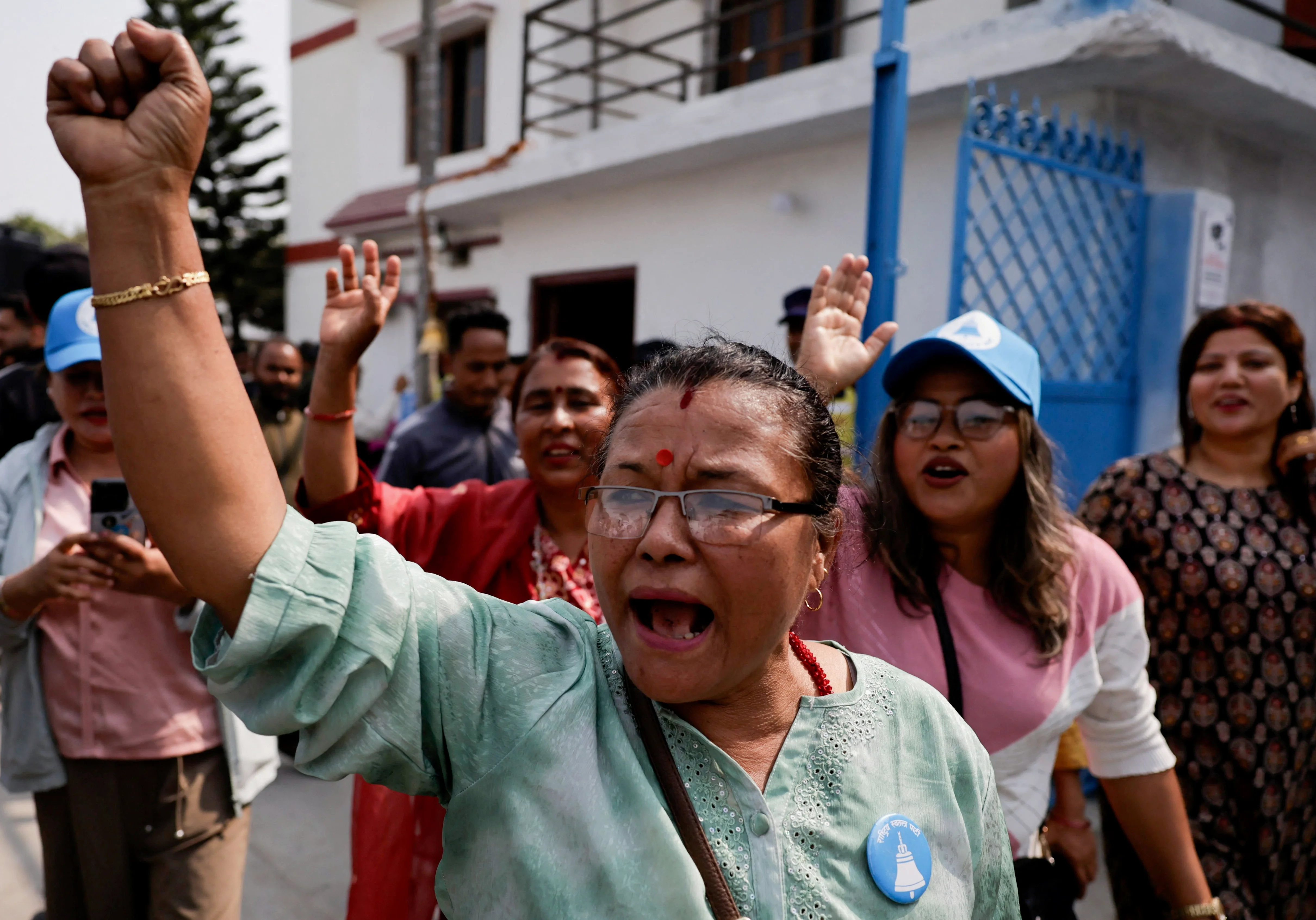
Nepal is preparing for a general election on March 2, 2024, a key moment that comes in the wake of mass protests that forced the resignation of Prime Minister K.P. Sharma Oli, a leader from the Communist Party of Nepal (Unified Marxist Leninist) or CPN (UML). This election follows a turbulent period marked by widespread public discontent, with citizens demanding an end to corruption and political infighting that has plagued the Himalayan nation for decades.
The Legacy of Political Fragmentation
Nepal’s political landscape has been defined by frequent changes in government, with 32 governments since 1990, none of which completed a full five-year term. This pattern of instability has roots in the nation’s transition from a constitutional monarchy to a republic, a process that began in the early 2000s.
In 1951, Nepal moved from monarchy to parliamentary democracy, but the system was suspended in 1960 when King Mahendra banned political parties. His son, King Birendra, ruled until 1990 when the country transitioned to a constitutional monarchy. Despite elections in 1991 and 1999, the ruling Nepali Congress, the country’s oldest political party, was unable to maintain power due to internal conflicts and factionalism.
A key moment came in 2001, when King Birendra and eight other royals were killed in a palace massacre by his son, Crown Prince Dipendra, who later committed suicide. The tragedy led to a shift in political power, with King Gyanendra taking control in 2005. However, his autocratic rule sparked mass protests and was overturned in 2006, paving the way for a national unity government led by the Nepali Congress.
The Transition to Republic and Continued Instability
In 2008, a special assembly dominated by former Maoist rebels, who had transitioned into mainstream politics following a peace deal, voted to abolish the 239-year-old monarchy. The Communist Party of Nepal (Maoist) faction, led by the former rebels, took power, but the shift to a republic did not bring the political stability many had hoped for.
Since then, Nepal has seen 15 changes in government, with power shifting between the former Maoist rebels’ party, the moderate Communist Party of Nepal (Unified Marxist Leninist), and the Nepali Congress. In 2015, a new constitution came into force after two constituent assemblies worked on the document for over seven years. However, this did not lead to stable governance, and instead, reinforced public apathy toward the political class.
The nation’s political elite, often seen as corrupt and out of touch with the struggles of ordinary citizens, has faced growing criticism. Nepal, one of the world’s poorest countries, has long struggled with poverty and inequality, issues that have been exacerbated by the political instability.
Recent Protests and the Path to Election
Last September, an online anti-corruption movement, led by young activists, erupted into mass street protests that forced the resignation of Prime Minister Oli. The protests were driven by public frustration over corruption, mismanagement, and the perceived inability of the political class to address the country’s deepening economic and social challenges.
Following Oli’s resignation, former Chief Justice Sushila Karki was appointed as interim leader to oversee the upcoming general election. Karki, a respected legal figure, has been tasked with ensuring a fair and transparent electoral process, a challenge given the country’s history of political manipulation and voter suppression.
The election is expected to be highly competitive, with multiple parties vying for power. The Nepali Congress, the Communist Party of Nepal (Unified Marxist Leninist), and the former Maoist rebels’ party are all expected to be strong contenders. Analysts suggest that the election could be a turning point for Nepal, offering an opportunity to break the cycle of instability and usher in a more stable political environment.
According to a recent report by the South Asian Institute for Policy Research, the last five years have seen a 40% increase in political protests across the country, with over 1.2 million citizens participating in demonstrations in 2023 alone. This level of public engagement is unprecedented in Nepal’s history and may signal a shift in the political landscape.
Experts say the election could also have significant implications for Nepal’s foreign relations, particularly with its neighbors in South Asia. With tensions rising over trade and border disputes, the outcome of the election may determine the direction of Nepal’s regional diplomacy.
As the election approaches, the focus remains on ensuring that the process is free from interference and that the will of the people is respected. With over 18 million eligible voters, the stakes are high, and the results could shape the future of Nepal for years to come.






Comments
No comments yet
Be the first to share your thoughts