

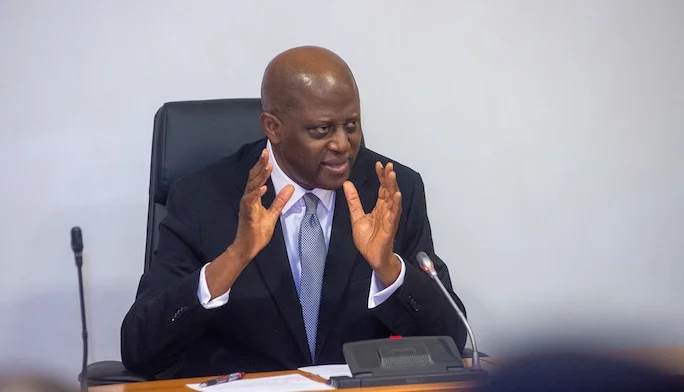
CAIRO — Olayemi Cardoso, governor of Nigeria’s Central Bank, called on African countries to industrialize, create jobs and build climate resilience while lifting millions out of poverty. He delivered the message in a keynote address at the Egypt 30by30 Programme, organized recently by the Central Bank of Egypt and the International Finance Corporation.
The initiative, Cardoso said, captures a continental vision for resilient, climate-aware economies. Africa must grow and expand opportunities, he added, but only through deliberate collaboration.
Nigeria’s central bank is working closely with the Central Bank of Egypt and World Bank Group partners, Cardoso noted. Their focus: developing resilient financial frameworks, advancing green finance and bolstering cross-border ties. Such efforts would help Africa not just survive global shocks but prosper amid economic shifts.
Resilience starts with credibility, Cardoso emphasized in the speech. Nigeria’s disciplined, transparent reforms have strengthened macroeconomic fundamentals and restored confidence in its financial system, he said. Those steps lay the foundation for lasting growth.
“To build resilient financial systems, we must anchor our economies on trustworthy institutions, credible policies, transparent markets, and risk-aware innovation,” Cardoso stated.
Climate risks carry direct financial consequences, he warned. They influence sovereign ratings, borrowing costs, inflation, food security, insurance availability and government budgets. Africa produces the least global emissions yet suffers some of the heaviest impacts from climate change, according to Cardoso.
Still, the continent holds vast potential. Cardoso pointed to Africa’s renewable energy resources, biodiversity riches, youthful population and fast-growing financial markets as key assets.
“To seize these opportunities, we must innovate for resilience, not as isolated nations, but as a continent,” he said. Collective action—transparent, committed and unified—can forge financial systems strong enough to endure shocks and drive prosperity for decades, Cardoso argued.
The speech highlighted Africa’s need for stability alongside sustainability. Central banks across the continent must prioritize both to secure a viable economic future, participants agreed.
Cardoso’s remarks come as African leaders grapple with overlapping crises: climate disasters, debt pressures and sluggish growth. Nigeria, Africa’s largest economy, has pursued reforms under President Bola Tinubu’s administration, including naira floatation and fuel subsidy cuts. Those measures have drawn mixed reviews but stabilized some indicators, officials said.
The 30by30 Programme aims to mobilize private finance for climate adaptation by 2030. Partners like the IFC see it as a model for scaling green investments in emerging markets. Cardoso’s involvement signals Nigeria’s interest in similar tools.
His push for industrialization echoes broader African Union goals. The continent’s Agenda 2063 envisions self-reliant growth through manufacturing and value-added sectors. Yet progress lags, with manufacturing accounting for under 10% of GDP in most nations, World Bank data shows.
Job creation remains urgent. Africa’s working-age population will double to 1.1 billion by 2040, according to United Nations projections. Without resilient economies, that demographic dividend risks becoming a burden.
Green finance offers one path forward. Cardoso advocated for climate-smart bonds and risk disclosures to attract investors. Nigeria issued its first sovereign green bond in 2017, raising $29 million for renewable projects.
Cross-border cooperation could unlock more. Cardoso praised Egypt’s leadership and urged similar pacts on payment systems and trade finance. Such steps might ease dollar shortages that plague many African banks.
The Cairo event drew central bankers, financiers and policymakers from across Africa and beyond. Discussions centered on blending public funds with private capital for adaptation projects like drought-resistant agriculture and flood defenses.
Cardoso closed by reaffirming Nigeria’s commitment. “Africa’s financial future depends on stability and sustainability,” he said. Meeting that challenge demands action now.




Comments
No comments yet
Be the first to share your thoughts