

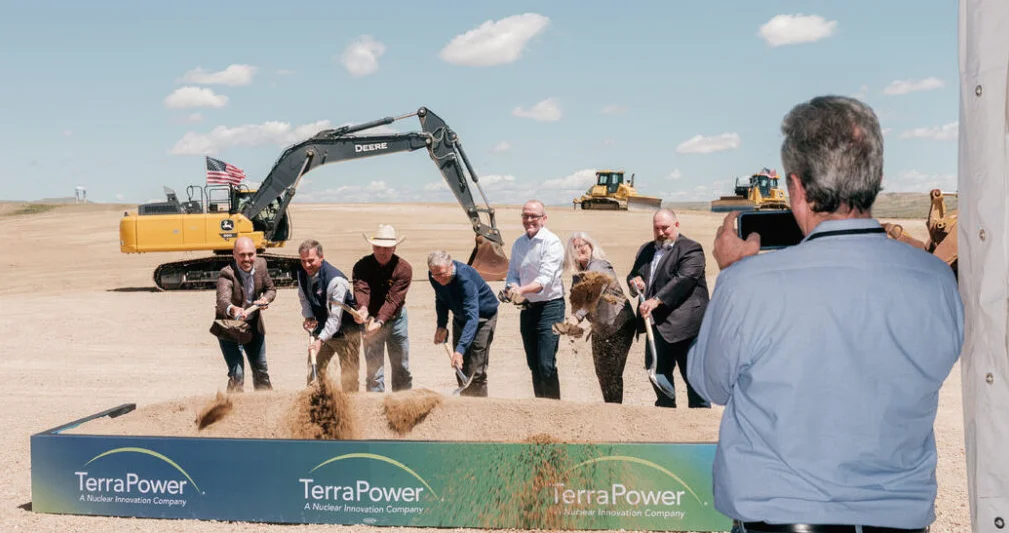
A novel type of nuclear power plant in Wyoming, backed by Bill Gates, has received a key federal permit, allowing it to begin construction and signaling a major step forward for advanced nuclear energy in the United States. The Nuclear Regulatory Commission (NRC), which oversees reactor safety, unanimously granted a construction permit to TerraPower, a startup co-founded by Gates. This approval marks the first time a commercial-scale, advanced nuclear plant has received such clearance in nearly a decade.
Advanced Design Promises Lower Costs and Greater Flexibility
TerraPower’s reactor design is fundamentally different from traditional light-water reactors used in current U.S. nuclear plants. Instead of using water to cool and generate steam, the plant uses liquid sodium, which allows it to operate at lower pressures. This design is expected to reduce the need for expensive containment structures and simplify emergency cooling systems.
“This is the first commercial-scale, advanced nuclear plant to receive this permit,” said Chris Levesque, TerraPower’s chief executive, in a statement. The reactor will be 345 megawatts, about one-third the size of traditional reactors like those at the Vogtle plant in Georgia, which faced massive cost overruns and delays.
TerraPower’s reactor also features a molten salt battery that allows it to adjust its power output, a critical feature for integrating with renewable energy sources like wind and solar. This flexibility is seen as a major advantage over conventional reactors, which have difficulty matching the fluctuating demand on the grid.
Federal Permit Process Accelerated by Recent Reforms
The NRC’s review of TerraPower’s application was completed in just 18 months—faster than the 27 months the agency initially estimated. This speed was partly due to a 2024 law passed by Congress aimed at streamlining the approval process for advanced reactors.
“The NRC reviewed TerraPower’s construction permit application in just 18 months—far faster than the 27 months it had initially estimated,” said a source familiar with the process. However, some critics argue the agency may have moved too quickly, citing concerns over the safety of liquid sodium reactors.
Edwin Lyman, director of nuclear power safety at the Union of Concerned Scientists, raised concerns about the potential risks of TerraPower’s reactor. “Make no mistake, this type of reactor has major safety flaws compared to conventional nuclear reactors that comprise the operating fleet,” he said in December after the NRC completed its review. “Its liquid sodium coolant can catch fire, and the reactor has inherent instabilities.”
TerraPower responded by emphasizing that it had spent over four years and more than 60 meetings with the NRC to address these concerns, submitting detailed technical reports on the reactor’s design and safety features.
Challenges Ahead Despite Federal Approval
While the permit is a major milestone, TerraPower still faces significant hurdles. The company had already pushed back its start date multiple times, and it will need to avoid the cost overruns that have plagued other nuclear projects. The initial cost of the Wyoming plant is expected to be around $4 billion, though TerraPower hopes to reduce this over time through experience and economies of scale.
The U.S. Department of Energy has committed to covering part of the cost of the first reactor, which could help offset some of the financial burden. However, the company will also need to secure the specialized fuel required for its reactor, a process that could be complex and time-consuming.
Additionally, President Trump has ordered a sweeping overhaul of the NRC, and the agency is expected to reveal thousands of pages of proposed regulatory changes in the coming weeks. These changes could impact the speed and scope of future reactor approvals, as well as the rules governing radiation exposure limits.
With its permit in hand, TerraPower plans to begin construction on the Wyoming site in the coming weeks. The company had already started building non-nuclear components of the plant in 2024, which did not require federal approval. However, the full-scale construction of the reactor itself will now move forward with the support of federal regulators.
The success of TerraPower’s project could have significant implications for the future of nuclear energy in the United States. If the plant comes online in 2031 as planned, it could serve as a model for other advanced reactor designs and help address the challenges of cost, safety, and integration with renewable energy sources.






Comments
No comments yet
Be the first to share your thoughts