

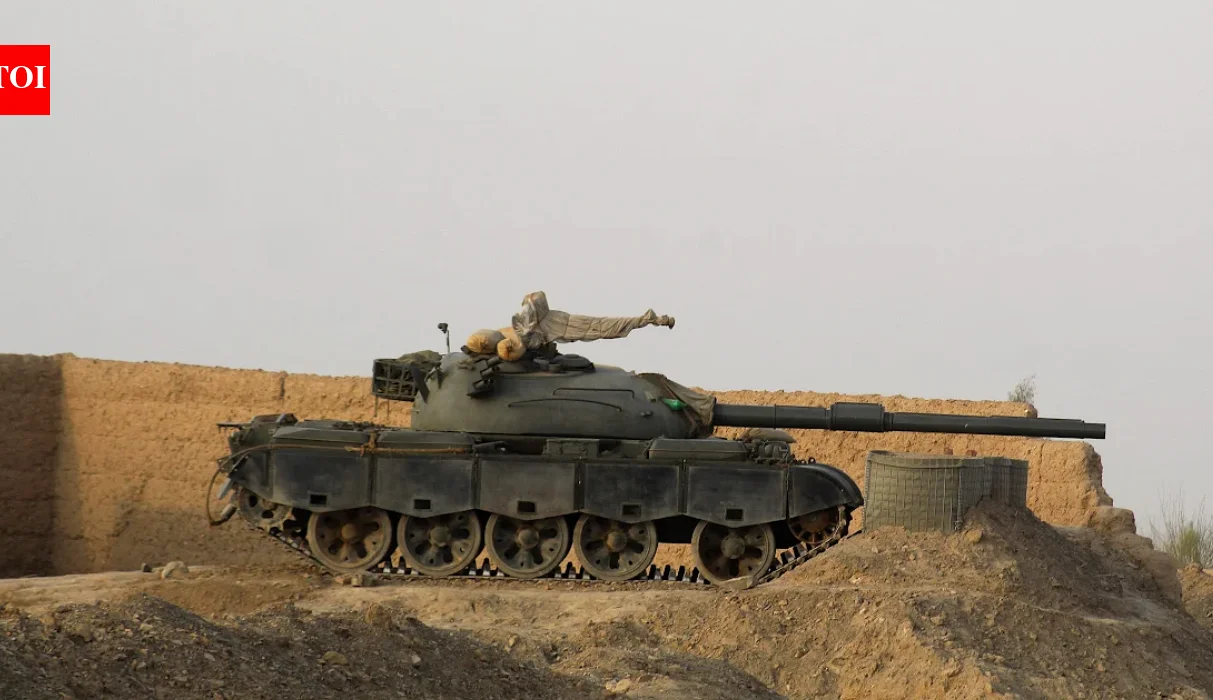
Pakistan launched airstrikes in Afghanistan overnight, targeting military posts and ammunition depots in a move it called a ‘strong and effective’ response to alleged unprovoked attacks from across the border. The strikes, which hit key cities including Kabul and Kandahar, reportedly killed 133 people, according to Pakistan’s information minister, Attaullah Tarar. The escalation comes after Afghanistan claimed it had killed 55 Pakistani troops in cross-border attacks along the contested Durand Line, raising concerns about the future of diplomatic efforts between the two nations.
Impact on Civilian Populations
The airstrikes reportedly caused significant civilian casualties and damage to infrastructure in multiple Afghan provinces. In Kabul, residents reported hearing multiple explosions and seeing jets flying overhead. The United Nations has called on both sides to protect civilians and adhere to international law. UN Secretary-General Antonio Guterres urged restraint, emphasizing the need to resolve differences through diplomacy.
Afghanistan’s defense ministry stated that 55 Pakistani soldiers were killed, with some bodies reportedly taken into Afghanistan. It also claimed the capture of more than a dozen Pakistani army posts and the destruction of 19 military installations. However, Pakistan’s government disputed these claims, stating only two soldiers were killed and 36 Afghan fighters were killed in the cross-border attacks.
Escalation of Tensions
Tensions between Pakistan and Afghanistan have been rising for months, with deadly border clashes in October resulting in the deaths of dozens of soldiers, civilians, and suspected militants. The recent violence follows explosions in Kabul that Afghan officials blamed on Pakistan, prompting Islamabad to conduct airstrikes deep inside Afghanistan, targeting alleged militant hideouts.
Afghanistan’s defense ministry has accused Pakistan of violating its airspace and sovereignty, citing strikes on civilian areas including a religious madrassa and several homes. Pakistan, however, maintains that its actions are in response to unprovoked attacks from Afghan territory.
Militant Allegiances and Regional Security
The conflict between the two nations is further complicated by the presence of militant groups. Pakistan has long accused the Taliban of providing sanctuary to the Pakistani Taliban (TTP), a group responsible for numerous attacks in the country. Although the TTP is distinct from the Afghan Taliban, it is believed to have close ties with them.
Pakistan has been conducting a major crackdown on migrants since October 2023, expelling hundreds of thousands of people. The recent strikes have led to further displacement, with Afghan authorities evacuating a refugee camp near the Torkham border crossing after several refugees were wounded in a missile strike.
Afghanistan’s military released video footage showing military vehicles moving at night, accompanied by heavy gunfire. However, the footage has not been independently verified. The situation remains highly volatile, with both sides accusing each other of initiating hostilities.
The Qatar-mediated ceasefire has largely held, but sporadic exchanges of fire have continued. Several rounds of peace talks in November failed to produce a formal agreement, leaving the region in a state of uncertainty.
With both sides reporting sharply divergent casualty figures, the conflict is likely to continue unless a diplomatic solution is reached. The international community is closely watching the situation, as the escalation threatens regional stability and could have broader implications for security in South Asia.





Comments
No comments yet
Be the first to share your thoughts