

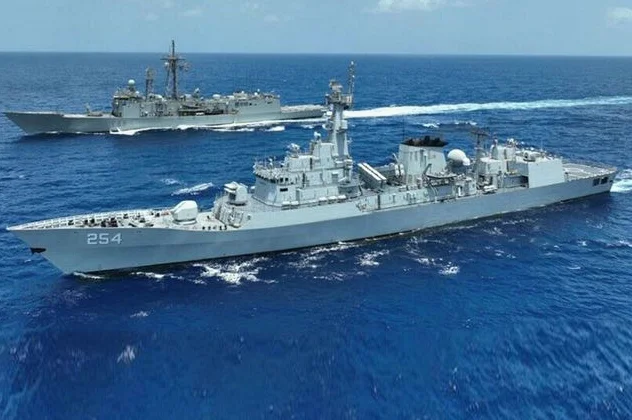
The Pakistan Navy has initiated an escort operation to safeguard critical maritime trade routes, responding to a volatile regional security environment. The move follows Iran’s decision to close the Strait of Hormuz and comes amid heightened tensions involving Israel and the United States, which launched a military strike on Iran on February 28.
Maritime Security and Trade Vulnerability
Pakistan’s decision to bolster naval operations highlights the country’s growing concern over the security of its maritime trade, which relies heavily on sea routes. According to a report by the Dawn newspaper, the Pakistan Armed Forces Public Relations Service (ISPR) announced that the navy has launched operations to counter ‘multidimensional threats’ to national maritime trade.
The ISPR statement emphasized that the escort operations are being conducted in coordination with the Pakistan National Shipping Company. The aim is to ensure the continuous flow of national energy supplies and the security of maritime communication lines.
Approximately 90% of Pakistan’s trade is conducted via sea, making the security of these routes essential for the country’s economy. The statement noted that the navy has already escorted two commercial vessels as part of the operation.
Strait of Hormuz: A Global Energy Lifeline
The Strait of Hormuz, located between Iran and Oman, is a critical chokepoint for global energy transportation. About one-third of the world’s seaborne oil and a significant portion of liquefied natural gas (LNG) pass through this narrow waterway, which has a narrowest point of approximately 33 kilometers.
The strait’s strategic importance means that any disruption, such as its closure, can trigger sharp increases in global energy prices and cause economic ripple effects worldwide. During periods of heightened regional tensions, the mere threat of a closure can send shockwaves through global markets.
Iran’s recent decision to close the strait has raised concerns among international players, including the U.S. and its allies, about the stability of global energy supply chains. The move follows the February 28 strike by Israel and the U.S. on Iran, which further escalated regional hostilities.
Regional and Global Implications
The Pakistan Navy’s escort operation highlights the broader geopolitical stakes involved in the region’s maritime security. As a country with significant trade dependencies on sea routes, Pakistan is not only reacting to immediate threats but also positioning itself to manage potential disruptions in the region.
Experts suggest that Pakistan’s response may be part of a larger strategy to diversify its maritime security partnerships and ensure that its energy and trade routes are not disrupted by regional conflicts. The operation also reflects a growing awareness of the interconnectedness of regional security and global economic stability.
According to the ISPR statement, the escort operations are being conducted in close coordination with the Pakistan National Shipping Company, emphasizing the importance of public-private collaboration in ensuring the security of vital maritime routes.
As tensions continue to simmer in the region, the Pakistan Navy’s move is likely to be closely watched by both regional and global stakeholders. The operation’s success in securing trade routes could have far-reaching implications for Pakistan’s economy and its role in regional maritime security.






Comments
No comments yet
Be the first to share your thoughts