

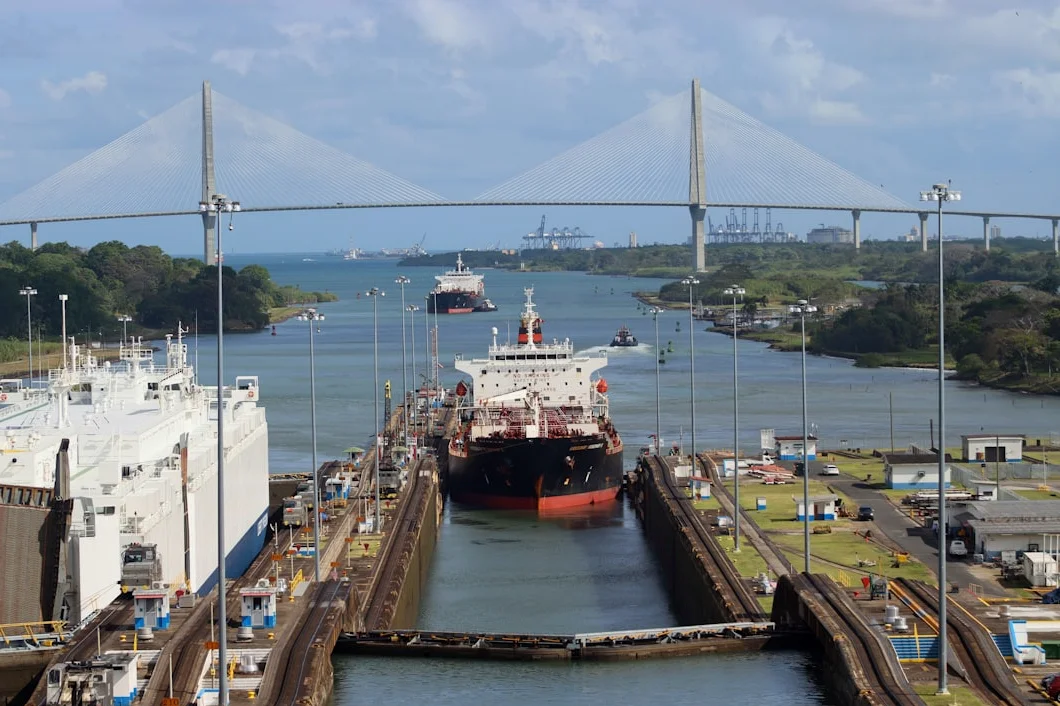
The Panama Canal is expected to limit traffic starting in early September, as it prepares for lower water levels due to the El Nino weather phenomenon.
Transit Caps Set for Drier Weather Conditions
On Thursday, the Panama Canal Authority, the body that oversees the waterway, announced that daily transit caps would be set to address concerns about the drier weather conditions ahead.
Under the new measures, 34 vessels will be permitted to sail through the canal as of September 4, but a further reduction will start on September 15, when the limit will be 32 ships.
The travel restrictions are a reversal for the Panama Canal Authority — Officials told the news service Reuters in May that they had no plans to limit crossings this year, citing water conservation measures imposed last year.
Global Trade Impact Expected
The canal, which handles about 5 percent of global maritime trade, usually has capacity to accommodate about 40 vessels per day; Since June, it has seen a daily average of 35 transits.
Any significant decrease in travel through the canal is likely to translate into slower international shipping for industries that rely on the waterway. That, in turn, could increase costs.
A severe drought in 2023, for instance, cut traffic through the Panama Canal by roughly 36 percent, leading to disruptions in global supply chains.
The declining water levels that year were also attributed to El Nino, as well as climate change accelerated by human activities.
El Nino to Intensify in Coming Months
El Nino is a naturally occurring weather phenomenon that takes place every two to seven years, when the eastern tropical Pacific Ocean is warmer than usual.
The resulting weather patterns can have an impact across the region and even globally, putting some areas at risk of excessive heat and drought, while others suffer from flooding.
Scientists expect a particularly strong El Nino in the coming months, potentially among the strongest on record, while that could lead to an increase in cases of extreme weather events.
Panama Canal authorities have previously imposed vessel limits in order to conserve water. The canal relies on a lock system that lifts and lowers vessels as they travel from the Pacific Ocean to the Caribbean Sea, and vice versa.
But the canal is fed, in part, by freshwater from nearby lakes and reservoirs, most notably Gatun Lake. Panamanians rely on that lake as well to supply drinking water to nearby cities, including the capital Panama City, putting additional strain on the waterway during times of drought.





Comments
No comments yet
Be the first to share your thoughts