

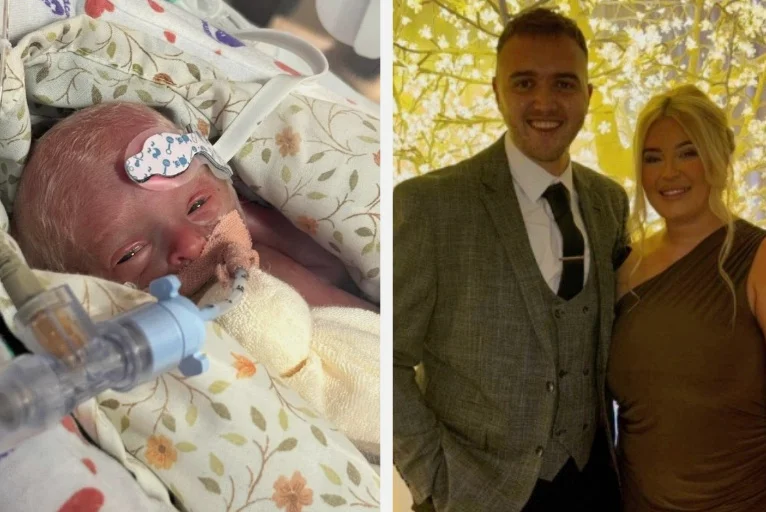
IRVINE, Scotland — Lucy Regan and Kyle Malone lost their newborn daughter Nelly to antiphospholipid syndrome, a rare blood clotting disorder, just eight days after her premature birth in November 2024. The couple from North Ayrshire now demands that hospitals across the NHS make APS screening standard for all early pregnancies.
Nelly arrived at 28 weeks gestation at Queen Elizabeth University Hospital in Glasgow, weighing only 1lb 3oz. A routine scan at 24 weeks had revealed she had stopped growing, prompting an emergency caesarean section. Lucy Regan was rushed to the hospital by ambulance and warned that her baby might not survive delivery. Against the odds, Nelly lived for eight days.
“We were blessed with eight precious days with Nelly before she sadly passed away,” Regan said. An examination of the placenta later showed clots that restricted blood flow, stunting the baby’s growth. Regan herself carries the APS condition, also known as Hughes syndrome, which raises risks of abnormal clotting and pregnancy complications. She was not tested for it during her pregnancy with Nelly because the screening is not routine.
The diagnosis came only during Regan’s next pregnancy. With proper testing, monitoring, and treatment, she delivered a healthy son, Teddy, without complications. Regan stresses that early detection could prevent similar tragedies. “APS can significantly affect pregnancy outcomes,” she said.
The parents launched their petition on Change.org to push for APS blood tests as part of standard early pregnancy checks. They point out the condition’s rarity but deadly impact when undiagnosed. No figures specify how many UK pregnancies suffer from undetected APS each year, though medical experts recognize its role in miscarriages and stillbirths.
Regan, a former pupil at St Matthew’s Academy in Saltcoats, praises the care at Ayrshire Maternity Unit and Queen Elizabeth University Hospital. “The care we and Nelly received was exceptional,” she said. “We will be forever grateful to the staff who cared for us with such compassion during the most devastating time of our lives.” She places no blame on medical teams but calls for systemic change.
“We have started the petition in Nelly’s memory to raise awareness and call for change,” Regan added. “We miss Nelly every day, and if sharing her story can help save even one baby’s life, then her legacy will be one of love, strength, and change.”
The petition has garnered support from families touched by similar losses. NHS guidelines currently recommend APS testing only for women with specific risk factors, such as recurrent miscarriages or late pregnancy losses. Advocates like Regan argue for broader application to catch cases like hers earlier.
Health officials have not yet responded to the petition. Similar campaigns have prompted reviews of maternity protocols in the past, including after inquiries into preventable baby deaths at other UK hospitals.






Comments
No comments yet
Be the first to share your thoughts