

 The Guardian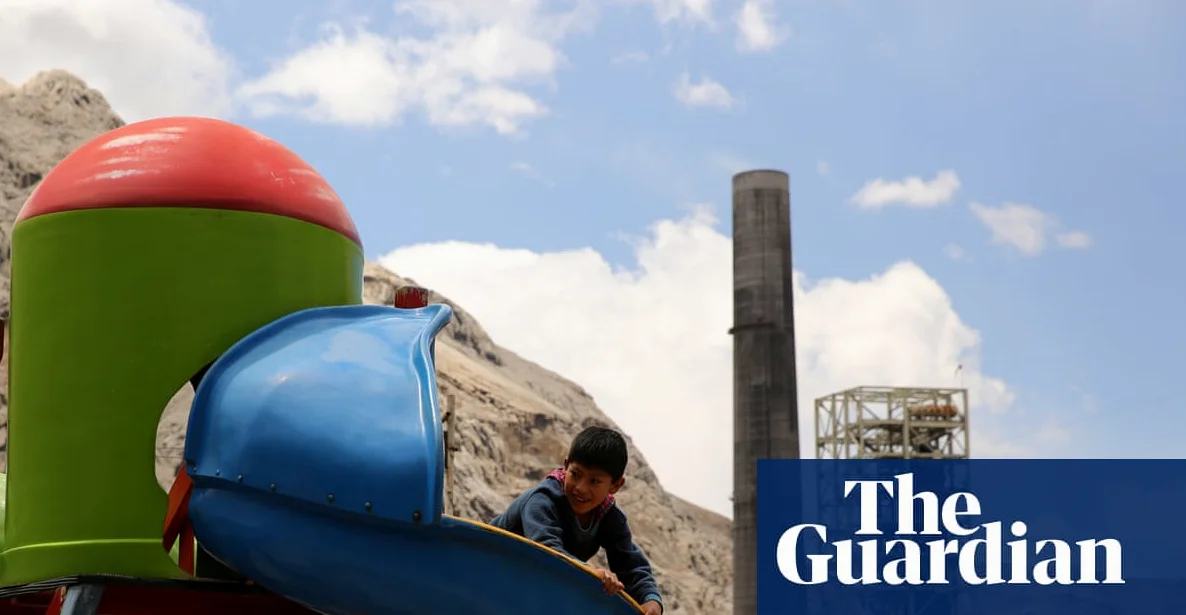
Cardinal Pedro Barreto, 82, called a $150m (£111m) out-of-court settlement for 1,373 Peruvians who were allegedly poisoned by a toxic smelter in the Andes “a historic milestone.” The settlement, announced in June, was reached with Doe Run Company, a subsidiary of the Renco Group, and came as Barreto prepared to testify in the first of four civil trials in St Louis, Missouri.
A Two-Decade-Long Legal Battle
The legal battle began in 2007 in a state court on behalf of 17 Peruvian children and expanded into a federal court case with more than 1,373 plaintiffs—now young adults. Schlichter Bogard, a St Louis-based law firm, alleged that Doe Run failed to reduce lead emissions at the smelter, causing permanent health injuries and harm.
“This is a historic milestone,” Barreto said in an interview with The Guardian. “But this long-awaited justice doesn’t solve the problem faced by many children who were personally affected, especially neurologically. The money will not compensate for the harm they have suffered, but it is a sign that justice has been served.”
Environmental Toll on a Peruvian Town
Barreto led a nearly two-decade campaign to hold the US company accountable for the severe health impacts on the population of La Oroya, an Andean town the Blacksmith Institute, now known as Pure Earth, listed in 2007 as one of the world’s 10 most polluted places. Saint Louis University researchers found in 2005 that children in La Oroya had some of the highest blood lead levels ever recorded.
According to a 2004 study by Peru’s environmental health office, nearly 100% of children under six in La Oroya had blood lead levels above 10 μg/dL, well above the threshold that can cause growth impairment and lower IQs. The study also noted that lead, arsenic, cadmium, and sulphur dioxide emissions had increased since Doe Run took over the smelting complex in 1997.
Barreto, the former archbishop of Huancayo, received death threats and harassment after he began his activism in 2004. He said the threats were often made publicly and through messages indicating “if I kept speaking out, they were going to take much more drastic measures.”
A Landmark Victory for Victims
Jerry Schlichter, founder of the law firm involved in the case, described the settlement as a “historic tipping point” in which an American company was held responsible for its actions in another country affecting non-US residents. Schlichter said the victory was due to the “passion and conviction that this was a just cause.”
Each of the 1,373 plaintiffs could receive at least $100,000 from the payout, which Schlichter said would be a “life-changing event.” The Department of Justice had previously asked that the lawsuit be transferred to Peru, but Schlichter opposed the move, arguing the children would receive nothing if the case had been moved.
Doe Run did not admit wrongdoing in the settlement. In a statement, its CEO, Matt Wohl, said: “We elected to put this behind us and focus on what matters – running our business, serving our customers and investing in new technologies.”
Ira Rennert, founder of the Renco Group and owner of Doe Run, is a 92-year-old billionaire with an estimated net worth of $3.8bn, according to Forbes in 2024. Rennert made his fortune in the 1980s junk-bond market before expanding into mining and industrial firms.
Barreto stressed that the local population deserved the recognition for enduring the suffering caused by the pollution. “We have had to endure just a little of the immense suffering they constantly face,” he said.






Comments
No comments yet
Be the first to share your thoughts