

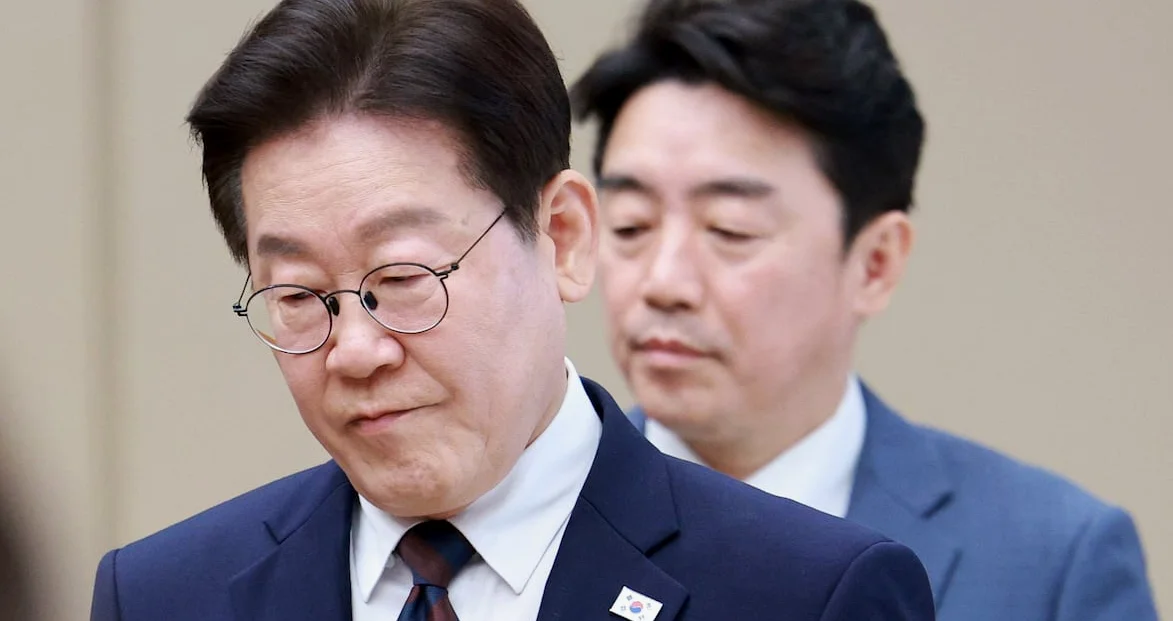
President Lee Jae Myung has issued a stern warning against radical reforms to the prosecution system, criticizing Democratic Party hardliners for their push to abolish the supplementary investigation rights of prosecutors. The president’s remarks come amid escalating tensions in the National Assembly over proposed reforms to the Serious Crimes Investigation Agency Act and the Indictment Agency Act.
President’s Cautionary Stance on Reforms
On March 9, President Lee stated, ‘Even if necessary reforms are carried out, we must be cautious not to indiscriminately criticize the entire system, label everyone as targets for reform, and end up burning down the thatched cottage to kill bedbugs.’ His comments were seen as a direct response to Democratic Party hardliners in the National Assembly’s Judiciary Committee who are pushing for significant revisions to the government’s proposed bills.
President Lee further emphasized, ‘Reform often requires surgical correction. To solve problems, we must accurately identify causes and clearly distinguish the good from the bad.’ He reiterated that no single organization, including the courts or prosecutors, should be recklessly dismantled in the name of reform.
Hardliners Push for Prosecutors’ Abolition
Democratic Party hardliners, including Choo Mi-ae and Kim Yong-min, are advocating for the complete abolition of prosecutors’ supplementary investigation rights. They argue for the dismissal of all current prosecutors and the selection of new ones through reappointment reviews for the Indictment Agency.
Some Democratic Party lawmakers have even suggested impeaching Chief Justice Jo Hee-de following the controversial passage of the ‘three judicial laws.’ This has raised concerns within the ruling party about the potential impact on the June 3 local elections.
A ruling party source noted, ‘The Lee Jae Myung government prioritized unity from its inception, but situations where it is dragged by certain party factions and hardline supporters have repeatedly occurred. Cheong Wa Dae seems to believe such extreme arguments hinder state affairs.’
Justice Minister Criticizes Hardliners
Justice Minister Jung Sung-ho, who led the government’s bill, criticized the hardliners on Facebook. He wrote, ‘Some are labeling the bills as ‘anti-reform’ simply because they differ from my intentions, which does nothing to unite the public.’
Pro-Lee figures like Han Jun-ho and Lee Geon-tae shared the president’s X post, stating, ‘Attacks and attempts to destabilize the president must stop now.’
Park Chan-woon, an advisory chairman of the prosecution reform task force under the Prime Minister’s Office, resigned after opposing the hardliners’ push to abolish prosecutors’ supplementary investigation rights. In his statement, he warned, ‘Claims for complete abolition risk plunging our criminal justice system into unbearable chaos. The harm from drastic overhauls will fall on the people.’
Despite these warnings, Democratic Party hardliners continue their strong rhetoric. Kim Yong-min, appearing on the pro-ruling party YouTube show ‘Mae-bul Show,’ argued that if the government’s bill passes, ‘an Indictment Agency even more powerful than the current prosecutors’ office will emerge,’ demanding revisions.
Legal circles warn that this is about cutting off prosecutors who displease the Democratic Party. During the broadcast, which is primarily watched by ruling party supporters, comments like ‘Withdraw support for Lee Jae Myung,’ ‘Crush Lee Jae Myung’s approval ratings,’ and ‘Impeach Lee Jae Myung’ flooded the chat.
Divisions are emerging even among the ruling party’s supporters over the prosecution reform plan. Lawmaker Noh Jong-myun stated, ‘When the government’s bill was adopted as the party’s official stance, it was clearly conditional on ‘revisions in the Judiciary Committee.’ Turmoil is inevitable.’
Regarding President Lee’s warnings to hardliners, Kim Ou-joon, a pro-ruling party YouTuber representing their support base, criticized on his channel, ‘President Lee has an unnecessary obsession with objectivity. Doesn’t he realize he’s acting as his own ‘red team’?’ This reflects criticism that the president appears passive on reforms like prosecutors’ restructuring.






Comments
No comments yet
Be the first to share your thoughts