

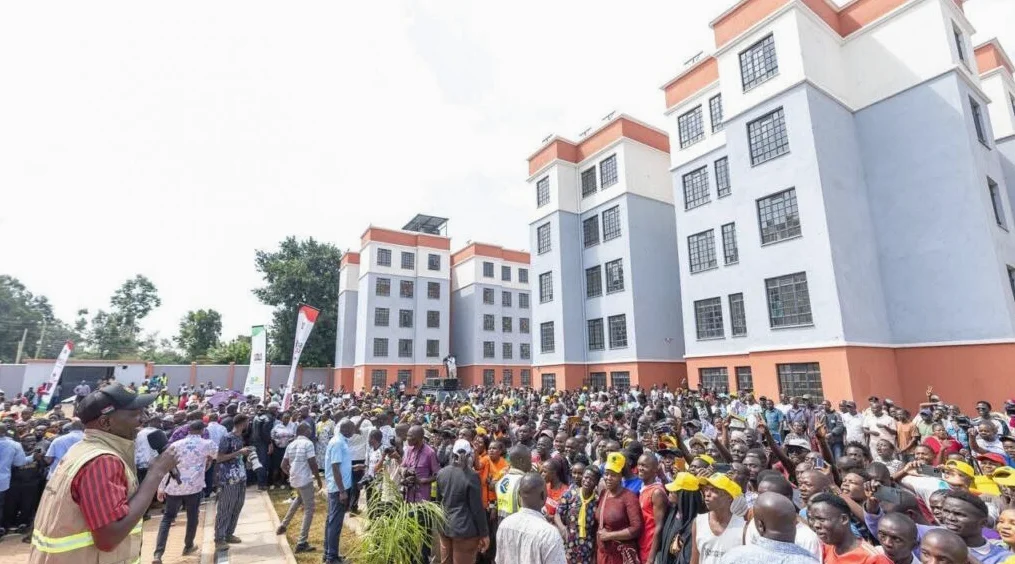
KAKAMEGA, Kenya — President William Ruto on March 17 handed over 180 affordable housing units to beneficiaries at the Milimani Boma Yangu Estate Phase 1 in Kakamega County. The event, held at the Milimani Boma Yangu Estate, was a major step in the government’s effort to address the country’s housing deficit and ensure dignified living for all Kenyans.
Significance of the Housing Initiative
The project, developed by the State Department for Housing and Urban Development, is part of a broader national strategy to transform living conditions across Kenya. The estate, which includes 220 housing units, is designed to provide affordable, modern homes for low- and middle-income families. The initiative has already created jobs for thousands of local workers, including artisans, masons, and electricians, among others.
President Ruto emphasized that the housing project is not only about providing shelter but also about supporting economic development and social stability. During the handover ceremony, he noted that the government remains committed to its vision despite opposition and criticism from various quarters. “This is a true testament that the affordable housing programme is a reality,” he said, highlighting the project’s impact on job creation and infrastructure development.
Residents of the estate will benefit from a range of amenities, including green spaces, street lighting, landscape gardens, well-developed road networks, ample parking, and other essential social facilities. The project highlights the government’s commitment to improving the quality of life for Kenyans across the country.
Government’s Housing Strategy and Expansion Plans
The Housing Principal Secretary, Charles Hinga, reiterated that the government is actively constructing housing units across all 47 counties. He urged Kenyans to apply for these units through the USSD code *832# or via the Boma Yangu portal. The housing units, he added, are built using modern technology and are designed to meet the highest standards of living.
“The demand for housing is now at an all-time high, and we are working tirelessly to meet this demand,” Hinga said. The government’s efforts are part of a larger plan to ensure that every Kenyan has access to decent housing, regardless of their income level or geographical location.
At the same event, President Ruto also laid the foundation stone for the Milimani Phase II Affordable Housing Project. This phase will deliver 1,891 housing units, including 947 affordable units, 392 social housing units, and 552 market housing units. The project will include a community center, a kindergarten, a primary school, commercial stalls, roads, sewer reticulation, a borehole, boundary walling, a power house, a gatehouse, parking areas, and cabro paved driveways, among other facilities.
The Milimani Phase II project is expected to be completed by December 2027. This timeline aligns with the government’s broader agenda to prioritize affordable housing development as a means of improving livelihoods through job creation and ensuring dignified living for all Kenyans.
Future Implications and Challenges
The Milimani Phase II project is anticipated to have a significant economic and social impact on Kakamega County. The construction phase alone is expected to create thousands of jobs for local workers, including laborers, artisans, and professionals in various fields. The project also aims to provide essential social infrastructure, such as schools and community centers, which will benefit both residents and the broader community.
However, the government faces challenges in ensuring that the housing units are accessible to all eligible Kenyans. With demand for housing units at an all-time high, there is a need for continued investment in infrastructure, including roads, electricity, and water supply, to support the growth of these housing developments.
Experts suggest that the success of the affordable housing initiative will depend on the government’s ability to manage resources effectively and ensure transparency in the allocation of housing units. “The government must continue to prioritize housing as a key pillar of national development,” said a housing analyst, who emphasized the need for sustained investment in the sector.
President Ruto’s commitment to expanding the affordable housing program has been a central theme in his administration. The government has already initiated similar projects in other counties, and the success of the Milimani estate could serve as a model for future housing developments across the country.
The Milimani Phase II project, once completed, is expected to significantly improve the living standards of residents in Kakamega County. It will not only provide housing but also create a more developed and self-sufficient community. The government’s efforts to deliver affordable housing are a crucial step toward achieving its broader vision of national development and economic transformation.






Comments
No comments yet
Be the first to share your thoughts