

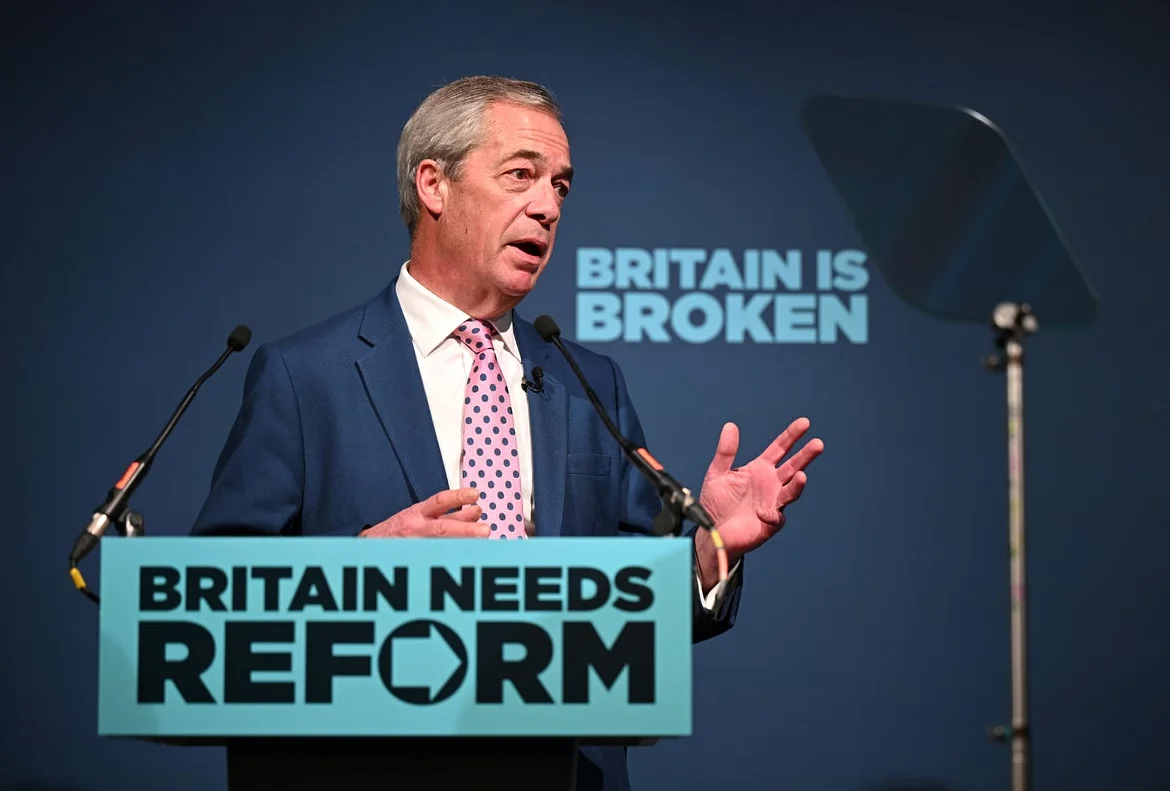
LONDON — Reform UK candidates and officials have drawn scrutiny for statements favoring traditional family structures, with party leader Nigel Farage claiming heterosexual couples form the most stable relationships. Farage made the remark in 2025 during a press conference introducing Danny Kruger, a former Conservative MP who defected to Reform UK. Kruger had previously told a National Conservatism conference that marriage between a man and a woman provides “the only basis for a safe and successful society.”
Dr. James Orr, Reform’s new head of policy, echoed those sentiments at the Family Education Trust’s 2025 annual conference. “All the data shows that children are best off with a mum and a dad, preferably in the house, preferably biologically related to them,” Orr said. He called heterosexual families the “natural” benchmark that the state should help citizens aspire to reach.
On abortion, Farage has called the United Kingdom’s laws “totally out of date,” labeling the 24-week limit “ludicrous.” Orr described the regime as one of the world’s most extreme, comparing it to policies in North Korea, China and Canada during his Family Education Trust speech. He referenced a recent Times Radio interview where a medic pushed for limits up to 37 or 38 weeks.
Kruger, now Reform’s MP for East Wiltshire, once challenged the idea of an “absolute right to bodily autonomy” for pregnant women in a parliamentary debate, prompting local protests. He later clarified his stance aligns with the 1967 Abortion Act and the status quo after MPs voted to decriminalize abortion in England and Wales. A Reform UK spokesperson said last year the party holds no formal position on abortion and plans no changes to current laws.
Fertility concerns have also surfaced. Matt Goodwin, Reform’s candidate for the Gorton and Denton by-election, urged a “biological reality” check for young girls to combat Britain’s “fertility crisis.” In a November 2024 YouTube video, Goodwin warned that “many women in Britain are having children much too late in life” and suggested extra taxes on childless people. Farage distanced the party from the tax idea but floated tax breaks for parents with “quite a few children” to ease living costs.
Orr advocated pro-natalist measures without coercion. He noted the widening gap between desired and actual fertility rates across the West, calling it legitimate for conservatives to explore ways to encourage bringing “new life into the world.”
Reform UK reversed course on the two-child benefit cap earlier this year. Farage pledged in May 2024 to scrap it as “the right thing to do,” later narrowing it to working British families. New Treasury spokesman Robert Jenrick said Wednesday the cap “has to go” — meaning it should stay — while Farage conceded his pro-family push had failed.
The party’s pledge to scrap the Equality Act, announced by education and equalities spokesperson Suella Braverman, has raised alarms. Critics like the Good Law Project warn it could erode protections for maternity leave and against discrimination toward mothers and pregnant women. Braverman pitched the move as targeting overreach, but opponents see it as courting extremists.
Farage stirred further debate at a 2025 Westminster lunch. He said men sacrifice family lives for careers more readily than women, adding that high-achieving women often outpace men at the top. The remarks underscore Reform UK’s focus on traditional roles as it climbs polls and builds its election team.




Comments
No comments yet
Be the first to share your thoughts