

 BBC
BBC 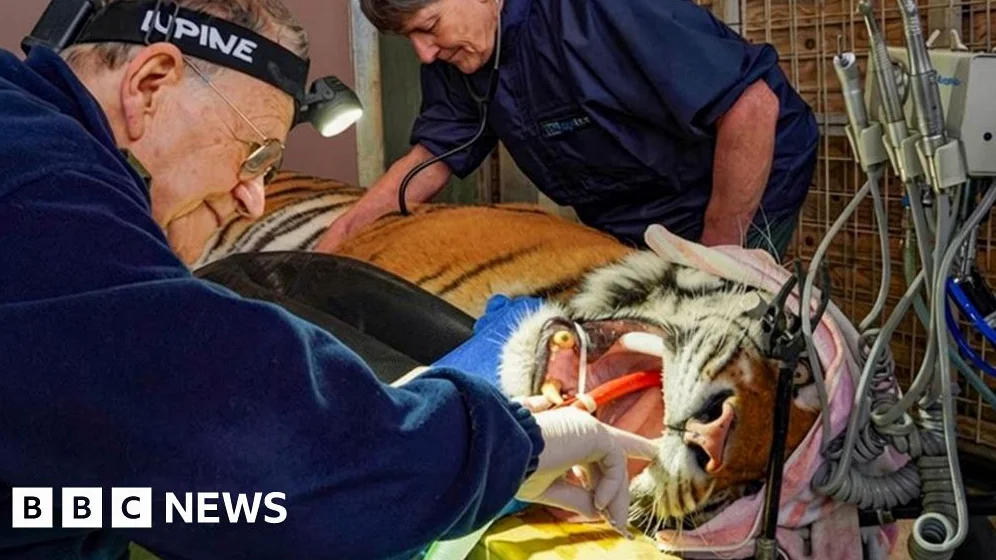
A rescue tiger named Aqua has undergone a root canal treatment to save its two 7cm-long canine teeth at Noah’s Ark Zoo Park in Wraxall, near Bristol. The procedure, which lasted two hours, was conducted to address dental issues that were preventing the tiger from eating properly.
Procedure Details and Expert Involvement
Aqua, who was rescued from illegal traffickers in 2019, has been living at the zoo since October. The procedure was performed by specialist Dr. Peter Kertesz, who described the operation as a ‘standard procedure’ but emphasized the need for ‘total trust in the anesthetist’ given the tiger’s size and sensitivity.
According to zoo curator Chris Wilkinson, ‘specialist equipment designed for big cats’ was used to carry out the ‘equivalent of a human root canal.’ Aqua is now ‘back on his feet and his usual self again,’ according to the zoo.
To perform the operation, six members of staff had to lift the 22-stone (142kg) anaesthetised animal onto the operating table and ensure its jaw was kept open so the team could work safely on his teeth.
Dr. Kertesz, who has worked on about 300 cats, drilled 3in (7.6cm) into the teeth and removed any decayed pulp before filling the cavities. He noted the size of the tiger’s teeth, stating, ‘Of course, the size is enormous. While your tooth might have a 10mm root, in this case it’s about 80mm.’
Background of Aqua’s Rescue and Rehabilitation
Aqua was discovered, along with nine other tigers, ‘covered in faeces’ and crammed into a horse box at the Poland-Belarus border nine years ago. Thought to be around 7-years-old, the tiger spent several years at a rehabilitation centre in Spain before finding his current home in Somerset.
The zoo stated that ‘historic dental issues’ are ‘unfortunately common in big cats with challenging pasts.’ Aqua’s case highlights the ongoing efforts to rehabilitate animals that have suffered from abuse or neglect.
The procedure on Aqua marks a significant milestone in veterinary care for large cats. Similar procedures have been performed on other big cats, but the complexity of this operation was heightened by the tiger’s size and the specific dental challenges it faced.
Significance for Conservation and Animal Welfare
The successful treatment of Aqua’s teeth is not only a testament to the advanced veterinary care available at Noah’s Ark Zoo Park but also highlights the broader importance of animal welfare and conservation efforts. The zoo has been working to provide a safe and healthy environment for rescued animals, many of whom have endured difficult pasts.
According to the zoo, the procedure has allowed Aqua to resume normal eating habits, which is crucial for his overall health and well-being. The team at Noah’s Ark Zoo Park is continuing to monitor Aqua’s recovery closely and will provide regular updates on his progress.
With the increasing number of rescued animals being brought into care, the need for specialized veterinary services is growing. The successful root canal on Aqua serves as a model for similar procedures on other large animals, offering hope for the long-term health of these animals in captivity.
The zoo is also using this opportunity to raise awareness about the importance of dental health in big cats and the challenges they face due to their often difficult pasts. This case highlights the need for continued investment in animal welfare and the importance of providing high-quality care for rescued animals.






Comments
No comments yet
Be the first to share your thoughts