

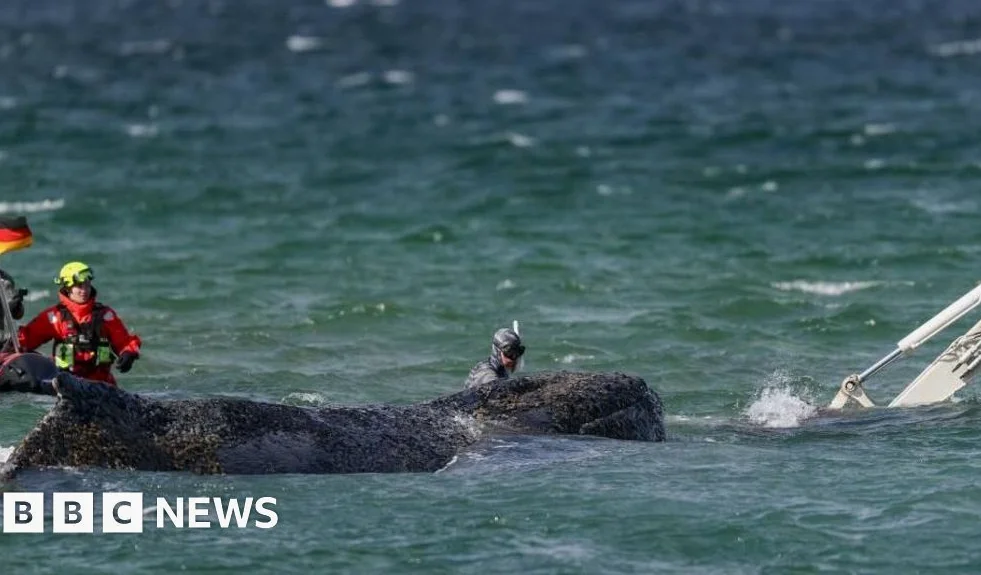
Rescuers in Germany are working to save a 32-foot humpback whale that became stranded near the Baltic Sea coast, according to multiple reports. The incident has drawn attention from local authorities, marine biologists, and the public, as efforts to free the animal continue. The whale was spotted near the island of Usedom, a popular tourist destination on the German-Polish border, and has been the focus of a coordinated rescue operation involving marine experts and local volunteers.
Rescue Efforts and Challenges
The whale. Estimated to be about 32 feet long and weighing several tons, was discovered on the beach near the village of Zinnowitz, according to the New York Times. Local authorities confirmed that the animal is a humpback whale, a species typically found in deeper waters. Rescuers have been working to guide the whale back to the sea, using boats and barriers to prevent it from becoming further trapped in the shallow water.
German marine conservation groups have joined the effort, with experts on hand to monitor the whale’s condition and provide guidance on how to safely assist it. The operation has been complicated by the whale’s size and the shallow waters, which have made it difficult to maneuver the animal without causing harm; Officials from the German Federal Agency for Nature Conservation (BfN) have been on site, providing support and monitoring the situation closely.
According to local news reports. The whale was initially spotted in the open sea but was driven ashore by strong currents or human activity; the exact cause of the stranding remains unclear. Marine biologists have noted that humpback whales can sometimes become stranded due to environmental changes, illness, or injury, but the specific reason in this case is still under investigation.
Local Reactions and Community Involvement
The stranded whale has become a focal point for the local community, with many residents and visitors gathering along the shore to watch the rescue efforts. According to German media. Including AOL.com. The incident has drawn large crowds. With people expressing concern for the animal’s well-being and frustration over the lack of immediate progress in freeing it — some have called for more resources to be allocated to the rescue, while others have offered to help in any way they can.
Local volunteers have been assisting with crowd control and providing information to onlookers, ensuring that the whale is not stressed by excessive human presence. In an interview with a local news outlet, a volunteer named Maria Schneider said, ‘We all want to help this whale, but we need to be careful not to interfere in the wrong way. The experts are the ones who know what to do.’
German environmental organizations have also weighed in on the situation, emphasizing the importance of protecting marine life and the need for increased awareness about the threats faced by whales in coastal areas. According to the German Society for the Protection of Whales, the incident highlights the growing issue of whales becoming stranded due to climate change and human activity.
International Attention and Environmental Concerns
The stranded whale has also attracted international attention, with reports from both German and international media covering the ongoing rescue efforts. The New York Times reported that the incident has raised concerns about the impact of climate change on marine ecosystems, as rising sea temperatures and shifting currents can disrupt the natural migration patterns of whales and other marine animals.
Marine biologists from the United States have also expressed concern about the situation, with one expert noting that similar incidents have been reported in other parts of the world. According to Dr. Emily Carter, a marine biologist at the University of California, ‘These events are becoming more common, and it’s a clear sign that we need to take a closer look at how our actions are affecting the ocean environment.’
In addition to environmental concerns, the incident has also sparked discussions about the need for better coordination between local authorities and marine conservation groups when dealing with such emergencies. Some experts have called for the establishment of a rapid response team specifically trained to handle whale strandings and other marine wildlife emergencies.
What’s Next for the Whale and the Rescue Efforts
As the rescue operation continues, the focus remains on safely returning the whale to deeper waters. Rescuers are using a combination of techniques, including using barriers to redirect the whale’s movement and monitoring its behavior to determine the best course of action. According to the New York Times, the whale has shown signs of distress, including rapid breathing and attempts to move away from the shore, which could indicate that it is still capable of swimming but needs assistance to get back to open water.
Local authorities have indicated that they are working with marine biologists to assess the best possible outcome for the whale. If the rescue is successful, it will mark a rare and significant event in the history of whale strandings in the region. If the whale is unable to be freed, the next step would involve making difficult decisions about its welfare, including the possibility of euthanasia if the animal is deemed to be in severe pain or distress.
Environmental groups have called for increased funding and resources to support such rescue efforts, emphasizing the importance of protecting marine life and preventing future incidents. According to the German Society for the Protection of Whales, ‘Every whale that is saved is a victory for the ocean and for the future of our planet.’
Why This Matters
The stranding of this humpback whale serves as a reminder of the complex relationship between humans and the marine environment. As climate change continues to alter ocean conditions, the frequency of such events may increase, putting more marine life at risk. The rescue efforts in Germany are not only a test of the country’s ability to respond to wildlife emergencies but also an opportunity to raise awareness about the importance of protecting marine ecosystems.
For the local community, the incident has brought people together in a shared effort to help a vulnerable animal. The event has also sparked conversations about the need for greater environmental responsibility and the importance of preserving natural habitats. As the rescue continues, the world will be watching to see if this humpback whale can be saved and what lessons can be learned from this experience.




Comments
No comments yet
Be the first to share your thoughts