

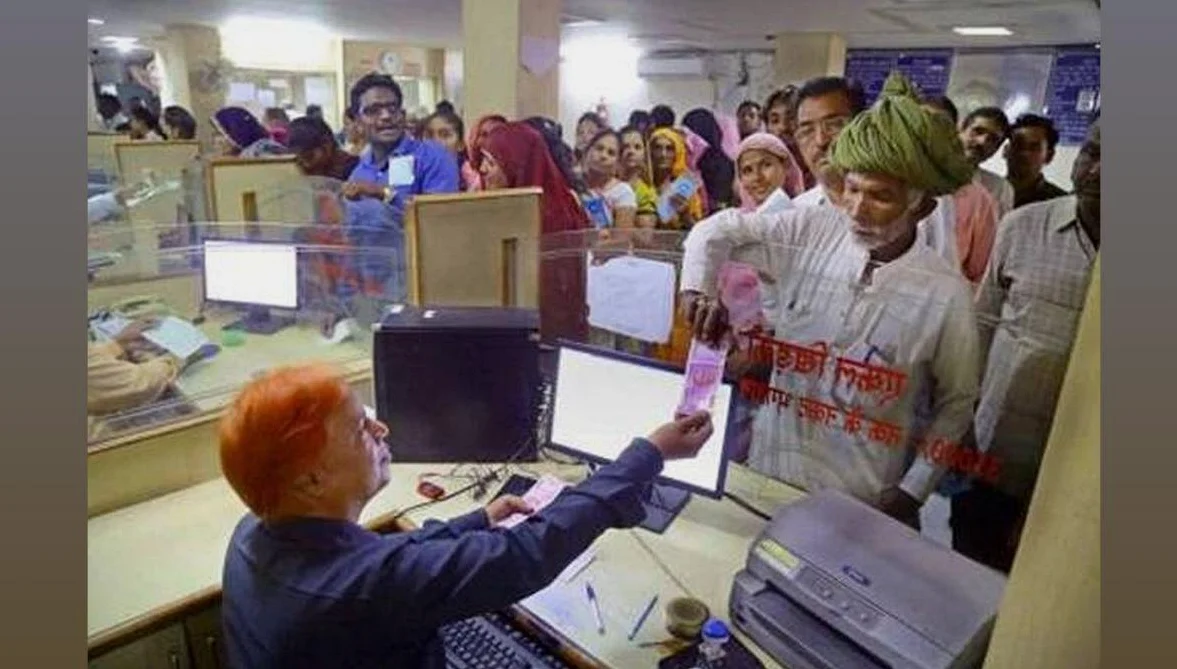
A parliamentary committee has advised the government to consider public offerings for the most profitable Regional Rural Banks (RRBs) in order to attract market capital and enhance corporate governance standards. The Standing Committee on Finance, chaired by BJP leader Bhartruhari Mahtab, submitted its report highlighting the improved financial health of RRBs and suggesting the need for further capital infusion through IPOs.
Structural Consolidation and Financial Health
The committee noted that the government has completed the structural consolidation of RRBs, reducing their number from 43 to 28 viable entities across 11 states. This consolidation has eliminated the need for further capital infusion in the fiscal year 2026-27, according to the report.
RRBs have achieved a consolidated net profit of Rs 7,720 crore in the first nine months of FY 2025-26, marking a significant improvement. The gross non-performing assets (NPAs) have dropped to a 13-year low of 5.4 per cent. However, the report also identified ongoing risks, particularly the 13.8 per cent gross NPA in priority sector education loans.
The committee emphasized the need for RRBs to actively mitigate these sector-specific risks by using their inclusion in the Credit Guarantee Fund Scheme for Education Loans (CGFSEL) and by implementing AI-driven automated Early Warning Signals (EWS) to detect potential defaults early.
Public Offerings and Corporate Governance
The Standing Committee on Finance has strongly recommended that the government guide highly profitable RRBs toward Initial Public Offerings (IPOs) to attract market capital and enforce higher corporate governance standards. This move is seen as crucial for the long-term financial stability and operational efficiency of these banks.
The committee’s report said, ‘The committee strongly urged the government to proceed with guiding highly profitable RRBs toward Initial Public Offerings (IPOs) to attract market capital and enforce higher standards of corporate governance.’ This recommendation is part of a broader strategy to modernize the banking sector and align it with global standards.
The consolidation of RRBs has been guided by the principle of ‘One State-One RRB’, leading to the formation of a state-level RRB with a contiguous area of operation. This has simplified management and improved service delivery across the states.
Historical Context and Future Outlook
The consolidation process began in FY 2006 and has seen multiple phases. The number of RRBs was reduced from 196 to 82 in the first phase (FY 2006 to FY 2010), then to 56 in the second phase (FY 2013 to FY 2015), and to 43 in the third phase. The fourth phase, which started in May 2025, further reduced the number to 28 across 26 states and two union territories.
The amalgamation of RRBs has resulted in a more simplified structure, with improved operational efficiency and cost rationalization. The merged entities have increased their capital base, enhancing their financial stability and resilience. The committee expects that the consolidation will lead to cost savings and allow RRBs to invest in advanced technology platforms.
According to the RRB Act of 1976, these banks were established to provide credit and other financial services to small farmers, agricultural laborers, and artisans in rural areas. The Act was amended in 2015, allowing RRBs to raise capital from sources other than the central government, state governments, and sponsor banks.
Currently, the central government holds a 50 per cent stake in RRBs, while 35 per cent and 15 per cent are held by sponsor banks and state governments, respectively. The amended Act ensures that the combined shareholding of the central government and sponsor banks does not fall below 51 per cent, maintaining a degree of control and oversight.
The committee’s recommendation for public offerings comes at a time when the banking sector is under pressure to modernize and improve financial performance. With NPAs at a historic low and profitability on the rise, the move could attract significant investor interest and inject fresh capital into the sector.
The government is expected to consider the committee’s recommendations in the coming months, with a potential timeline for IPOs of select RRBs by the end of FY 2026. The implementation of these recommendations could have a significant impact on the rural banking landscape in India, promoting greater transparency and accountability.






Comments
No comments yet
Be the first to share your thoughts