

 Bloomberg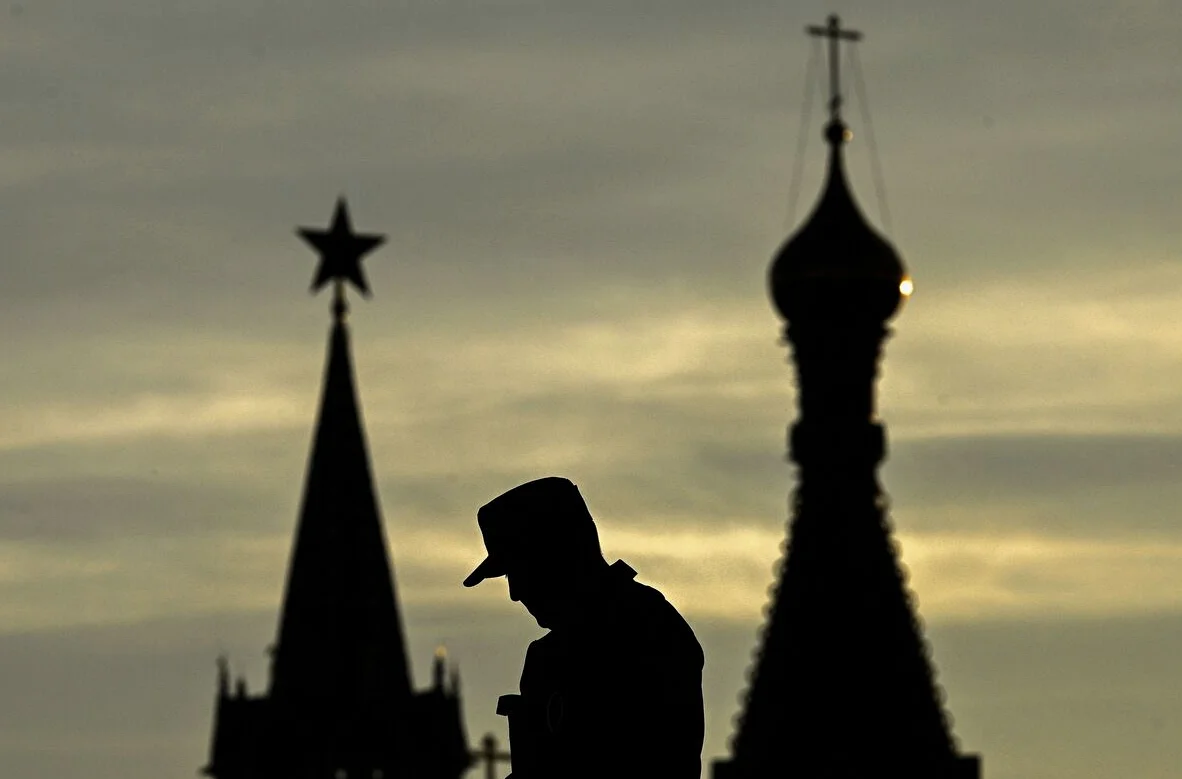
Russia is advancing legislation that would permit the use of its military to protect citizens facing arrest or prosecution abroad, a move that highlights the country’s deepening hostility toward foreign courts and international tribunals.
Legislative Move and Presidential Authority
Draft legislation published on the Russian parliament’s website on Thursday outlines a framework allowing the military to intervene in cases where Russian citizens are being pursued by foreign judicial systems. The measure would grant the president exclusive authority to decide whether to deploy armed forces in such situations, according to the text.
Vyacheslav Volodin, speaker of the lower house of parliament, emphasized the urgency of the bill, stating that lawmakers would prioritize it, as reported by Interfax news service. ‘The Western justice system has completely discredited itself,’ Volodin said, highlighting a growing narrative within Russian political circles that Western legal institutions are biased or illegitimate.
The proposed law comes amid heightened tensions between Russia and the West, particularly following the International Criminal Court’s (ICC) issuance of an arrest warrant for Russian President Vladimir Putin in 2023 for alleged war crimes involving the abduction of children from occupied areas of Ukraine. The ICC has also issued similar warrants for other senior Russian officials linked to the ongoing war in Ukraine.
Implications for International Legal Systems
Political scientists and legal experts have expressed concern over the potential implications of the bill. Ekaterina Schulmann, a political scientist at the Carnegie Russia Eurasia Center in Berlin, described the legislation as a direct threat to the ICC and other international legal bodies that may pursue cases against Russia.
‘This bill looks like a direct threat to the International Criminal Court and other international and foreign legal entities that may take up cases against Russia and Russian officials,’ Schulmann said. ‘The message is pretty simple: if you try to detain any of our people, we can send in special forces.’
However, the practical implementation of such a policy remains uncertain. Sergei Badamshin, a Moscow-based lawyer, noted that the principle of reciprocity in international law could create a dangerous precedent. ‘If we stop respecting other states’ sovereignty by using military force to free our citizens, then other countries may begin to act in kind, sending their own armed forces in response,’ Badamshin said.
The legislation still needs to be approved by both chambers of parliament and signed by President Vladimir Putin to become law. Its passage could provide Moscow with a new tool to exert political pressure on foreign governments, according to Nikolai Petrov, a senior research fellow at the New Eurasian Strategies Centre in London.
Domestic and International Significance
The proposed law is not only aimed at foreign legal systems but also at reinforcing domestic support for the Kremlin. Schulmann noted that the legislation serves to create a sense of external threat and internal protection among the Russian public. ‘The Kremlin is telling them, ‘the authorities will stand up for you’,’ she said, suggesting that the law could be used to bolster nationalist sentiment and unity.
Western countries have increased their scrutiny of Russian activities abroad, particularly in response to alleged Russian sabotage and the country’s involvement in international energy trade. The U.S. and European allies have targeted Russia’s so-called ‘shadow fleet’—a network of vessels that operate without clear ownership or registration—to disrupt sanctioned Russian oil and gas exports.
The potential for military intervention in foreign legal cases raises questions about the stability of international legal frameworks. If Russia proceeds with the law, it could set a precedent that other countries might follow, leading to a more fragmented and potentially more volatile international legal landscape.
While the actual impact of the measure remains unclear, the mere threat of military force could be used as a diplomatic lever. The legislation, which has yet to be finalized, is part of a broader strategy by the Russian government to assert its sovereignty and challenge perceived Western encroachments on its interests.
As the bill moves through the legislative process, the international community will be closely watching for any signs of implementation or further escalation. The potential for military involvement in foreign legal matters could have far-reaching consequences, affecting not only Russia’s relations with other countries but also the functioning of international legal institutions.
For ordinary Russians, the legislation may serve as a reassurance that the government will protect its citizens abroad. However, for the rest of the world, it could be viewed as a significant escalation in Russia’s assertive foreign policy.



Comments
No comments yet
Be the first to share your thoughts