

Senegalese lawmakers are moving to restrict President Bassirou Diomaye Faye’s powers through constitutional amendments, sparking heated debates and protests in the National Assembly. The proposals. Introduced by the ruling Pastef party—include banning a sitting president from serving as a political party leader and restricting the president’s authority to sign legislation into law during the period between a presidential election and the inauguration of the president-elect. According to BBC and AOL.com reports. The changes are seen as targeting Faye, who remains a Pastef member but no longer holds an official role in the party; these measures could limit his ability to form a new party ahead of the next election.
Proposed Constitutional Reforms
The reforms also seek to expand the powers of parliamentary committees, a move that could shift more authority from the executive to the legislature. Pastef, which holds 130 of the 165 seats in the National Assembly, claims the changes are intended to strengthen the separation of powers among Senegal’s executive, legislative, and judicial branches. However, the opposition views the reforms as an attempt at political retaliation by former Prime Minister Ousmane Sonko, who remains a powerful figure within the ruling party.
Protests and Walkouts in the National Assembly
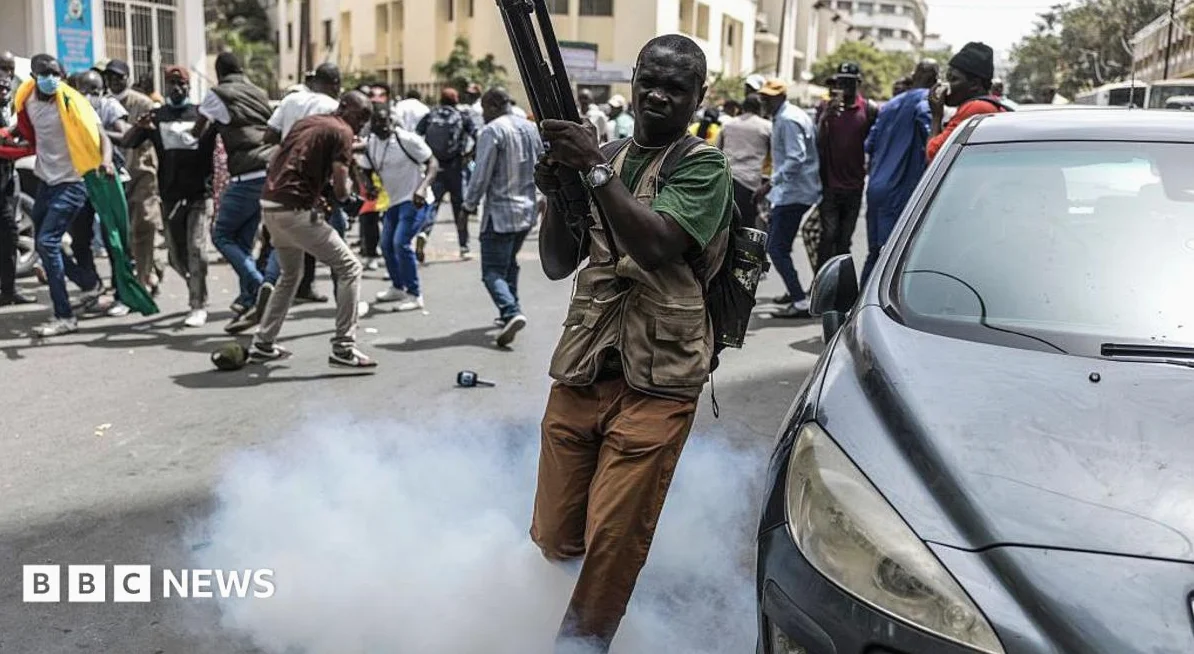
Tensions escalated on Monday as police used tear gas to disperse protesters outside the parliament, as Inside the chamber, opposition lawmakers staged a walkout in protest against the proposed reforms. During the debate. Justice Minister Moussa Sarr announced that the president intended to refer the matter to a public vote through a referendum. However, Sonko questioned the president’s authority to do so, arguing that the reforms had already been validly adopted with the support of a majority of lawmakers.
Opposition and Civil Society Concerns
Both the opposition and civil society organizations have criticized the amendments, calling for their immediate withdrawal, and they argue that the reforms are politically motivated and could undermine democratic principles in the country. The debate highlights growing divisions within Senegalese politics, with the ruling party seeking to consolidate its influence while the opposition and civil society push back against what they see as an erosion of checks and balances.

Comments
No comments yet
Be the first to share your thoughts