

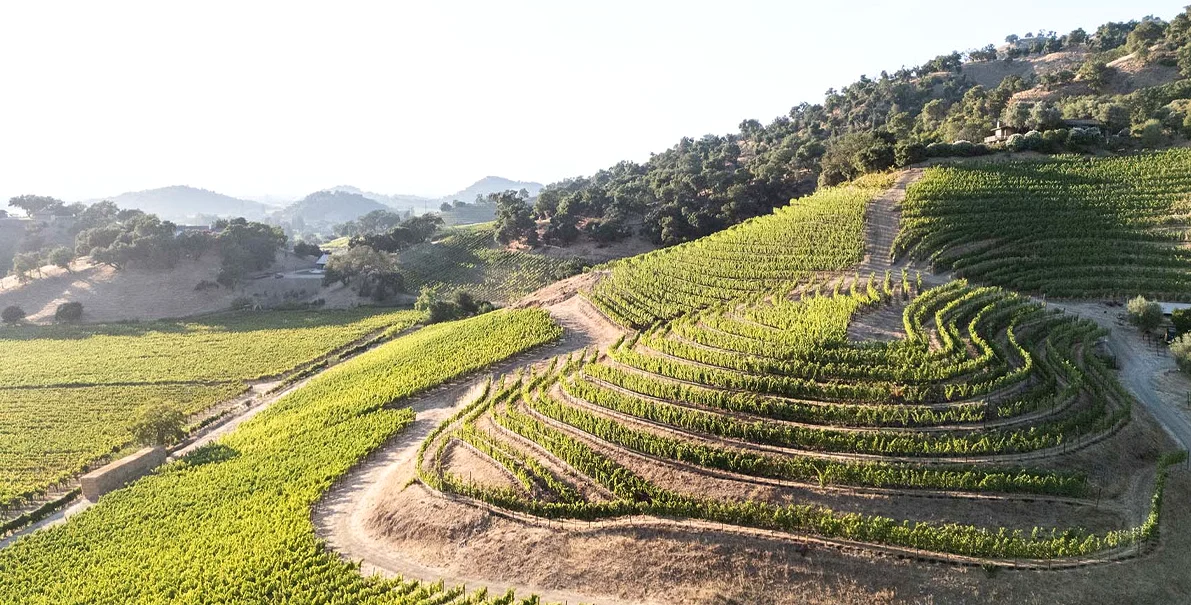
NAPA, California — John Shafer, a former Chicago real estate executive, bought 72 acres on Napa’s Stags Leap ridge in 1973. He bulldozed poison oak and scrub brush to carve terraces into the steep slopes. Vines went in the next year. That move upended local convention.
Early Napa plantings hugged the valley floor. European immigrants like Jacob Schram at Schramsberg in 1862 and Charles Krug in 1861 stuck to bottomlands. Flood risks and fertile alluvial soil suited their flat-vineyard approach. Sunlight pooled evenly. Irrigation came easy from the Napa River.
Shafer saw differently. He studied Bordeaux and Burgundy. Hillsides there delivered drainage, sun exposure and mineral soils. Napa’s fog-shrouded mornings and afternoon winds matched. "We wanted that rocky, well-drained ground," Shafer recalled in interviews. His son Doug, now president, learned tractor driving on those first plantings.
Sunlight hits Shafer’s hillsides longer each day. Updrafts cool grapes overnight. Thin soils force vine roots deep into volcanic outcrops. The result: concentrated flavors in cabernet sauvignon, merlot and chardonnay. Hillside One, a cabernet block on 38 percent slopes, yields just two tons per acre.
Elias Fernandez took winemaking reins in 1986. A former Mondavi assistant, he shapes Shafer’s One Point Five cabernet, a Stags Leap staple since 1978. The 2020 vintage earned 97 points from Wine Spectator. Sunspot vineyards, planted to syrah and grenache since 1991, produce the Relic line.
Shafer skipped the 1976 Judgment of Paris hype. Focus stayed on vineyards. No consultants. No hype. Estate fruit only. Today, 55 acres produce 35,000 cases yearly. Prices top $100 per bottle for reserves.
Napa hillside rush followed. Spottswoode, Diamond Creek and Chappellet joined by late 1970s. Shafer’s bet validated terroir over tonnage. "Floor fruit bulks up fast but lacks structure," Doug Shafer said. Critics agree. Robert Parker once called Shafer "Napa’s most consistent producer."
Family runs it still. Doug’s son Alex tends vineyards. Fourth generation scouts clones. Sustainability marks every row: solar power, sheep for mowing, owl boxes for pest control. No herbicides since 1996.
Visitors climb the hillside driveway to a modern tasting room. Views sweep across the palisades to San Pablo Bay. Tastings book months out. Shafer Vineyards stands as Napa’s hillside pioneer, proving elevation builds legends.






Comments
No comments yet
Be the first to share your thoughts