

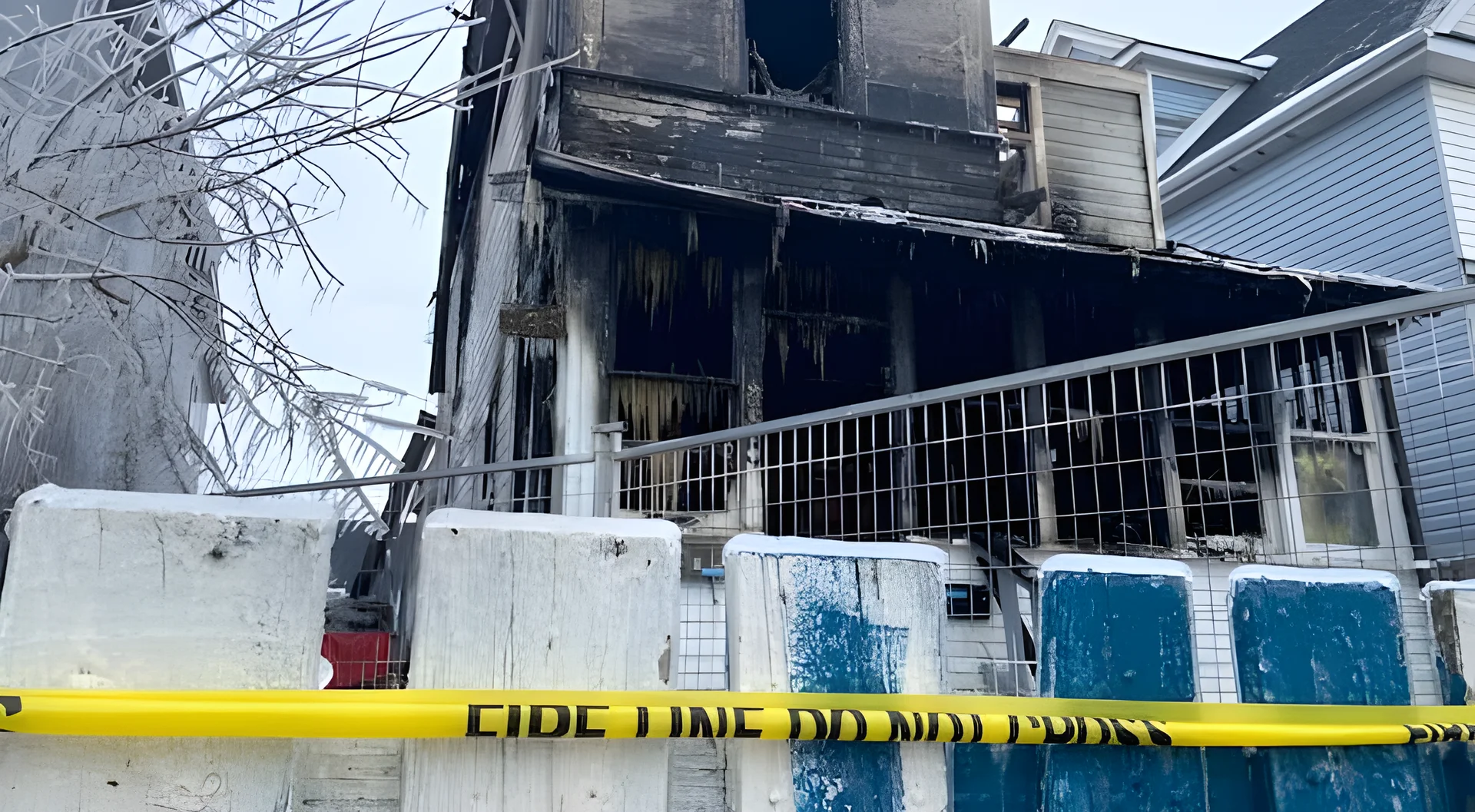
Six people have died in house fires in Winnipeg in under three months, prompting the local firefighters’ union to call it a public health crisis linked to staffing shortages. The United Fire Fighters of Winnipeg (UFFW) has been warning for years about the risks posed by underfunded fire services, but recent fatalities have brought the issue to a breaking point.
The Alarming Death Rate
According to Nick Kasper, president of the UFFW, the average fire fatality rate in Canadian cities is about 0.5 or 0.6 per 100,000 people. However, in Winnipeg, the rate is now at approximately five times that figure, making it a public health concern.
Kasper told CBC Manitoba’s Information Radio host Marcy Markusa that the city has been experiencing some of the highest rates of fire-related deaths and property loss in the country for years. He emphasized that the situation has now escalated to a level that can be described as a public health crisis.
“It’s a shocking number,” Kasper said. “We’ve been reporting some of the highest losses of life and property in the country, and typically we see ourselves around double the [national] rate. Now it’s evolving into a public health crisis here.”
The latest fatality occurred during a fire in the East Kildonan area on Monday night, bringing the total number of fire-related deaths in the city to six since December 29. Kasper described the reaction of his fellow firefighters as “devastated.”
Root Causes and Risk Factors
According to Kasper, fire-related deaths are preventable and follow well-established patterns tied to housing conditions, fireproofing infrastructure, public education, and emergency response capacity. He noted that the highest volume of structure fires in Winnipeg occurs in neighborhoods with older housing stock and vulnerable populations, including seniors living alone, people in overcrowded homes, and residents on a lower socio-economic level.
“That’s what our members see every day,” Kasper said. “These are the neighborhoods where the risk factors intersect and where we’re seeing these outcomes.”
The UFFW has pointed to a 15-year strategic plan developed by the Winnipeg Fire Paramedic Service in 2020, which aimed to address infrastructure deficits and rising call volumes. The plan identified critical staffing shortages in fire prevention, public education, examination, and fire investigation branches, and called for investments in those areas by 2022.
Kasper said that six years later, with call volumes increasing, not a single one of those recommendations has been fulfilled. The plan also proposed reducing 30 stations to 23 for better efficiency, investing in new technology, and upgrading facilities to meet demands from a growing population.
“That reference in 2020 was the city’s own strategic direction, which estimated call volumes out to 2040,” Kasper said. “We exceeded those years ago and have added no new resources. We’ve simply shelved that report and largely ignored any recommendations other than consolidation of stations.”
Failed Plans and Underfunded Services
Kasper emphasized that the current situation in Winnipeg is a direct result of the city’s failure to follow through on its own strategic plans. He stated that the consequences of not adhering to the 2020 plan are the city’s own responsibility.
“[If] we take the time to make a plan and we don’t follow the plan, I think the consequences of our failure is our own responsibility,” Kasper said.
The Office of the Fire Commissioner confirmed the number of fatal fires since December 29 but noted that the data is preliminary and may be updated as investigations are completed. The commissioner’s office said in an email to CBC News that the number could actually be higher.
Kasper said that the 2020 plan also identified a shortage of 11 positions in fire prevention, two in public education, and four in fire investigations. He argued that properly staffing those positions could go a long way in preventing fires in the first place, by targeting high-risk communities, inspecting homes, installing smoke alarms, and teaching fire safety tips around cooking and electrical use.
“We are not putting our efforts into preventing incidents before they occur,” Kasper said. “The alarming statistics that we’re seeing here in Winnipeg are a consequence of that.”
Municipalities across Canada compare performance indicators, including investment in fire services, response times, and total losses. Kasper noted that over the last decade, Winnipeg has reported among the lowest cost for its fire service, meaning it invests among the lowest into resources. The city has also had the slowest response times and the highest rate of property and life loss anywhere in the country.
Cities like Calgary and Toronto are investing in hiring hundreds of new firefighters, building new stations, and adding new equipment to keep up with population growth. Kasper said that while it’s impossible to measure the number of fires prevented, it’s very easy to measure performance compared to the rest of the country. He added that Winnipeg is falling far behind where it should be.
“We’ve been saying this for years, but now the numbers are undeniable,” Kasper said. “This isn’t just about staffing—it’s about public health and safety.”
CBC has contacted the City of Winnipeg for comment, but as of the latest update, no response has been received.





Comments
No comments yet
Be the first to share your thoughts