

 BBC News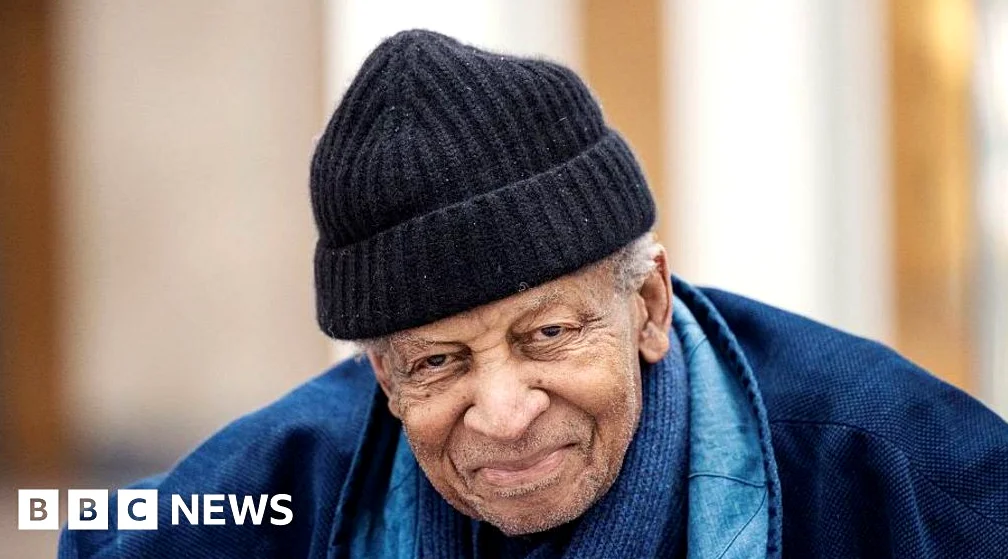
Abdullah Ibrahim, a new figure in South African jazz music, has died at the age of 91, his family confirmed, as he “passed away peacefully, surrounded by his family in Germany, after a short illness,” according to a statement released on behalf of the family.
A Legacy of Musical and Political Influence
President Cyril Ramaphosa paid tribute to Ibrahim, stating that his “creations honoured the South Africa that shaped his political commitment and musical brilliance.” Ibrahim’s work was deeply intertwined with the country’s anti-apartheid struggle, with his compositions reflecting the cultural and political tensions of the time.
Ibrahim, born Adolph Johannes Brand in 1934, began composing at the piano at the age of seven. He grew up in Cape Town and would go on to have a career spanning eight decades and dozens of recordings, including the 1974 track Mannenberg, which became a symbol of resistance against white-minority rule in South Africa.
Ibrahim initially performed under the name Dollar Brand before changing it after converting to Islam in the late 1960s; As a teenager, he played in a swing band, his own trio, and the Jazz Epistles, a group that also included jazz legend Hugh Masakela.
A Life Shaped by Apartheid and Jazz
As apartheid laws became more rigid, jazz music, which encouraged racial mixing and was seen as counter-cultural, faced increasing scrutiny. This political climate led to the breakup of the Jazz Epistles, and Ibrahim eventually moved to Switzerland in the 1960s. He later moved to the United States after being introduced by American jazz legend Duke Ellington.
According to a BBC Radio 3 profile, Ibrahim’s distinctive style combined the sounds of South Africa with the rhythmic and improvisational elements of jazz. Despite living outside South Africa for much of his life, he remained deeply connected to his homeland and made frequent trips to perform and record.
His partner, Dr Marina Umari, said in a tribute: “Abdullah passed away peacefully with South Africa and its people in his heart. His love for his country never wavered, no matter where in the world he found himself.”
Final Performances and Enduring Impact
Ibrahim’s final live appearance was at the Cape Town International Jazz Festival in March, where he “captivated audiences with the artistry, grace, and profound musical vision that defined his life’s work,” the family statement said.
He recorded over 70 albums in his career, with his most recent released in 2023. His most famous composition, Mannenberg, was recorded in 1974 and became a major anti-apartheid anthem. The song reportedly inspired Nelson Mandela during his imprisonment.
“I always say we never thought of Ellington as an African American – we thought of him as a wise old man in the village,” Ibrahim said in 2024. “You have any musical problem or inspiration, you go to Ellington. And he has been that bulwark for many, many, many musicians.”
Ibrahim also contributed to film soundtracks for works such as Claire Denis’s dramas No Fear, No Die and Chocolat. His accolades include the German Jazz Trophy and a South African music lifetime achievement award.
John Fordham of The Guardian described Ibrahim’s music as having “some of the most vividly beautiful themes to emerge from his culture’s special chemistry of African vocalised phrasing.”






Comments
No comments yet
Be the first to share your thoughts