

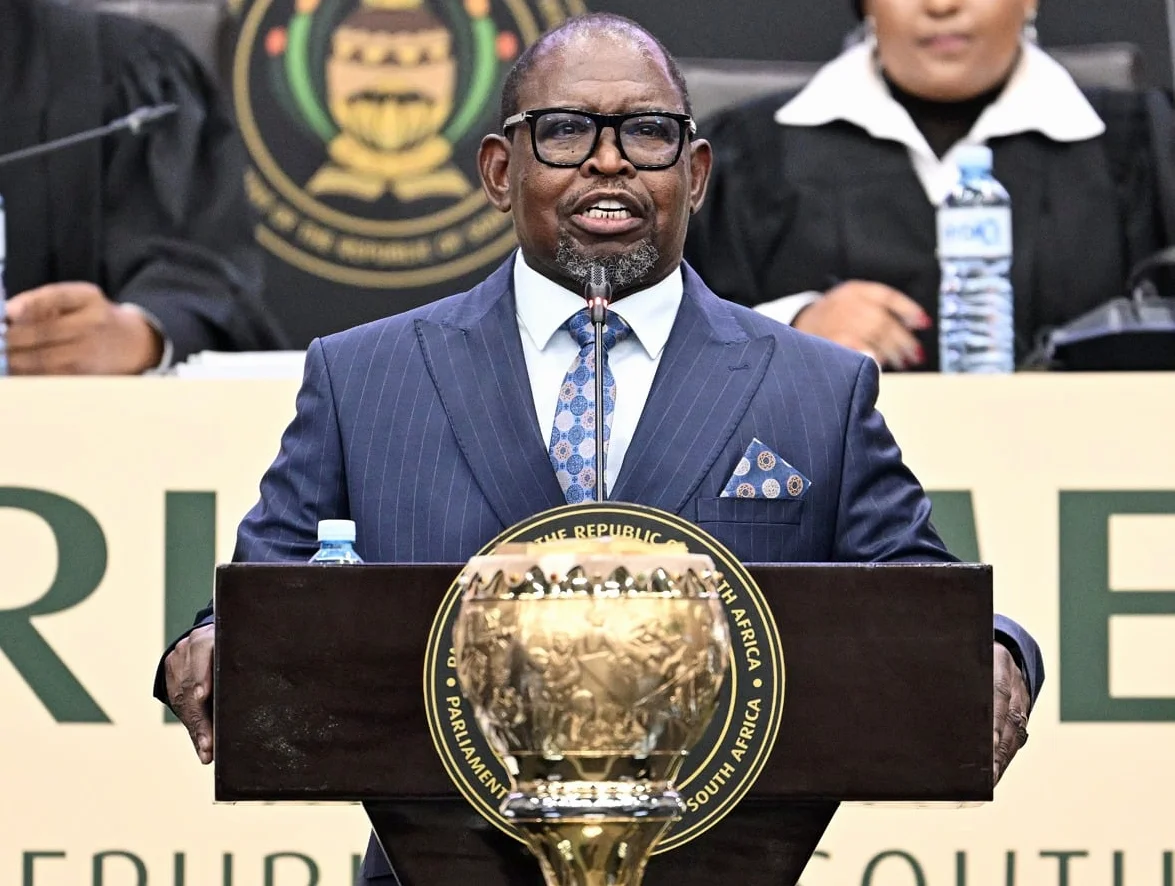
South Africa’s 2026 budget, revealed by Finance Minister Enoch Godongwana, has drawn both praise and criticism, with political parties divided on its ability to address the country’s pressing economic challenges. Unlike the 2025 budget, which included a controversial value-added tax (VAT) increase, the 2026 budget has opted for a more conservative approach, avoiding hikes in personal income tax and VAT. This decision has been welcomed by several political factions, although some argue it fails to adequately support the nation’s most vulnerable citizens.
Relief for Taxpayers, Concerns for the Poor
Democratic Alliance (DA) finance spokesperson Mark Burke praised the budget as a “step in the right direction,” highlighting the absence of tax increases as a significant policy win. He stated that the decision to provide relief to South Africans by not raising personal income tax and VAT is “very positive.”
“Making budgeting boring again,” Burke remarked, adding that the DA has secured key policy victories, including the tax freeze. However, his comments contrast with those of uMkhonto weSizwe (MK) Party member Emerald Madlala, who criticized the budget for not doing enough to support the poor. Madlala argued that the tax relief would primarily benefit the middle and upper classes, leaving the majority of unemployed South Africans unaffected.
“What is happening is that you’ve got a few people who are so-called the middle class and the upper class who speak about taxation,” Madlala said. “People at home, the majority of people, are unemployed.”
Support with Calls for Sectoral Focus
Other parties, including the African Christian Democratic Party (ACDP), African Transformation Movement (ATM), and Rise Mzansi, expressed support for the budget but emphasized the need for greater focus on sectors like health and education in future budgets. These groups argued that while the current budget avoids tax hikes, it must be followed by targeted investment in public services to address long-standing inequalities.
The 2026 budget comes at a time of economic uncertainty in South Africa, with the country grappling with high unemployment, inflation, and a struggling currency. The decision to avoid tax hikes has been seen by some as a way to ease financial pressure on households, particularly in light of the previous year’s VAT increase, which had raised concerns about affordability.
According to the South African Revenue Service (SARS), the 2025 VAT increase had already pushed the rate to 15%, affecting daily expenses for millions of South Africans. The 2026 budget appears to be a strategic move to stabilize the economy without further burdening consumers.
However, the absence of significant new revenue sources has raised questions about how the government will fund its priorities. The budget includes a 2.5% increase in public sector salaries, which is expected to cost the state an additional R12 billion annually. Critics argue that this increase, while necessary, could strain the national coffers.
Looking Ahead: What’s Next?
The 2026 budget will be closely watched in the coming months, particularly as the government faces a series of key economic decisions. One major upcoming event is the National Development Plan review, scheduled for the end of 2026, which will outline the country’s long-term economic strategy.
Analysts suggest that the government may need to explore alternative revenue streams, such as increasing taxes on multinational corporations or implementing more progressive wealth taxes. These measures, however, are likely to face political resistance, especially from business groups and conservative factions.
With inflation still above 5% and unemployment hovering around 32.4%, the government’s ability to balance fiscal responsibility with social welfare remains a challenge. The 2026 budget may have avoided tax hikes, but the real test will be in how effectively it addresses the country’s broader economic and social issues.
As the year progresses, the impact of the 2026 budget will become clearer, particularly on households and businesses that have been affected by years of economic stagnation and policy uncertainty.




Comments
No comments yet
Be the first to share your thoughts