

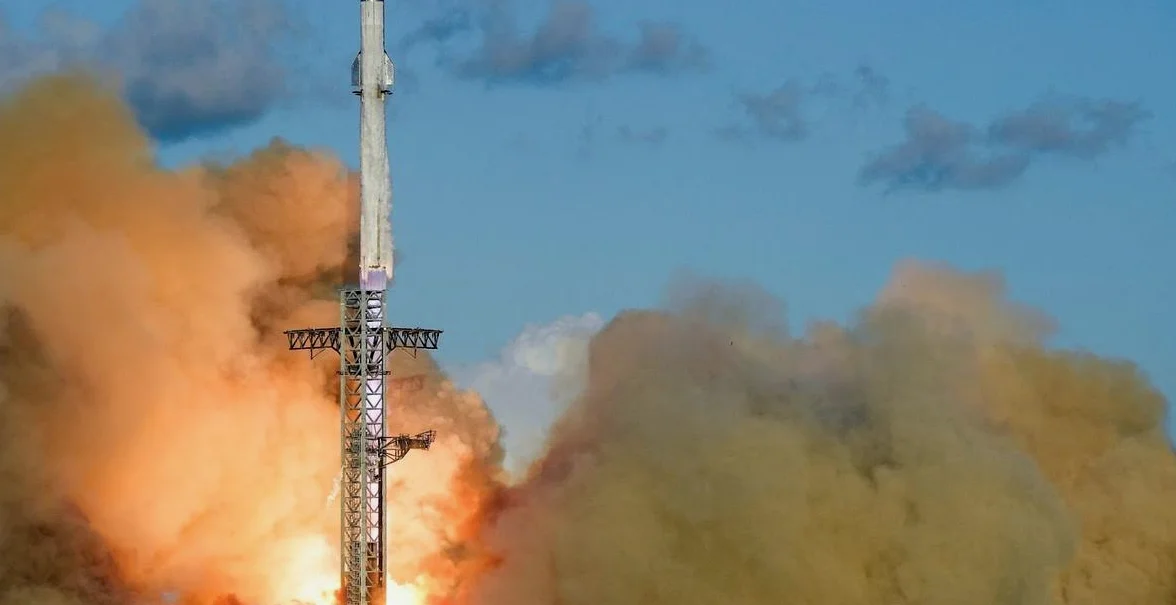
SpaceX is preparing to begin commercial operations of its Starship rocket as soon as next year, marking a major step toward its goal of reducing the cost of space travel and enabling Mars colonization. The company, which plans to go public this year with a target valuation of $1.5 trillion, has conducted 11 test flights of the Starship system so far, with varying degrees of success. A 12th test flight is expected in the coming weeks, according to SpaceX officials.
Starship’s Commercial Potential
The Starship rocket, the largest and most powerful ever built, is designed to carry both crew and cargo to the Moon, Mars, and beyond. Its commercial deployment could significantly lower the cost of orbital launches, which currently range from $10,000 to $15,000 per pound of payload. According to SpaceX, the Starship’s reusability could reduce this cost by as much as 90%.
Elon Musk, CEO of SpaceX, has long emphasized the importance of commercializing Starship to fund its ambitious Mars colonization plans. ‘The only way we can get to Mars is by creating a self-sustaining business model that doesn’t rely on government funding,’ Musk said in a recent interview.
The Starship’s commercial operations could also accelerate the deployment of SpaceX’s Starlink satellite constellation, which aims to provide global broadband internet. With the ability to launch thousands of satellites at a lower cost, SpaceX could expand its coverage to underserved regions more quickly.
Test Flights and Technical Challenges
Despite the progress, the Starship program has faced numerous technical challenges. The first test flight in 2020 ended in a dramatic explosion shortly after liftoff. Subsequent tests have shown improvement, with the most recent test in February 2026 achieving a successful landing of the booster and a controlled descent of the upper stage.
‘We are making progress, but the path has been anything but smooth,’ said SpaceX’s chief engineer, John Insprucker, in a statement. ‘Each test flight teaches us something new, and we are applying those lessons to refine the system.’
The upcoming 12th test flight, scheduled for late March 2026, will focus on demonstrating the rocket’s ability to perform a full mission profile, including a powered landing on a floating platform. If successful, it could pave the way for commercial operations by the end of 2025.
Competition and Regulatory Hurdles
SpaceX’s aggressive timeline contrasts sharply with NASA’s Moon-to-Mars program, which has faced delays and budget constraints. NASA’s Artemis program, aimed at returning humans to the Moon by 2025, has been slowed by technical issues with the Space Launch System (SLS) rocket and the Orion spacecraft.
Despite the challenges, SpaceX is not the only player in the commercial space race. Blue Origin and Rocket Lab are also developing reusable launch systems, though none are as advanced as Starship. The Federal Aviation Administration (FAA) must approve SpaceX’s commercial operations, a process that could take several months.
‘The FAA has strict safety requirements, and we are working closely with them to ensure Starship meets all regulatory standards,’ said a SpaceX spokesperson. ‘We expect to have final approval by mid-2025.’
Once commercial operations begin, SpaceX could offer launch services to private companies, governments, and research institutions at a fraction of the current cost. This could have a significant effect on the space industry, enabling more frequent and affordable access to space.
For consumers, the impact could be felt in the form of lower costs for satellite-based services such as GPS, weather forecasting, and global communications. The broader economic benefits could extend to industries reliant on space technology, including agriculture, logistics, and disaster response.
SpaceX’s IPO, expected later this year, is also a key factor in its ability to fund the Starship program. The company has raised over $10 billion in private funding so far, but an initial public offering could provide the necessary capital to accelerate its commercial ambitions.
With the first commercial Starship launch potentially within two years, the space industry is watching closely to see if SpaceX can deliver on its promises. The success of the program could redefine the future of space exploration and make Mars colonization a more tangible goal.






Comments
No comments yet
Be the first to share your thoughts