

 World Headlines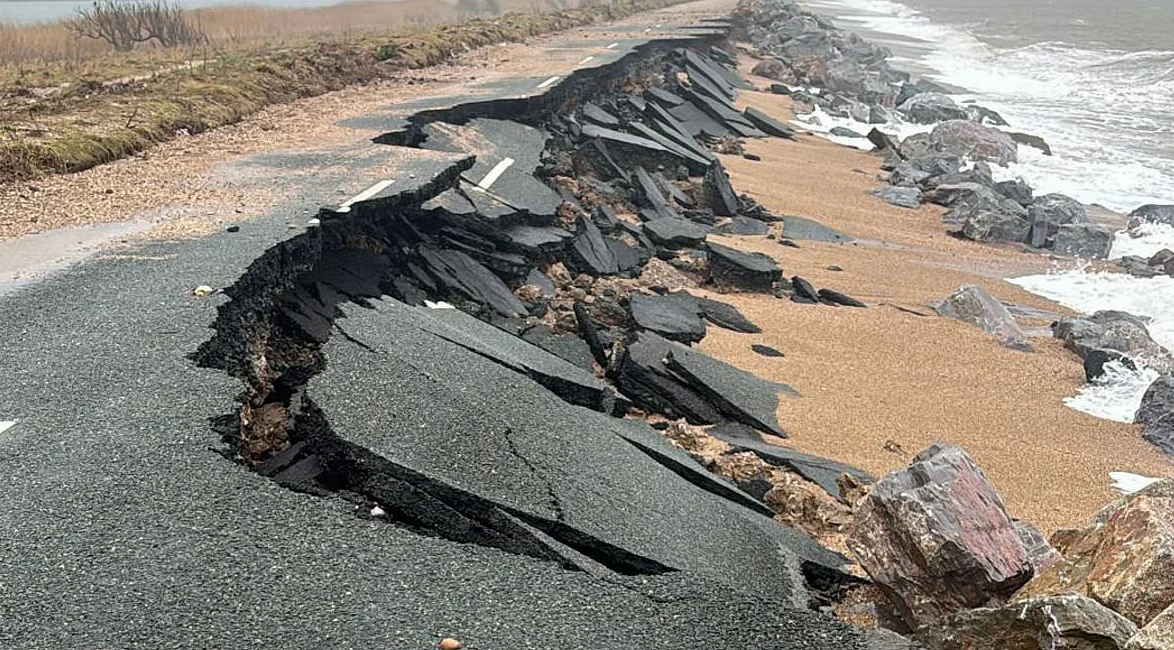
TORCROSS, England (AP) — Storm Imogen’s 12-foot waves and 60 mph winds tore away 200 meters of the A379 highway along a precarious shingle bar between Torcross and Slapton, leaving residents cut off from main roads. The two-mile stretch, known as the Slapton Line, now gapes with chunks of tarmac submerged offshore.
Devon County Council estimates repairs at £18 million, a sum beyond its budget. Officials hope for aid from a new £1 billion Structures Fund, but Councillor Dan Thomas called funding prospects dim. “Highways authorities nationwide don’t have enough money as it is, never mind roads like this,” the Liberal Democrat councillor said.
The road has crumbled before — in 2001, 2016 and 2018 — yet the government has offered no firm commitment to rebuild. Locals packed a village hall meeting last week, venting frustration at council leader Julian Brazil. Suggestions flew: Army pontoon bridges, tolls, kelp barriers or diverting foreign aid billions.
Torcross businesses reel. Gail Stubbs, 47, runs the 600-year-old Start Bay Inn, its windows boarded after rogue waves smashed the sea wall. Roofs lifted. Waist-deep water flooded alleys. “We predict business down 50 percent,” Stubbs told reporters. “Damage to the village has been severe. If storms keep coming, we may not be here.” She and her partner now handle a single detour on narrow lanes to Dartmouth, reversing 22 times in one 45-minute trip that used to take 10.
Ali Willcock, owner of the Billy Can cafe, hears metal clanking in the waves at night. “Everything rattles. Impossible to sleep,” he said. Cafes drew ‘disaster tourists’ over half-term, but cancellations mount as summer looms. Some 300,000 holidaymakers flock to southwest England beaches annually; Torcross access now hinges on that lone detour.
School buses reroute around the gap, stretching commutes. Residents fret over delays to doctors, pharmacies and ambulances. The shingle bar, once a D-Day rehearsal site mimicking Normandy’s Utah Beach, resembles a war zone.
Gerd Masselink, coastal geomorphology professor at the University of Plymouth, called it the site’s worst change in a decade. The beach dropped 6.6 feet in hours — six years of erosion compressed. Over 20 years, it has lost 20 feet. “Significant, but part of a trend along south coast beaches,” Masselink said. Gravel shifts east. Flooding rises. Erosion accelerates.
“We can’t defend coastlines for 20, 30, 40 years unless we concrete the whole coast,” he warned. “We have to retreat.”
A Department for Environment, Food & Rural Affairs spokesperson pointed to £10.5 billion in flood and erosion defenses by 2036, protecting 900,000 properties. The government shifted £100 million to urgent maintenance after inheriting defenses in poor shape, the spokesperson said.
Stubbs recalled a 1979 storm that nearly swept her pub’s pool table out — prompting the sea wall now in ruins. Storm Imogen hit Feb. 8, pummeling homes and the Start Bay Inn alongside the road.
Repairs, if funded, might drag to 2027. For now, Torcross clings on, battered but open.






Comments
No comments yet
Be the first to share your thoughts