

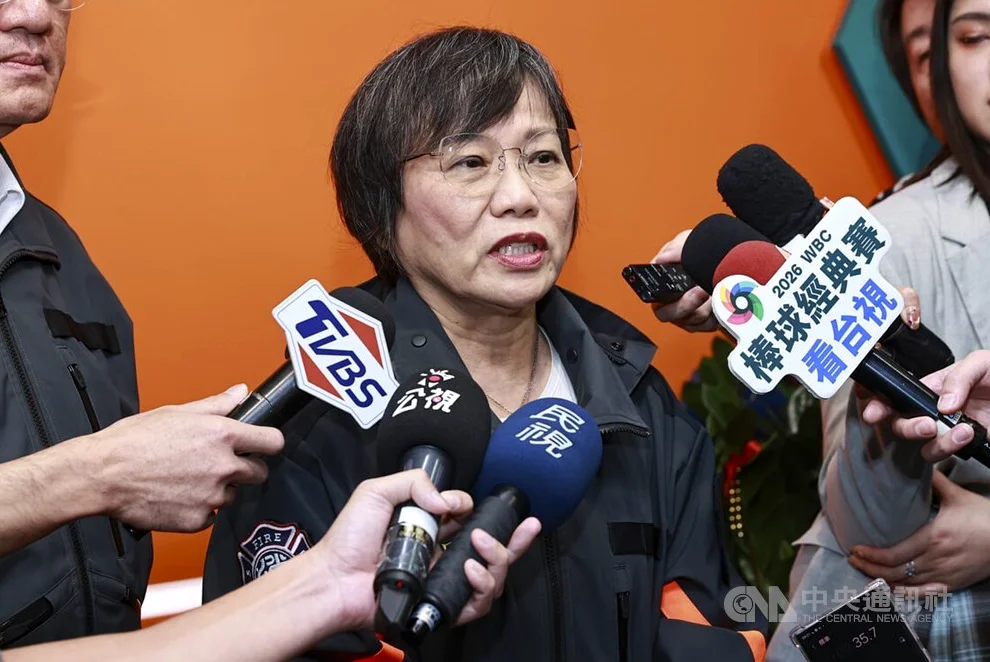
Taipei, Feb. 27 — Taiwan’s government has strongly criticized Beijing for what it describes as political intimidation aimed at Taiwanese officials, following a report that a nephew of Interior Minister Liu Shyh-fang has business ties in China. The Ministry of the Interior (MOI) accused the Chinese Communist Party (CCP) of trying to create a “chilling effect” among public servants.
Allegations and Reactions
The controversy began after a report published by Hong Kong-based outlet Ta Kung Pao on Friday alleged that Liu had received political donations from her nephew, Yen Wen-chun, who holds executive positions at three companies in China and reportedly earns a high salary. The report described Liu as a “staunch supporter of Taiwan independence” and accused her of allowing relatives to profit from businesses in China while discouraging cross-strait relations.
MOI spokesperson Maa Shyh-yuan said the ministry would continue to act in accordance with the law, fulfill its duties, and defend Taiwan’s democracy and rule of law. Maa did not directly address the allegations, instead emphasizing the ministry’s commitment to its responsibilities.
In response, China’s Taiwan Affairs Office (TAO) spokesperson Chen Binhua stated that the office was aware of the allegations and was conducting an investigation in accordance with the law. He said that individuals who support Taiwan independence and their relatives are not permitted to profit from businesses in the mainland while undermining cross-strait relations.
“Taiwan independence supporters, as well as the businesses and individuals that back them who undermine peace and stability in the Taiwan Strait or harm the interests of compatriots on both sides, will be severely punished,” Chen said.
Impact on Cross-Strait Relations
The Mainland Affairs Council (MAC), Taiwan’s top agency for cross-strait affairs, said Beijing’s actions intimidate Taiwanese engaged in cross-strait exchanges and undermine healthy relations. The council emphasized that the government supports normal cross-strait activity, noting that working or investing in China benefits local economies.
However, the council warned that Beijing’s threats deepen public distrust and resentment. It stressed that any intimidation by the Chinese government is counterproductive to supporting positive relations between the two sides.
Meanwhile, the main opposition Kuomintang (KMT) urged authorities to immediately launch a full investigation to clarify the facts and determine whether any political influence was involved. KMT caucus secretary-general Lin Pei-hsiang said the report’s claims require clarification but warned that, if true, they could raise serious concerns over national security, improper benefit transfers, and political influence.
Lin added that any dealings with foreign forces or suspicious financial flows should be investigated and that the same standards must apply to all.
Call for Respect and Goodwill
Separately, Taiwan People’s Party (TPP) lawmaker Li Chen-hsiu said regardless of whether Taiwanese are in Taiwan or working in China, their legal rights and basic protections should be respected. She urged the Chinese Communist Party authorities to show greater goodwill toward the people of Taiwan.
The incident has reignited concerns over the treatment of Taiwanese nationals working in China, with some arguing that Beijing’s actions may deter cross-strait cooperation and economic ties. The situation highlights the delicate balance between economic interests and political tensions in the region.
As the investigation continues, the implications for cross-strait relations remain unclear. The incident may also influence upcoming political developments in both Taiwan and China, particularly as tensions over Taiwan’s status remain a central issue in regional geopolitics.






Comments
No comments yet
Be the first to share your thoughts