

 The New York Times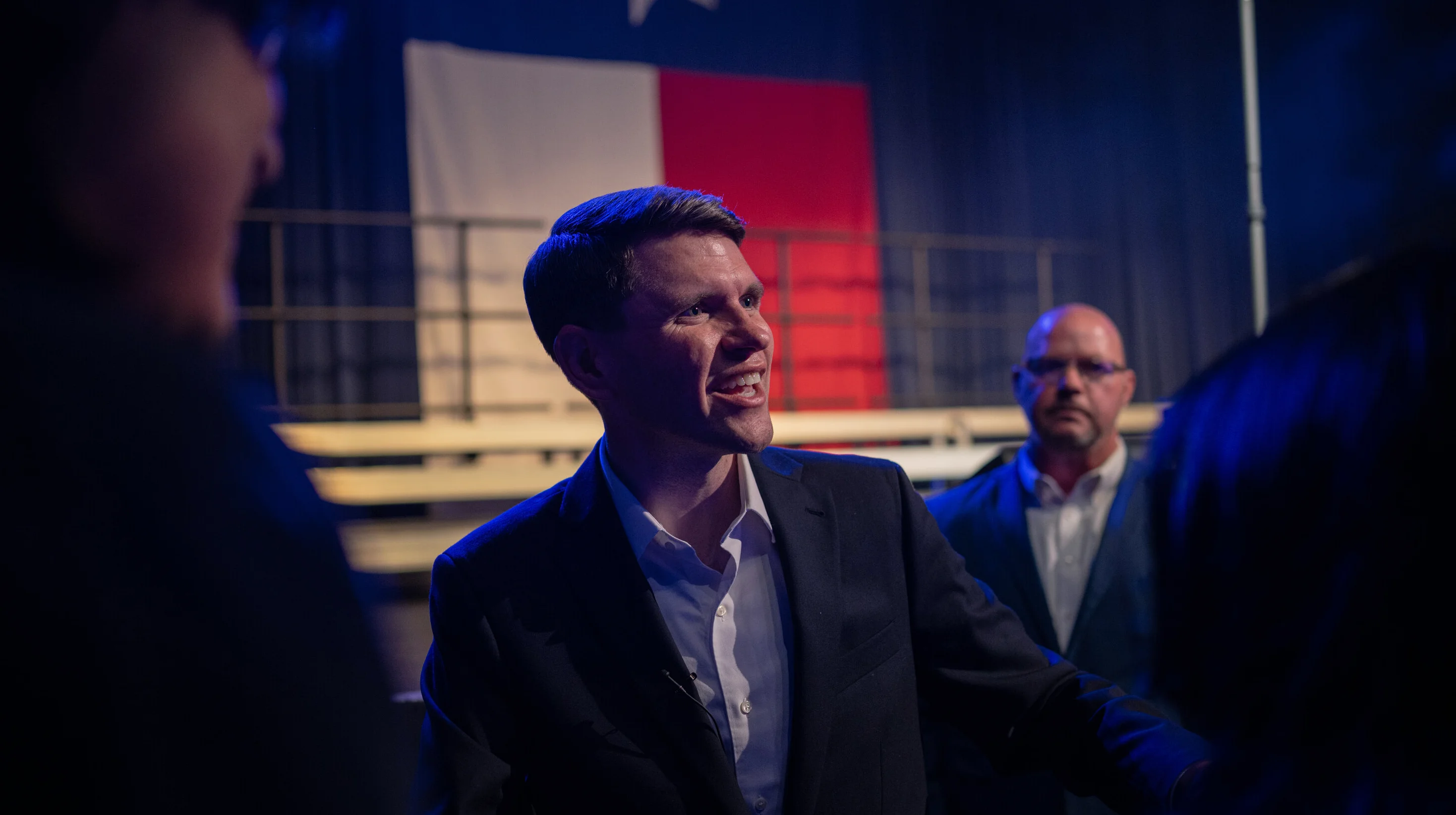
James Talarico, a 36-year-old Texas legislator in an uphill campaign for the Senate, knew when he boarded a plane to New York City last month that the biggest interview of his life would never appear on television. His appearance on Stephen Colbert’s late-night show was to be one in a series of national interviews in February timed to the start of early voting in the Democratic primary in Texas.
Colbert Interview Sparks Viral Moment
But days before the trip, Mr. Colbert’s producers told the Talarico campaign the network — nervous about federal regulators — would only post the interview online. The Talarico campaign had a choice: Cancel the trip and crow about the Trump administration trying to muzzle him, or say nothing, film the segment, and hope Mr. Colbert would tell his audience the story of federal interference.
They said nothing and filmed. The YouTube clip gained more than 9 million viewers. Donations poured in. Internal campaign polling by his opponent showed the ground shift in Mr. Talarico’s direction. The moment captured the instincts of a campaign that was defined by strategic restraint rather than aggressive reaction.
A Campaign Built on Unity and Restraint
The Talarico campaign did not swerve when Representative Jasmine Crockett, one of the party’s biggest rising stars, entered the primary just months before the vote, or when his first opponent, former Representative Colin Allred, dropped out, or even when accusations of racially-charged comments threatened to derail his campaign in its final weeks.
But his win was also a victory for a proud combatant in the 2026 attention economy, reflecting the internet-first mindset of a young candidate who used an interview with Joe Rogan to catapult his candidacy even before it was official. The Colbert moment helped seal it at the end.
Mr. Talarico and his campaign signed up tens of thousands of volunteers and held 35 rallies in 26 cities across Texas. He ended with a final push on both traditional programming, such as ‘The View’ and ‘Real Time with Bill Maher,’ and on new ones like Jubilee, a YouTube show where he spent 90 minutes answering questions from skeptical voters.
Religion and Politics in a Digital Age
And everywhere Mr. Talarico went he stuck to the same campaign message: unity against billionaires who want to divide people, the power of love, the willingness to embrace political difference and welcome independents and Republicans into the fold — an unlikely winning formula in an era of partisan flame throwing. At times, his campaign seemed more Sunday sermon than political barnburner.
“Jesus says something really strange, he says, ‘blessed are you who weep,'” Mr. Talarico told an audience at Texas A&M University in late February. “If your heart is breaking as you watch what’s happening to our beloved country, it means you still have a heart.”
In the days after his win, national Democrats have rallied behind Mr. Talarico. President Obama called him on Wednesday to offer congratulations, saying the young Democrat brought “energy” and “enthusiasm” into the party, according to two people briefed on the call.
But that blend of religion and Democratic politics, captured in viral internet videos, is what drew in the likes of Mr. Rogan, who was fascinated by a clip of Mr. Talarico citing the Bible to challenge a Republican effort to put the Ten Commandments in public school classrooms.
The offer to appear on Mr. Rogan’s show came “out of the blue” last June, said Ali Zaidi, the former executive director of the Texas Democratic Caucus, who helped advise Mr. Talarico last spring. “We thought it was fake,” he said.
His aides were already thinking about a run, and the two-and-a-half-hour conversation with Mr. Rogan proved crucial, introducing Mr. Talarico to a national audience as a Democrat willing to venture into potentially unfriendly spaces.
Mr. Rogan told his guest, “you need to run for president.”
The Talarico team capitalized. He ran ads through his state legislative account to build a list of supporters he would tap for his Senate campaign. State records show he spent nearly $750,000 on digital ads over five weeks, from July 23 to the end of August. Donors started opening their wallets even before he was a Senate candidate, raising about $1.3 million in that same period.
At the same time, Mr. Talarico’s aides courted influential voices, particularly those who could reach critical Hispanic voters.
Mr. Talarico, a frequent social media user, knew the importance of online reach. “Everything is designed around how can we make this successful online,” said Parker Butler, who helped oversee the campaign’s social strategy.
On July 29, Mr. Talarico’s staff reached out to Carlos Eduardo Espina, a Spanish-language creator influential with millions of young Latinos. The candidate and the creator met in the fall for 90 minutes over coffee in Houston.
“Usually when you meet a politician, they have an ask,” Mr. Espina said. Mr. Talarico just listened. “I told him right there, you’ve got my support.”
Ms. Crockett’s campaign also courted Mr. Espina, but not until December.
“Our team wanted to gauge your interest in getting involved with the Crockett for Senate campaign,” read a Dec. 16 email to Mr. Espina signed by Team Crockett. “We wanted to open the door.”
It was already closed.
Mr. Espina’s experience underscored the differences in the two campaigns, one, a methodical monthslong marathon, the other, a hastily-conceived last-minute sprint. When she announced her candidacy, Ms. Crockett did so without a campaign manager.
Mr. Talarico’s campaign was managed by a 28-year-old from El Paso, Seth Krasne, a longtime adviser to Mr. Talarico who had never run a statewide race before.
The entrance of Ms. Crockett was by far the biggest test of the Talarico campaign, which had been facing Mr. Allred, who had been the party’s nominee for Senate in 2024. Mr. Allred dropped out when Ms. Crockett entered.
Ms. Crockett could match or exceed many of Mr. Talarico’s strengths. She was a proven small-dollar fundraiser and a popular social media star who knew how to command attention.
But for most of last year, Ms. Crockett had not been planning on running for Senate. In late spring, she spoke with Mr. Talarico by phone as he and his aides were considering a run. Ms. Crockett told him that she was not planning one herself, said Mr. Zaidi, who was briefed on the call.
“If I had known that she was a prospective candidate, it would have beared heavily on my advice,” Mr. Zaidi said, adding that Mr. Talarico may not have chosen to take her on. “How you run a campaign is highly dependent on who your opponent is.”
Then Texas state legislators redrew the state’s congressional maps in the long, hot redistricting summer, leaving Ms. Crockett with the choice of running in a House district with mostly new constituents or trying her luck statewide.
Ms. Crockett appeared formidable, and began the race with a significant edge in public polls. But her campaign struggled to get off the ground. Mr. Talarico raised more money than she did in the two days after her announcement, according to his campaign.
The s funded by Mr. Talarico’s campaign and supportive super PACs swamped Ms. Crockett’s. In some heavily Latino media markets, he spent eight or nine times more than she did.
“The influence of big money in this race should not obscure the fact that she remained competitive until the end,” said Karrol Rimal, Ms. Crockett’s top campaign aide.
Ms. Crockett declined an interview request, texting, “The race has ended. It’s truly time to pivot.”






Comments
No comments yet
Be the first to share your thoughts