

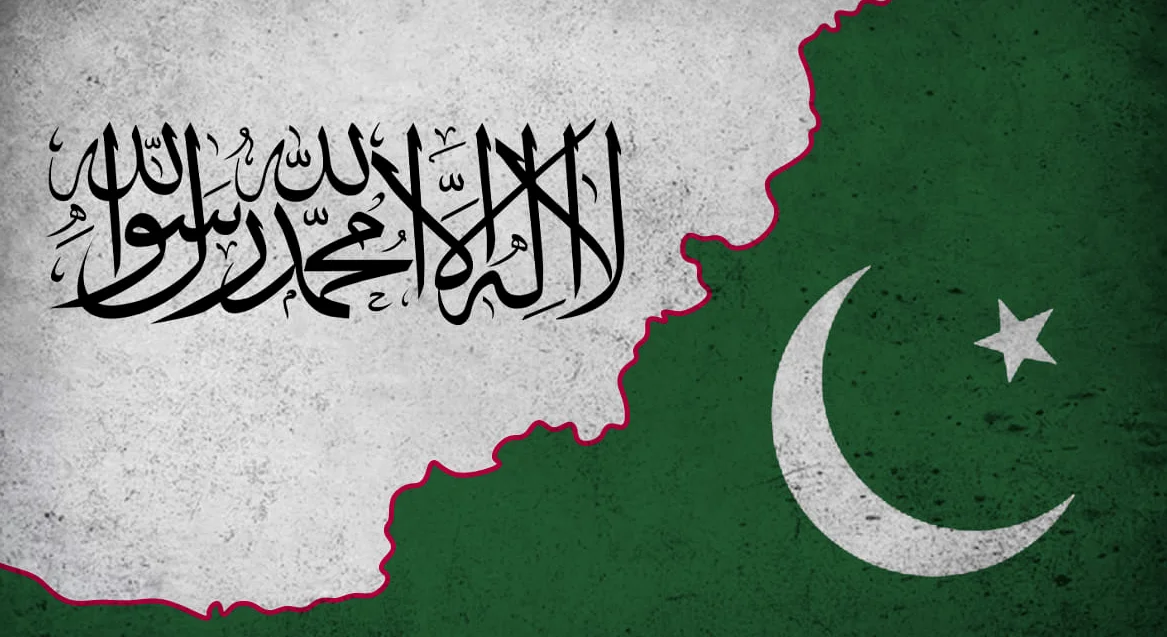
A deadly airstrike by Pakistan on a hospital in Kabul has deepened the already fraught relationship between the Taliban and Islamabad, with historical tensions and mutual distrust resurfacing. The attack, which killed at least 408 people and injured 265, is the deadliest in the ongoing conflict between the two nations and highlights the complex, often adversarial dynamic between the Taliban regime and the Pakistani government.
Historical Context: Distrust and Duplicity
The roots of this tension date back to the Taliban’s return to power in August 2021. Initially, the Pakistani establishment welcomed the Taliban’s ascension, with then-Prime Minister Imran Khan calling it the breaking of Afghanistan’s ‘shackles of slavery.’ However, this optimism was short-lived, as the Taliban and Islamabad quickly fell back into their familiar pattern of mistrust and suspicion.
Pakistan’s intelligence chief, Lt. Gen. Faiz Hameed, had traveled to Kabul shortly after the Taliban’s takeover, seeking to strengthen ties. But within months, tensions escalated, and by mid-2022, Pakistan had carried out cross-border airstrikes along the Durand Line, a border that Afghanistan does not recognize as an international boundary. This undefined border has long been a source of contention, complicating the already delicate relationship between the two nations.
According to a 2012 report compiled by NATO’s International Security Assistance Force (ISAF), Taliban fighters from the lowest ranks to commanders viewed the Pakistani government as ‘untrustworthy,’ ‘manipulative,’ and ‘controlling.’ The report noted that while the Taliban did not trust Pakistan, they accepted the status quo due to a lack of alternatives. Pakistan, meanwhile, continued to monitor and manipulate Taliban interactions with external entities.
The Emergence of the TTP Within the Taliban
The emergence of the Tehreek-e-Taliban Pakistan (TTP) within Pakistan further complicated the relationship between the Taliban and Islamabad. The TTP, a group that once operated under the Taliban’s Haqqani Network, was founded by Baitullah Mehsud in 2007 and became a major threat to Pakistan until the military’s Zarb-e-Azb operation in 2014.
The TTP’s influence waned after the operation, but it resurged following the Taliban’s return to power in 2021. In 2022, the TTP claimed at least 54 attacks in Pakistan, leading to retaliatory strikes by the Pakistani military in Afghanistan. The cycle of violence between the two countries has since continued, with neither side showing signs of backing down.
The TTP’s resurgence has been fueled by the Taliban’s return to power, which many in Pakistan believe has emboldened the group. The Pakistani government has attempted to distance itself from the Taliban, emphasizing that the TTP is an independent entity. However, the Taliban has historically provided safe havens for the TTP, further complicating the relationship.
Recent Escalation and Diplomatic Fallout
By April 2022, Pakistan’s Prime Minister Imran Khan had been replaced by Shehbaz Sharif, and the country’s use over the Taliban has since diminished. In May 2022, the TTP announced a ceasefire with the Pakistani government, but the deal collapsed after the U.S. airstrike on Kabul in July 2022, which killed Al Qaeda leader Ayman Al-Zawahiri.
The Taliban blamed Pakistan for allowing the U.S. to carry out the strike on its territory, leading to a diplomatic chill between the two countries. By September 2022, the TTP had resumed attacks on Pakistan, and in December 2024, Pakistan carried out airstrikes in Afghanistan, prompting retaliatory strikes from the Taliban across the Durand Line.
The recent airstrike on a hospital in Kabul has reignited tensions, with the Taliban accusing Pakistan of targeting civilians. The attack has also drawn international condemnation, with countries like India stepping in to mediate the conflict. However, the long-standing issues of mutual distrust, border disputes, and the presence of militant groups on both sides continue to strain the relationship.
The Taliban’s complicated relationship with Pakistan is not just a matter of regional politics—it has real-world implications for ordinary people. The ongoing conflict has led to increased instability in both countries, with civilians bearing the brunt of the violence. The lack of trust between the two nations makes it difficult to resolve the conflict, as both sides remain unwilling to compromise on key issues.
Looking ahead, the situation remains uncertain. Pakistan has shown no signs of backing down from its cross-border operations, while the Taliban continues to retaliate. With no clear resolution in sight, the cycle of violence is likely to continue, further entrenching the deep mistrust that has defined the relationship between the Taliban and Islamabad for decades.




Comments
No comments yet
Be the first to share your thoughts